Tesla opens Cybercab orders at $29,990 with a mandatory $299 monthly fee and eight crashes on file
The car carries a $29,990 price and a mandatory $299 monthly subscription; the driverless fleet behind it has a median pre-crash speed of 1 mph. Tesla's zero-injury record is real, but it is a record of a fence, and buyers are now paying for the fence as if it were the software.
 Richard Tangthree-minute read
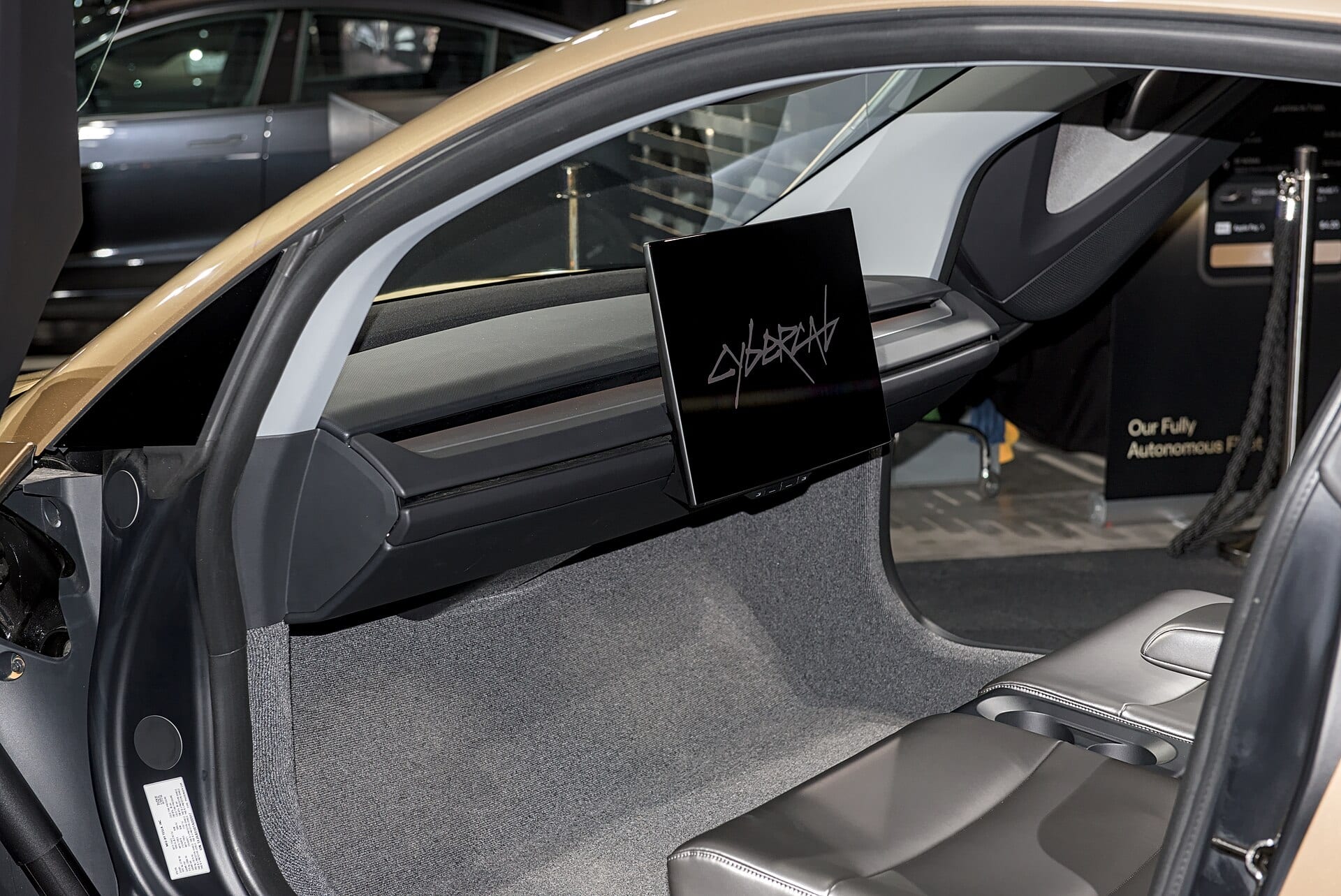
Tesla+0.43% — Tesla, up 0.43 percent today opened invite-only orders for the Cybercab on November 13: $29,990 for the two-seat car with no steering wheel, a $1,000 nonrefundable deposit, deliveries estimated for December in Austin, and a mandatory $299 monthly Autonomy Subscription without which, per Tesla's own terms, the car will not operate 52.
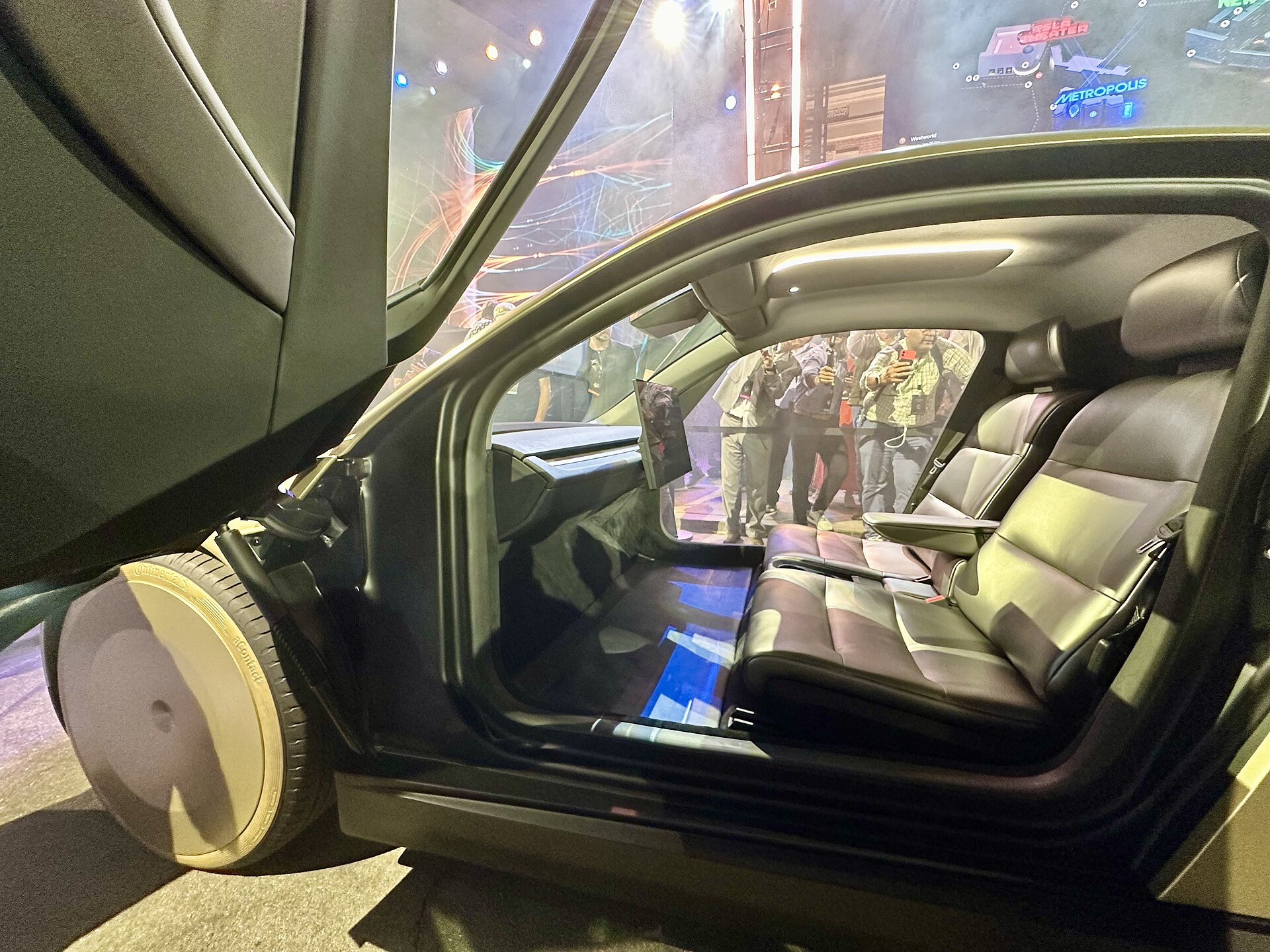
Three days later the crash record caught up with the order page: NHTSA's Standing General Order files now list eight Cybercab crashes, two with injuries, in the vehicle's first two months of public operation 1. The order form asks buyers to underwrite a safety record built on exclusions, and the files show exactly where the exclusions sit.
The geofence is doing the safety work
All four driverless crashes happened in Austin's Robotaxi service and none exceeded 5 mph: a pothole, a curb, and two collisions where the car was stopped and something else hit it 1. Across every driverless Tesla report in NHTSA's current release, the median pre-crash speed is 1 mph and not one crash happened on a highway 1.
The picture changes the moment a test driver is aboard. That second file holds the 53 mph highway crash in Philadelphia and both injury crashes, and Tesla redacted the narratives, so fault is unknown 1. Tesla is right to cap the speed today, given what its own driver-assist data shows at 50 mph and above 1. The problem is the sales claim that sits on top of the cap.
Driverless rides crash at walking pace; highway speed appears only with a test driver
The one crash at real speed had a human test driver aboard
Data
| Value | |
|---|---|
| Philadelphia, test driver | 53 mph |
| Lehi, test driver | 11 mph |
| Austin highway, test driver | 5 mph |
| Austin lot, driverless | 5 mph |
| Austin curb, driverless | 3 mph |
| Tampa, stopped, test driver | 0 mph |
| Austin, rear-ended, driverless | 0 mph |
| Austin exit, stopped, driverless | 0 mph |
What the zero-injury report does not count
Tesla's Robotaxi Safety Report claims zero injuries over 3.1 million driverless miles from January to October, and the claim holds within its stated scope because two things are left out 41. The methodology counts only miles with no safety monitor aboard, and the report covers the Robotaxi service, not the Cybercab test fleet where both injuries sit 41. A reader of the headline sees no injuries; the files show two, in the excluded set.
The contract repeats the fence
The order form repeats the same limit in contract language: the car runs only inside Robotaxi zones, cannot work for another ride-hailing service, cannot be resold without permission on pain of a $50,000 penalty, and Tesla can reprice the subscription on a month's notice, suspend it, or repurchase the car at a price Tesla itself determines 2. Even inside the fence, independent tracker Koby Pierce's address tests found the working Austin service area covers only about 59% of what Tesla advertises 5.
Whose money carries this
The buyer pays first: a nonrefundable deposit, and by Electrek's math about $47,600 over five years before insurance, registration and charging 5. Musk himself says the $299 fee is too high and should be closer to the roughly $115 Tesla charges for its software on other models 67.
Shareholders pay differently. Tesla trades near 400 times trailing earnings with an operating margin under 5%, so autonomy carries the valuation, and the documents behind that story are these crash files, not the safety page 7. Separately, NHTSA has ordered Tesla to prove under oath that a car with no brake pedal meets federal standards; Tesla answered confidentially in October and no ruling has come 5.
Tesla's operating margin peaked at 10.8% and came in at 2.6% last quarter
Data
| Operating margin | |
|---|---|
| Q4 '23 | 8.2% |
| Q1 '24 | 5.5% |
| Q2 '24 | 6.3% |
| Q3 '24 | 10.8% |
| Q4 '24 | 6.2% |
| Q1 '25 | 2.1% |
| Q2 '25 | 4.1% |
| Q3 '25 | 5.8% |
| Q4 '25 | 5.7% |
| Q1 '26 | 4.2% |
| Q2 '26 | 1.4% |
| Q3 '26 | 2.6% |
The speed column would move first
What to watch is concrete. The software drives well at low speed inside a fence, and highway speed in the open has never been demonstrated in the driverless data. If Tesla widens the geofence or lifts the speed cap, the next NHTSA release will show it first, in the speed column, before the safety report catches up.
Get Robotics & Defense by email, free
Robots, self-driving vehicles, drones and AI in defense. In our daily email, every weekday.

Reader comments
0 comments