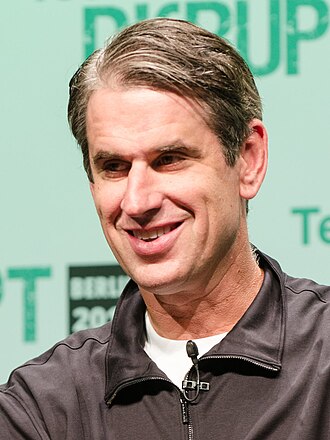
Bill Gurley
General Partner, Benchmark
Bill Gurley is a general partner at Benchmark, the San Francisco venture firm, best known for its early investment in Uber in 2011. He has long argued that traditional IPOs cost companies too much.
General Partner, Benchmark
Bill Gurley is a general partner at Benchmark, the San Francisco venture firm, best known for its early investment in Uber in 2011. He has long argued that traditional IPOs cost companies too much.
Gurley was born in Dickinson, Texas, outside Houston, and graduated from the University of Florida in 1989 with a Bachelor of Science degree, playing on the men's basketball team while he was there. He took an MBA from the University of Texas McCombs School of Business in 1993. Before investing, he worked in the technical marketing group of AMD's embedded processor division and then as a design engineer at Compaq Computer, where he worked on the 486/50 and Compaq's first multi-processor server.
He moved to Wall Street and spent four years as a research analyst, three of them at CS First Boston. He covered Dell, Compaq and Microsoft and was the lead analyst on the Amazon.com IPO. He then became a partner at Hummer Winblad Venture Partners before joining Benchmark as a general partner in 1999.
At Benchmark, Gurley led investments in and held board seats at companies including GrubHub, OpenTable, Zillow, Nextdoor, Stitch Fix and HackerOne. Forbes counts his $11 million investment in Uber in 2011 as his most noteworthy bet. Other investments were sold to larger companies, among them Vudu to Walmart, Shopping.com to eBay and Demandforce to Intuit. In 2020 he stepped back from his position at the firm after twenty-one years. Forbes lists him as the longest-serving partner at Benchmark, and company filings still name him a general partner.
Gurley argues that traditional IPOs cost venture-backed tech companies too much: banks set offer prices below what investors will pay, so companies must sell more shares to raise the same cash, diluting founders and employees. He favors direct listings, where the opening price is set by supply and demand. In September 2026, The Inference reported that he told people worried about AI risk to calm down and carry on, a message Chamath Palihapitiya echoed.
Sources · written 16 October 2026