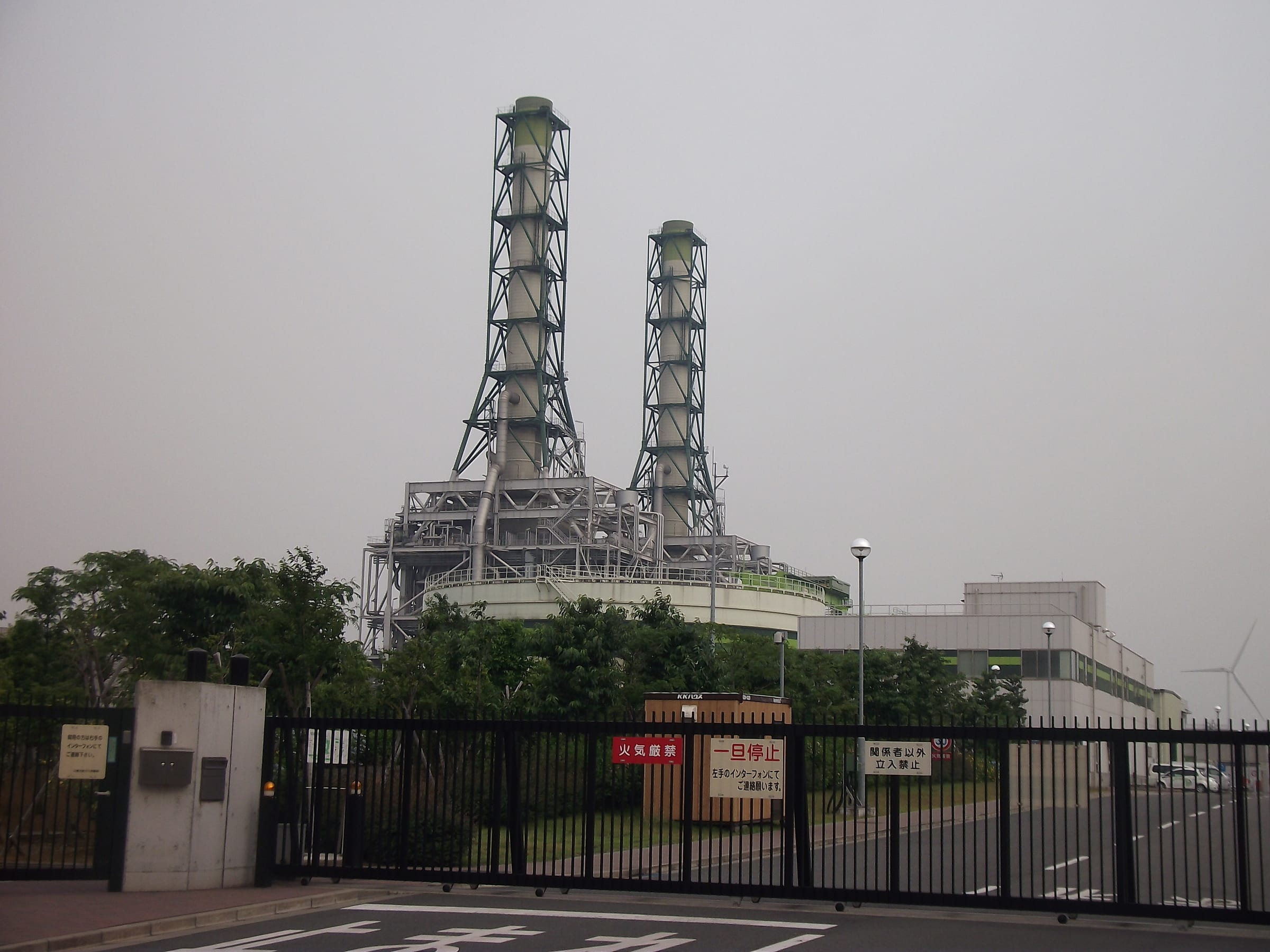
AI demand is pushing Exelon back into the generation business it spun off
Illinois regulators have approved ComEd's underground GRIT transmission ring, built because large unnamed customers arrived near O'Hare, one day after Exelon's transmission chief said utilities should be allowed to own power plants again. The AI buildout has moved into utility rate base, and regulators and ratepayers now decide who pays for it.
 Richard Tang · 3 min read

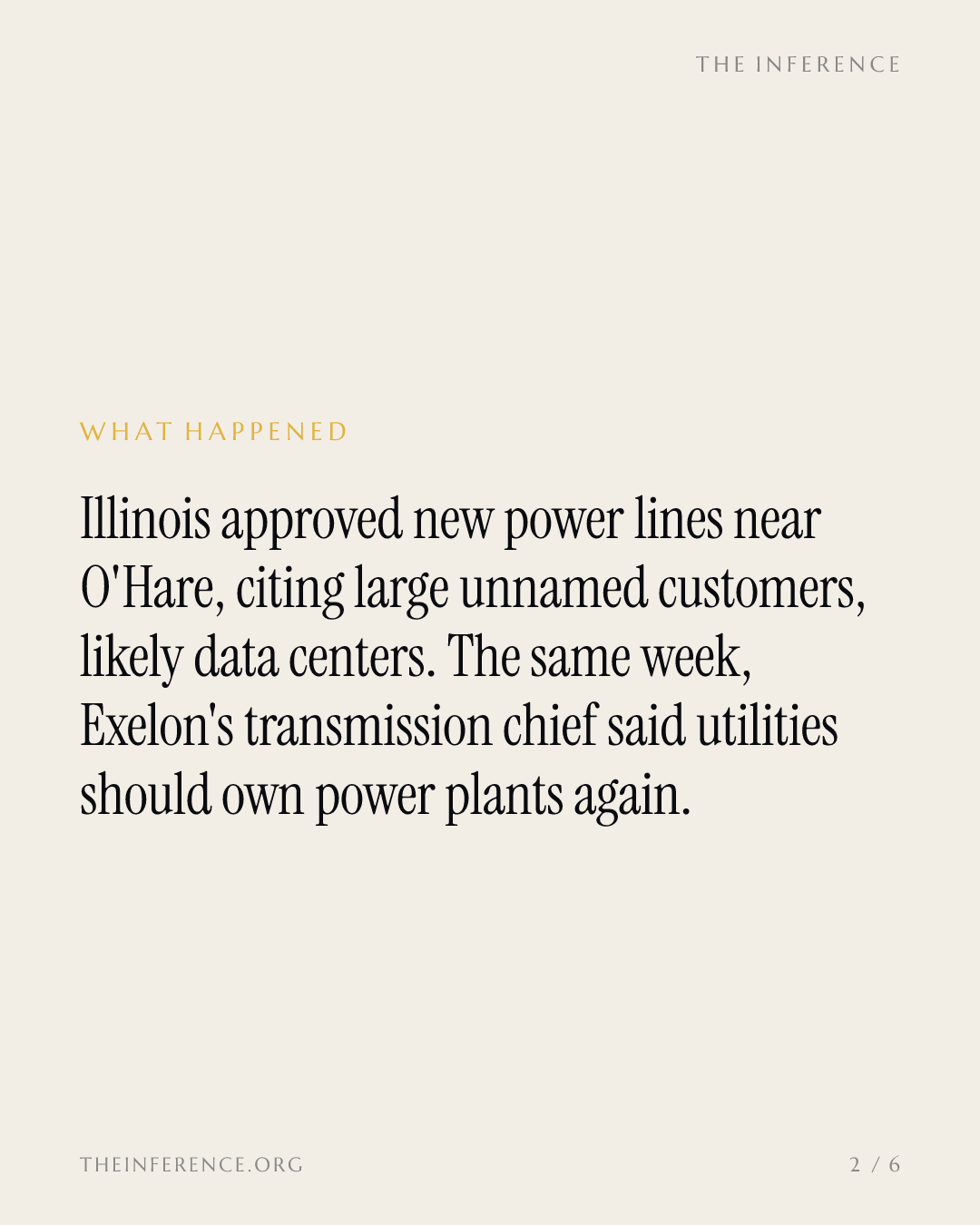
Illinois approved wires that unnamed large customers forced
Illinois has just approved a transmission project whose cause is stated in its own paperwork. On October 22, 2026, the Illinois Commerce Commission granted ComEd, Exelon's northern Illinois utility, a certificate to build GRIT: four underground 138-kilovolt lines and a new substation forming a ring around three existing substations near O'Hare, in service by 2029 1. ComEd's release says the need comes from "multiple large-load customers" that have entered Elk Grove Village and Wood Dale 1.
It never names them. The scale is the tell: Exelon−0.76% — Exelon, down 0.76 percent today counts 9 gigawatts of high-probability new load in ComEd territory, against the utility's all-time peak demand of about 24 gigawatts set in 2011, with a still larger queue waiting for study 2. That demand is now construction, with grading underway this autumn 1.
Ratepayers fund the build, and Exelon earns on it
GRIT is what AI-scale demand becomes inside a regulated utility: capital that earns an approved return, recovered through rates the commission controls. Exelon chose that model deliberately when it spun off Constellation−1.04% — Constellation, down 1.04 percent today, its generation business, on February 1, 2022, and emerged as a pure wires company 2. Its capital spending has exceeded operating cash flow almost every quarter for three years, and the gap widened as the load pipeline grew 6.
The approval day lifted the stock about 4%, though analyst consensus remains Hold 15. The protection for who pays is real: transmission security agreements put large customers on the hook for ten years of charges tied to the load they request, so a vanished project does not leave everyone else holding the wires 2.
Exelon's capital spending has outrun operating cash flow in 11 of the last 12 quarters
- Capital spending
- Operating cash flow
Data
| Capital spending | Operating cash flow | |
|---|---|---|
| Q3 '23 | $1.86B | $1.53B |
| Q4 '23 | $1.87B | $1.41B |
| Q1 '24 | $1.77B | $0.99B |
| Q2 '24 | $1.7B | $1.46B |
| Q3 '24 | $1.7B | $1.69B |
| Q4 '24 | $1.94B | $1.43B |
| Q1 '25 | $1.95B | $1.2B |
| Q2 '25 | $2.01B | $1.51B |
| Q3 '25 | $2.14B | $2.3B |
| Q4 '25 | $2.43B | $1.24B |
| Q1 '26 | $2.36B | $1.72B |
| Q2 '26 | $2.2B | $1.95B |
Wires carry power, only plants make it
Here is the strain in the wires-only model: transmission moves electricity, it does not create it. PJM Interconnection, the grid operator for Illinois and the Mid-Atlantic, fell short of its reliability requirement in its latest capacity auction, and federal regulators have suspended its emergency capacity purchase until February 2027 24.
Carim Khouzami, Exelon's executive vice president of transmission and development, gave the quotable version: "Over the past two years, PJM customers have paid $32 billion in capacity pricing, and they've gotten 1.2 GW less of generation" 2. So Exelon is asking state legislatures to let regulated utilities build and own generation again, and he believes his company will within five years 2.
The fleet it shed is meanwhile monetizing the same shortage: Constellation, the country's largest nuclear operator after absorbing Calpine, has signed 20-year nuclear agreements directly with Google and Amazon 3. Two models now compete for one gap: plants financed by ratepayers through their bills, or plants financed by the hyperscalers themselves.
The electrons are the bottleneck now
Follow the chain and the constraint has moved three times: chips, then wires, now generation. GRIT closes the middle link by 2029; no one has yet committed the power those customers will draw 12. The build is right, and the charging mechanism is right, because the customers requesting the load are the ones guaranteeing the bills 2.
What is unresolved is who earns on the electrons, and in Illinois that answer sits with the legislature and the commission rather than the auction. Whoever is allowed to own the next plants gets paid for the decade.
What happens next
CEGDoes PJM's capacity shortfall ease, or does the pricing squeeze that has Exelon arguing for generation ownership deepen?
The case for
The ICC approval converts AI demand into rate-base capital that earns an approved return, with large-load customers locked into ten years of charges
The case against
Exelon's capital spending has exceeded operating cash flow in 11 of the last 12 quarters, and analyst consensus on the stock remains Hold even after the approval-day pop
- February 2027FERC's suspension of PJM's emergency capacity purchases expires.
- 2029ComEd's GRIT transmission ring enters service around O'Hare. Do the unnamed large-load customers materialize and pay through the ten-year security agreements?
Get our follow-up when these land
Free. We'll email you when we publish on Constellation Energy, and send our free weekday newsletter. Unfollow in one click.