Cerebras's customer pays 3 to 5x for 2,000 tokens a second; Culper Research says the wafers fail in 2 years
General Compute's CTO says Nvidia struggles at decode and routes that work to Cerebras, at up to 2,000 tokens a second and a 3 to 5x price. The same week, Culper Research claimed the wafers wear out in about two years, and Cerebras answers on November 12.
 Richard Tang · 4 min read

The demand side has finally priced what Cerebras sells, and the price is high: a paying customer says a fast AI token is worth three to five times a normal one, and that Nvidia−3.00% — Nvidia, down 3.00 percent today is worst at producing exactly that. In the same week, a short seller put a two-year clock on the hardware that produces it. Both cases get tested on November 12, when Cerebras−6.21% — Cerebras, down 6.21 percent today reports third-quarter results.
The customer is Jason Goodison, co-founder and CTO of General Compute, an inference cloud startup that announced a $100 million Series A the same day. His company runs prefill, the first step of answering a prompt, on Nvidia's GPUs, and he calls Nvidia great at that. Decode, the second step that writes the answer one token at a time, is different: "NVIDIA really struggles on the very large models."
So General Compute hands decode to Cerebras, whose wafer-scale engine splits a large model across whole silicon wafers and generates up to 2,000 tokens per second. 1
A fast token can sell for three to five times a standard one
The customer, not the chipmaker, is setting the price for speed
- Estimate
Data
| Value | |
|---|---|
| Standard token | 1x |
| Fast token, low end (estimate) | 3x |
| Fast token, high end (estimate) | 5x |
The premium is already on the price list
Goodison says the premium is not a forecast: "you can charge many multiples on the same token if it's fast," and demand arrives "on the order of a few months to six months." 1 This is the first time a customer independent of Cerebras has attached both a use case and a price to wafer-scale inference.
It landed in the week Nvidia paid $13 billion for Groq$3.5B — Groq, private, latest valuation $3.5B to add a fast-inference accelerator and guided its own gross margin down to 71 to 72 percent for the January 2027 quarter. 1 Nvidia loses no sales while supply stays tight, as Goodison himself notes. 1 What it loses, a year or two out, is the top of its price list.
For Cerebras, that is demand-side validation of a business built mostly on one customer: $25.4 billion of contracted work at June 30, none of it from AWS+6.11% — AWS, up 6.11 percent today or any large cloud, much of it OpenAI$1.18T — OpenAI, private, latest valuation $1.18T. 2 Oracle−1.74% — Oracle, down 1.74 percent today agreed in late October to carry Cerebras inference on its cloud, a real second channel, though the rollout starts in 2027 and nothing has launched. 34
The clock on the hardware
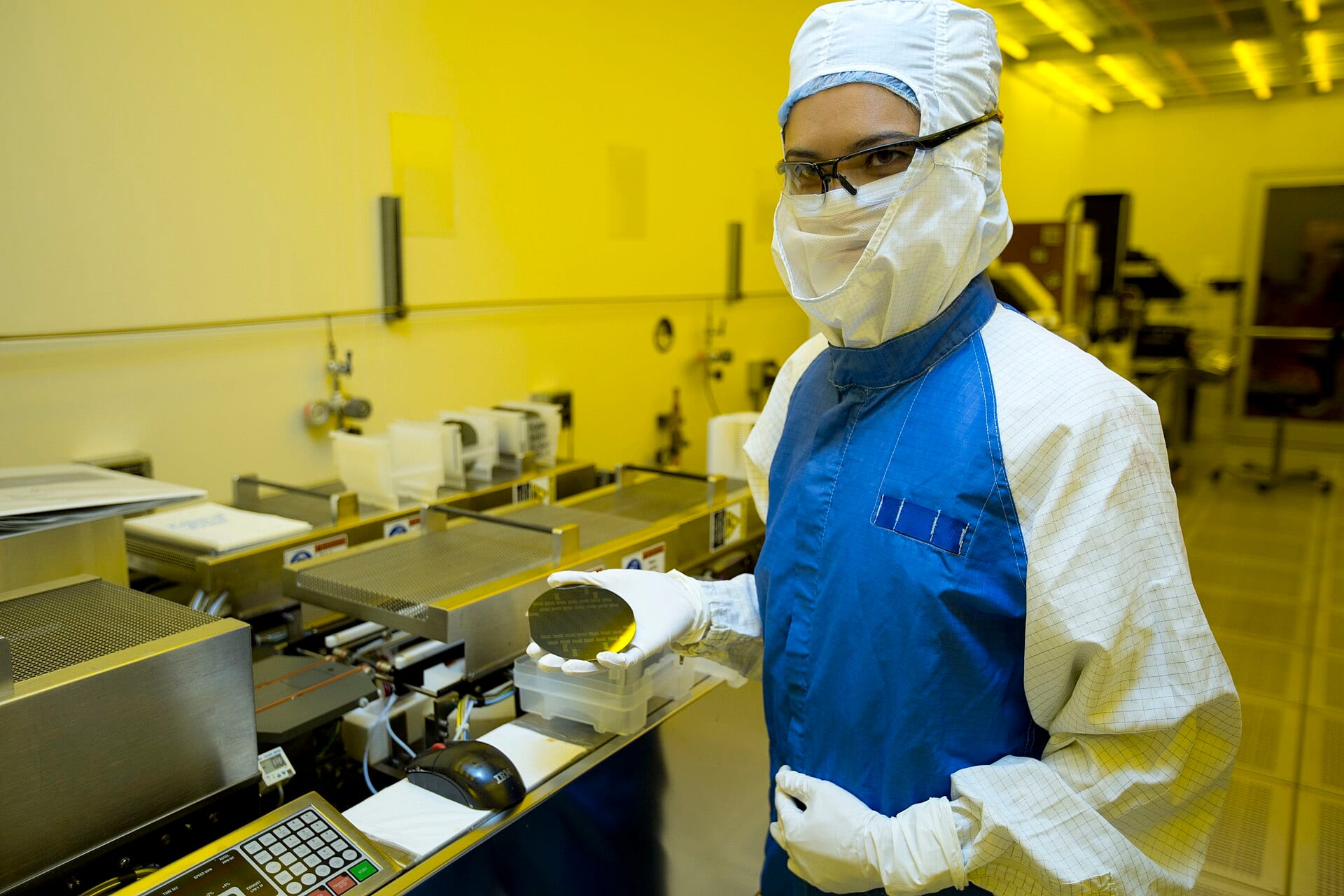
Culper Research, which disclosed a short position on October 28, argues the wafers "break down after just ~2 years in use." 3 The sharper point comes from Cerebras's own filings: draft IPO documents through December 2025 gave the systems useful lives of 1.5 to 3 years 7. Four months later the range had become 3 to 5, with no explanation, and longer lives mean lower depreciation and fatter margins. 7
Cerebras doubled the useful life it gives its wafers, with no explanation
- From
- To
Data
| From | To | Change | |
|---|---|---|---|
| Draft IPO documents, Dec 2025 | 1.5 yrs | 3.0 yrs | +100.0% |
| Filings, April 2026 | 3.0 yrs | 5.0 yrs | +66.7% |
Three law firms, including Block & Leviton and Levi & Korsinsky, have since opened investigations citing the short seller's allegations. 46 Cerebras has not answered the claim publicly. 3
The money question is the premium against the clock. A token that pays three to five times only pays if the machine that makes it runs long enough to collect. If wafers really fade in two years, customers replace hardware sooner, each year of compute costs more, and the core gross margin Cerebras guided to 38 to 40 percent for this quarter has to be rebuilt around shorter lives. 27
Cerebras reported gross margin has swung 30 points in four quarters
Data
| Gross margin | |
|---|---|
| Q1 '25 | 41.8% |
| Q2 '25 | 31.1% |
| Q1 '26 | 44.6% |
| Q2 '26 | 14.2% |
What November 12 has to settle
The shares closed at $97.82 on November 3, 75 percent below their May high 35. At that price they trade on 16 times forward sales, the lowest since listing, with the last tranches of lockup stock, shares from the IPO that become free to sell, opening November 9 and 10 and the report landing November 12 after the close. 35
Three things matter in that print: whether management answers the useful-life change with field data rather than adjectives, whether core gross margin holds the guided range, and whether early Oracle demand shows in bookings. 23
The capability is now proven where it counts, in a customer's cost calculation rather than a demo. The open link is economics: whether the premium outlasts the hardware that produces it. Fast tokens are a real market, priced by the people buying them. Whoever proves durable wafer-scale capacity owns the top of the inference price list, and November 12 is the first hard evidence of whether that is Cerebras.
Get Chips by email, free
How AI demand is reshaping chipmakers, memory and the fabs behind them. In our daily email, every weekday.

More about NVIDIA
NVDA · Fiscal Q2 2027Revenue rose 106% to $96.2B, 92.5% of it from Data Center, “driven by the ramp of our Blackwell Ultra infrastructure”. Gains on equity stakes of $7.8B lifted net income to $59.7B.
Show as a table
| Line | Value |
|---|---|
| Revenue | $96.2B |
| Gross margin | 75.0% |
| Operating margin | 66.2% |
| Net income | $59.7B |
| Hyperscale | $48.7B |
| AI clouds & enterprise | $40.3B |
| Data Center | $89.0B |
| Edge Computing | $7.2B |
| Gross profit | $72.1B |
| Cost of revenue | $24.1B |
| Other income | $7.8B |
| Operating income | $63.7B |
| Operating expenses | $8.4B |
| Tax | $11.8B |
| R&D | $7.1B |
| SG&A | $1.4B |