Entergy's gas plant for Meta hits $1.755 billion, 63% over estimate
A redacted Louisiana filing puts the first hard number on construction inflation in power built for a single AI customer, weeks before regulators vote on seven more Entergy plants under a fast-track that waives lowest-cost rules. December decides whether the bill lands on Meta, on Louisiana ratepayers, or on the growth story behind Entergy's premium multiple.
 Richard Tangthree-minute read

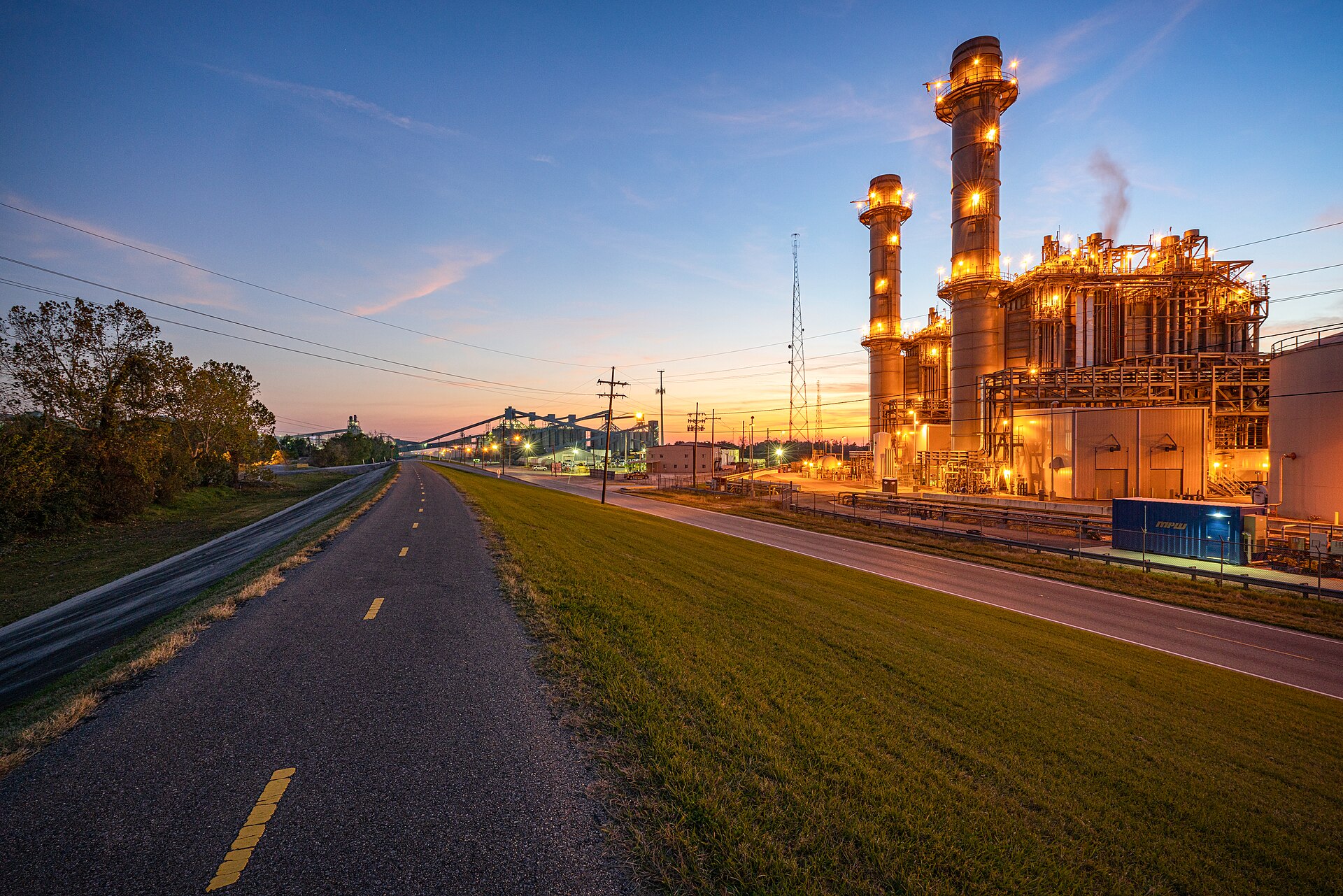
Waterford 5, one of three gas plants Entergy−1.70% — Entergy, down 1.70 percent today Louisiana is building to serve a single customer, Meta's−4.82% — Meta, down 4.82 percent today Hyperion data center in Richland Parish, is now projected at $1.755 billion, according to the quarterly report the utility filed this month with state regulators at the Louisiana Public Service Commission 1. That is 63% above the original estimate, and the public version of the filing redacts the spending detail behind the increase 1.
The AI demand behind the plant is not the risk; who pays when construction outruns an estimate is, and in December Entergy asks the state to repeat this structure seven more times 2.
Soft ground and higher labor, on the record since May
The cause is on the record in an earlier filing: soil that forces the site to be built up several feet on 120-foot piles, plus higher labor and equipment costs; the same dollar figure has stood in Entergy's reports since May 2. The pattern runs wider. The full Laidley build for Meta now costs more than Entergy originally filed, even with two components under budget 1, and Waterford 6, a separate plant approved in 2025, is already nearly $500 million over its projection, according to Environmental Defense Fund intervenors 1.
Waterford 5 is 63% over its filed cost; the wider Meta build climbed too
- As filed
- Nov. 2026 forecast
Data
| As filed | Nov. 2026 forecast | Change | |
|---|---|---|---|
| Waterford 5 (gas plant) | $1.079B | $1.755B | +62.7% |
| Laidley Project (total) | $3.956B | $4.363B | +10.3% |
Meta pays for 15 years; the plants run for decades
Entergy told Meta of the increase in January and was told to keep building; Meta pays more during its 15-year contract, and gas plants outlive contracts 1. The commission declined to cap construction costs, and denial in the prudence reviews after construction is, in consumer advocate Logan Burke's words, wildly unusual 1.
Testifying under oath in October, Entergy executive Ryan Jones put the residual risk on the record: if the plants still provide value after Meta's term, the company would expect to recover what remains from its other customers 6. Ratepayers already carry at least $470 million of the project's transmission under the application 1.
Investors are banking the same demand
Third-quarter adjusted earnings of $1.98 a share beat estimates, and management raised the floor of its 2026 guidance 34. Entergy added $1.5 billion of capital investment through 2030 5 and told investors that standardized plant designs cut engineering time roughly in half, blunting labor-cost exposure 5. Waterford 5 shows where that blunting ends: a standard design does not move soft ground 4. The stock trades near 25 times trailing earnings 4.
December decides who owns the overrun
On December 10 the commission takes up Project Evest: seven more gas plants, more than $14 billion of build, for Meta, under the Lightning Directive, a fast-track that waives the rule pushing utilities toward the lowest-cost option 78. Three groups sued on November 9 to void the directive, arguing the commission changed its rules without public notice 8.
December's vote covers seven plants, at about eight times Waterford 5's cost
Data
| Value | |
|---|---|
| Waterford 5 | $1.755B |
| Laidley Project | $4.3625B |
| Project Evest (7 plants) | more than $14B |
Approval at these costs keeps the growth plan intact and embeds the prudency risk; friction that slows the fast-track hits the capex behind the valuation. The buildout should happen, and the risk belongs with the parties who signed for the megawatts, not with ratepayers who never got a vote. The bottleneck in AI power is no longer megawatts; it is the fine print that decides who pays when the ground is softer than the estimate.
Get Power by email, free
How AI's hunger for electricity moves utilities, power plants and the grid. In our daily email, every weekday.



Reader comments
0 comments