FirstEnergy lifts capital plan to $38 billion after West Virginia approves gas plant
The approval came with a surcharge that bills West Virginia ratepayers while the plant is built, and FirstEnergy answered by lifting its five-year plan to $38 billion, its growth target to 7% to 9%, and its equity ask to $2.8 billion. No large-load customer is named in the filing.
 Richard Tangthree-minute read
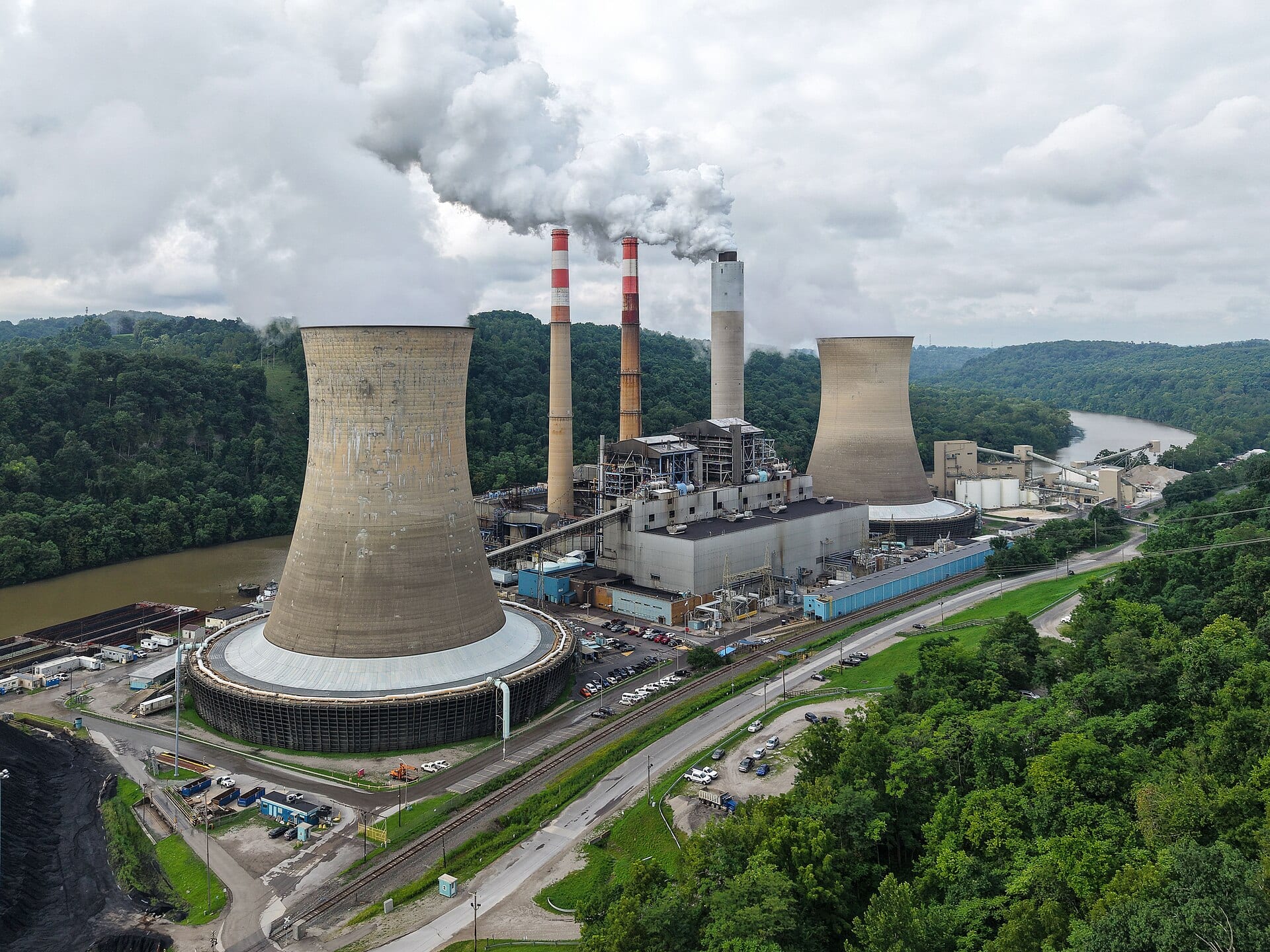
FirstEnergy's−0.21% — FirstEnergy, down 0.21 percent today filing this morning answers who pays when AI needs a power plant: shareholders first, West Virginia ratepayers second. A Form 8-K dated November 20 raises the utility's five-year capital plan from $36 billion to $38 billion, after state regulators approved its 1,200-megawatt Maidsville Energy Center gas plant beside the Fort Martin coal station near Morgantown 1. The same document lifts FirstEnergy's core earnings growth target for 2026-2030 to 7% to 9%, aiming at the upper half, up from 6% to 8% 12.
Shareholders' part of the bill is explicit: the equity FirstEnergy expects to issue through 2030 rises from $2.0 billion to $2.8 billion 1. About 35% of the plant itself will be funded with equity or equity-like securities 1. Ratepayers' part starts sooner, under a new generation surcharge the order created to recover financing costs during construction, an initial $1.18 a month on a residential bill 13.
Capex has topped operating cash in nine of the last ten quarters
- Capital spending
- Operating cash flow
Data
| Capital spending | Operating cash flow | |
|---|---|---|
| Q2 '24 | $0.94B | $1.11B |
| Q3 '24 | $1B | $0.78B |
| Q4 '24 | $1.29B | $1.04B |
| Q1 '25 | $1.01B | $0.64B |
| Q2 '25 | $1.23B | $1.08B |
| Q3 '25 | $1.31B | $0.85B |
| Q4 '25 | $1.17B | $1.14B |
| Q1 '26 | $1.26B | $0.15B |
| Q2 '26 | $1.35B | $0.99B |
| Q3 '26 | $1.59B | $0.92B |
The surcharge is what turned a plant into a growth story
The certificate was the expected part; the surcharge is the mechanism. It lets Mon Power and Potomac Edison collect the cost of financing the $2.48 billion plant in cash while it is being built, rather than after it enters service at the end of 2031 14. Rate base compounds during construction, site work starts in the first quarter of next year, and FirstEnergy is asking the Department of Energy for a low-cost loan to soften the bill 1. This is the company's first new plant since 1972, proposed in February against a projected capacity shortage that begins in 2029 4.
Maidsville added $2 billion of capex and $800 million of equity
- February 2026 plan
- Plan after Maidsville
Data
| February 2026 plan | Plan after Maidsville | |
|---|---|---|
| Capital plan, 2026-2030 | $36B | $38B |
| Equity and equity-like needs | $2B | $2.8B |
The bill lands on people who did not ask for the plant
The plant is sized to power roughly half a million homes 6. Mon Power serves about 395,000 customers 6. Emmett Pepper of Energy Efficient West Virginia says no cost belongs on residential bills for a plant built for data centers, and United Mine Workers president Brian Sanson calls the approval a blank check drawn on working families so out-of-state billionaires can power their data centers 5. FirstEnergy's West Virginia president Chris Beam says the power will be sold to the utilities' own customers, with turbines already secured under a reservation agreement that locked delivery dates 5.
The only missing signature is the customer's
No large-load customer appears anywhere in the filing, and the November 17 order has not changed what we noted on November 2, when the turbines were reserved and the buyer was not 1. The order does allow contracts with new large loads structured so other customers do not subsidize them, and FirstEnergy has issued a request for proposals for another 3 gigawatts of gas, with an update due early next year 1.
The state has signed its half of this contract. The customer has not signed the other half. Building the plant is right: AI's demand for electricity is real, and the shortage on the other side of 2029 is a grid study, not a lobbying slide 4.
But a growth target resting on a surcharge and a turbine reservation, with no named buyer, puts risk in the wrong hands: ratepayers carry the surcharge, shareholders carry the dilution, and the load that justifies both has committed to nothing. Whoever turns this capacity into a signed contract is creating the value, and that signature, promised as an early-2027 update, is the thing to watch 1.
Get Power by email, free
How AI's hunger for electricity moves utilities, power plants and the grid. In our daily email, every weekday.




Reader comments
0 comments