Google offers to pay American Electric Power $10.8 million to speed power to its Columbus data center
The first voluntary, corporate-funded transmission upgrade on a US regulated grid now sits before Ohio regulators. How they rule decides whether hyperscalers can buy speed on the grid, and whose bills fund the rest of AEP's $100 billion buildout.
 Richard Tangthree-minute read
Drafted with AI from the documents listed under Sources, then edited and fact-checked by Richard Tang. How we work
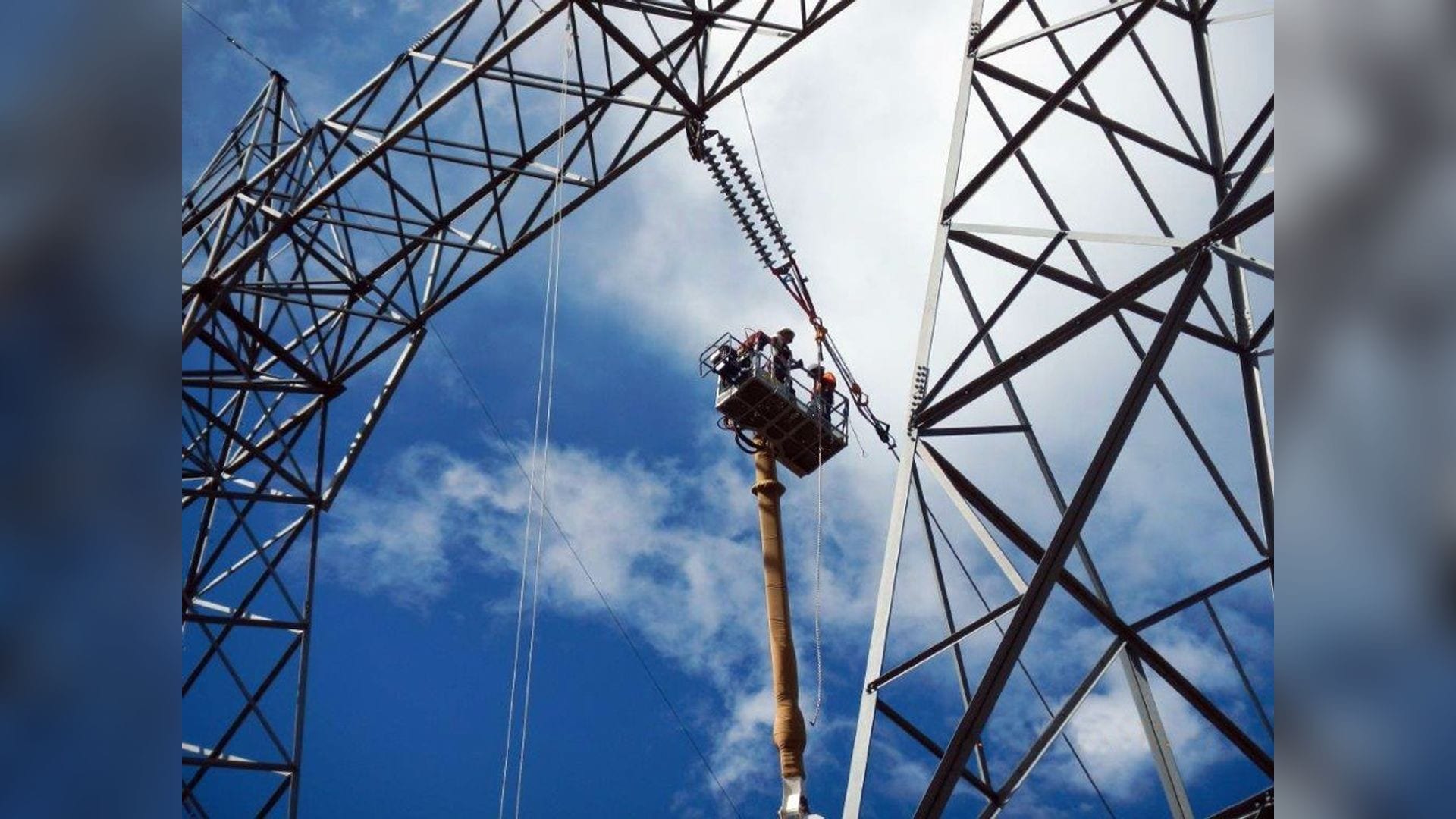
Google has offered to pay the entire $10.8 million cost of upgrading 15.5 miles of American Electric Power's+0.42% — American Electric Power, up 0.42 percent today Columbus transmission lines, in a joint filing with AEP's Ohio Power unit at the Public Utilities Commission of Ohio on November 19 1. By the companies' own description, it is the first voluntary, corporate-funded transmission upgrade of its kind on a US regulated grid 1. The deal is simple: Google's−2.28% — Google, down 2.28 percent today affiliate, Cardinal Power, pays to replace 50-year-old wires with advanced conductors on lines AEP already planned to rebuild, and 24 megawatts Google has already contracted for arrive about two years early 12.
New wire on old towers buys two years of speed
Advanced conductors carry more electricity through towers and rights of way that already exist, so no new corridor is needed 1. Once the planned 765-kilovolt buildout in Central Ohio is complete, the upgraded lines are expected to carry more than 700 megawatts of additional capacity on that corridor 1. Google also put $1 million into lineman training and conductor manufacturing apprenticeships, because reconductoring at this pace needs trained crews and domestic supply as much as it needs the wire itself 1.
In Ohio the customer, not a county board, offers to pay
Six days ago we reported that an Indiana county board had asked AEP to suspend a 75-mile transmission line behind its capital plan 6. What is new since November 19 is that in Ohio the customer, not a county board, is the one offering to pay for its own corridor 14. The companies pitch the deal as proof that growing demand can lower costs for existing customers, who are expected to see slightly reduced transmission charges and less energy lost on the lines 14. The Columbus Dispatch framed it the same way, as public pressure builds over who pays for data-center growth 4.
The stakes reach past one corridor: AEP's buildout is recovered from customers' bills, and the company says fully executed take-or-pay contracts with new large customers should generate up to $21 billion in fixed-cost offsets for existing residential customers over the life of those contracts, a figure it raised from $16 billion in October 3.
AEP's capex has nearly tripled; operating cash has not kept pace
- Capex
- Operating cash flow
Data
| Capex | Operating cash flow | |
|---|---|---|
| Q4 '23 | $1.61B | $1.34B |
| Q1 '24 | $1.76B | $1.44B |
| Q2 '24 | $1.56B | $1.46B |
| Q3 '24 | $1.85B | $2.17B |
| Q4 '24 | $2.86B | $1.73B |
| Q1 '25 | $2.1B | $1.45B |
| Q2 '25 | $3.28B | $1.22B |
| Q3 '25 | $2.28B | $2.46B |
| Q4 '25 | $4.25B | $1.81B |
| Q1 '26 | $3.8B | $1.52B |
| Q2 '26 | $3.13B | $1.9B |
| Q3 '26 | $4.58B | $2.35B |
The $10.8 million matters less than the template
AEP expects to invest $78 billion from 2026 through 2030 and has expanded its 2027-2031 capital plan to $100 billion, about $37 billion of it in transmission, supporting 13%-plus rate base growth and 9% to 11% annual operating earnings growth through 2031 13. Contracted load it expects to reach 84 gigawatts backs those plans 3. Chief executive Bill Fehrman has said new large-load customers should bear the incremental system costs they create 3.
Transmission is the biggest slice of AEP's $100 billion plan
Data
| Value | |
|---|---|
| Transmission | $37B |
| Generation | $36B |
| Distribution | $22B |
Two Ohio dockets decide whether the model repeats
The Ohio filing is the first test of that promise in transmission: if PUCO and the Ohio Power Siting Board approve it, with service targeted for late 2028, AEP can energize contracted load faster than its capital plan alone allows, and the who-pays fight moves from county boardrooms to dockets where terms are written down 12. If they read it instead as a precedent for shifting grid costs onto a few counterparties, the model stops here and the growth math reverts to the old funding route 5.
For AEP shareholders, the $10.8 million is immaterial; what matters is whether this structure repeats in AEP's next large-load agreements 12. The concrete watch items are the PUCO and Ohio Power Siting Board decisions, expected before the planned late-2028 in-service date, and whether the next batch of AEP contracts includes customer-funded transmission upgrades of this kind 12.
Sources
- 1Google Cloud Press Corner, "Google and Ohio Power Company Announce New Initiative to Unlock New Capacity with Advanced Transmission Technology", 19 November 2026
- 2Daily Energy Insider, Kim Riley, "Ohio Power, Google affiliate propose partnership to meet growing energy needs", 24 November 2026
- 3American Electric Power, "AEP Reports Third-Quarter 2026 Earnings, Expands Capital Plan and Increases Growth Outlook", 28 October 2026
- 4The Columbus Dispatch (via MSN), "Central Ohio's power grid could get an upgrade courtesy of Google", 19 November 2026
- 5Data Center Frontier, David Chernicoff, "The Real Economics of AI Infrastructure: Power, Cooling and the Price of Growth", 24 November 2026
- 6The Inference, "An Indiana county asks American Electric Power to suspend a 75-mile line behind its $100 billion plan", 21 November 2026
- 7American Electric Power, quarterly figures from its SEC filings, retrieved 25 November 2026
Get Power by email, free
How AI's hunger for electricity moves utilities, power plants and the grid. In our daily email, every weekday.




Reader comments
0 comments