IBM paid $11 billion for Confluent, then joined Nvidia's free Agent Knowledge Foundation
Seven months after IBM closed its $11 billion Confluent purchase, the Q3 call promoted LLMD, a free context-reuse project built with Red Hat and Google, and NVIDIA's open Agent Knowledge Foundation named IBM an adopter. The seller of the context layer is now helping build the free one.
 Vincent Jiang · 3 min read
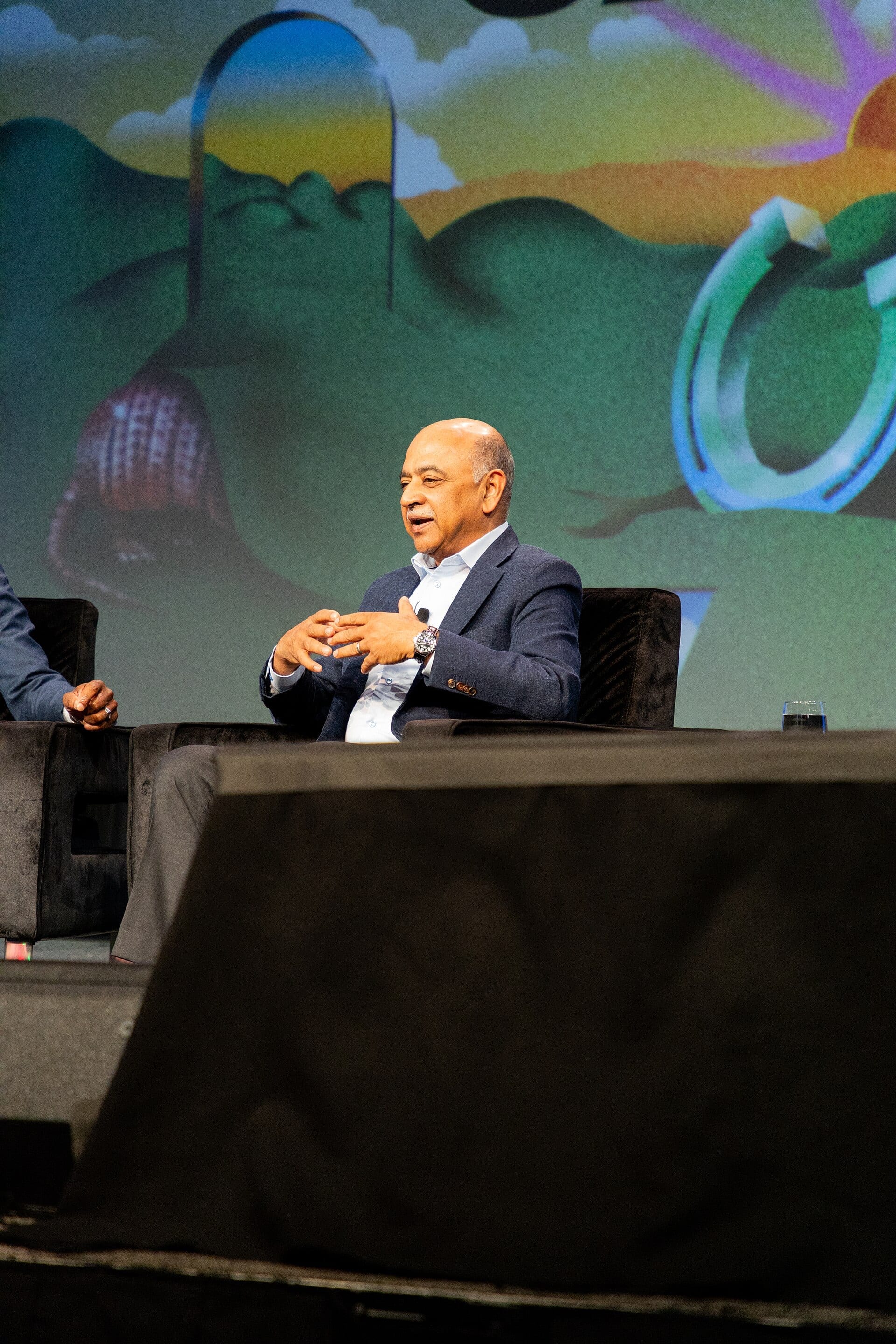
Seven months after IBM+0.28% — IBM, up 0.28 percent today closed its $11 billion purchase of Confluent on March 17, the free version of what it bought surfaced, and IBM is on both sides of it 2. On Wednesday's third-quarter call, chief executive Arvind Krishna promoted LLMD, an open-source project IBM builds with Red Hat and Google, as a way to run large models five to ten times cheaper by reusing processed context on GPUs customers already own 2.
The same week, NVIDIA−0.19% — NVIDIA, down 0.19 percent today widened its free Agent Toolkit into an Agent Knowledge Foundation and named IBM among the companies building on it 3.
What $11 billion bought, and what the free layer replaces
Confluent moves data between a company's systems as events happen, on Apache Kafka, so an AI agent sees the current state of the business rather than a stale snapshot. Its Streamhouse product, launched after the deal, continuously captures and queries that real-time data 2.
Krishna told analysts 72 percent of organizations report inadequate real-time data infrastructure 2. NVIDIA's free stack answers the same need differently: Auto-Ontology turns raw company data into business concepts agents can reason over, Nemotron Retriever models fetch it, and the OpenShell runtime polices what agents may do, without moving data or changing governance controls 3.
The bundle also carries the Kumo family of open prediction models and NemoClaw blueprints, reference designs for specialized agents 3. LLMD attacks the cost side, cutting how often processed context must be recomputed 2. Whether either would displace a Streamhouse deployment is untested; neither claims to.
The receipts on the paid layer
We set out the split last week: software revenue of $7.80 billion, up from $7.21 billion, with about half the growth matching what Confluent sold on its own, and no published Confluent revenue line to separate the halves 1. What is new is the direction of the alternatives.
Databricks$201.64B — Databricks, private, latest valuation $201.64B took AI Runtime to general availability on October 21 with serverless NVIDIA GPUs inside its governed Lakehouse 56. Its Agent Memory, in beta, gives agents persistent memory on Databricks' Lakebase database so they stop rediscovering facts and repeating mistakes; in company-reported, unverified testing it cut token use by about a third and tripled completed enterprise tasks 56.
Who carries the risk
NVIDIA sells the GPUs and runtime under every version of the layer, IBM's, Databricks' and the free one 35. The exposure sits with IBM shareholders, whose bought half of software growth expires in the second quarter of 2027, when acquired Confluent sales stop counting as growth 1, and with buyers of Databricks paper, marked at $190 billion in August against PitchBook's estimated $68.7 billion operating value 7.
The counterpoint: free tools still need someone to run them, and Krishna argues the modernization cycle is just beginning 2. Open-source adoption typically turns on adequate capability at zero license cost, so a buyer weighing a Confluent license against a free stack faces a concrete question: is good enough enough. The second-quarter 2027 results will show what IBM actually built 1.
IBM software growth stumbled to 5% in spring, rebounded to 8%
Data
| Software revenue growth, year over year | |
|---|---|
| Q3 2025 | 10% |
| Q4 2025 | 14% |
| Q1 2026 | 11% |
| Q2 2026 | 5% |
| Q3 2026 | 8% |
What happens next
IBMHow much of software growth was Confluent, and how much IBM's own?
The case for
LLMD's 5-10x context-reuse savings could pull IBM deeper into agent infrastructure on GPUs customers already own
The case against
Half of software growth is Confluent's, and it stops counting in Q2 2027
- January 2027IBM's fourth-quarter results.
Get our follow-up when these land
Free. We'll email you when we publish on IBM, and send our free weekday newsletter. Unfollow in one click.