Lantronix says 98% of its supply chain is out of China as the Pentagon plans 340,000 drones for $1 billion
The Pentagon's $1 billion, 340,000-drone buying spree meets Beijing's new case-by-case export reviews just as one small-cap compute supplier, Lantronix, claims its supply chain is 98% outside China. Whose money moves: LTRX shareholders betting a vetted module converts into drone orders.
 Vincent Jiangtwo-minute read
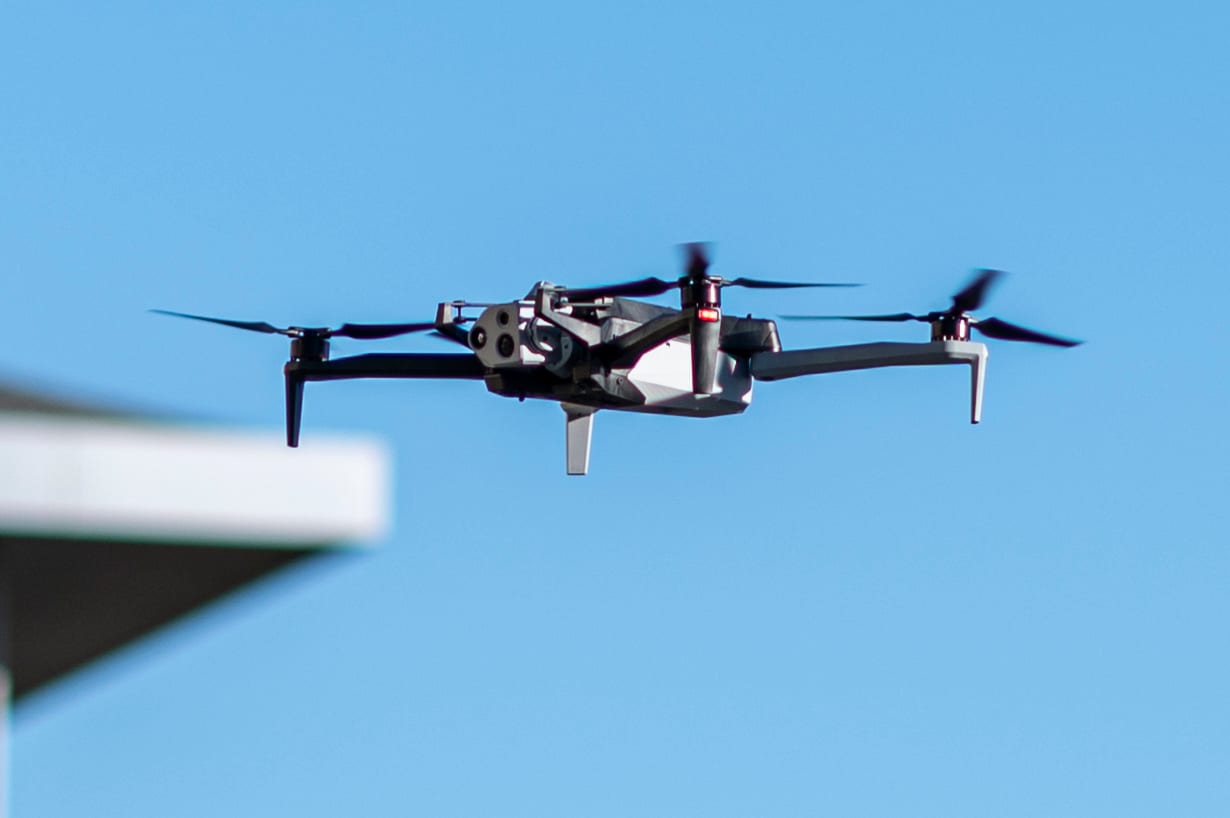
The Pentagon has ordered the first 30,000 of roughly 340,000 small attack drones it plans to buy for $1 billion over two years, a program the Army calls Drone Dominance 1. China just made the parts harder to get. Announcement No. 34, effective August 5, subjects U.S.-bound drones, key components and related technology to case-by-case review with no simplified licensing 1.
The $1 billion Drone Dominance buy is dwarfed by the wider autonomy money
Data
| Value | |
|---|---|
| Reconciliation ask | $50B |
| FY27 unmanned procurement | $16.9B |
| Drone Dominance program | $1B |
The module inside the airframe
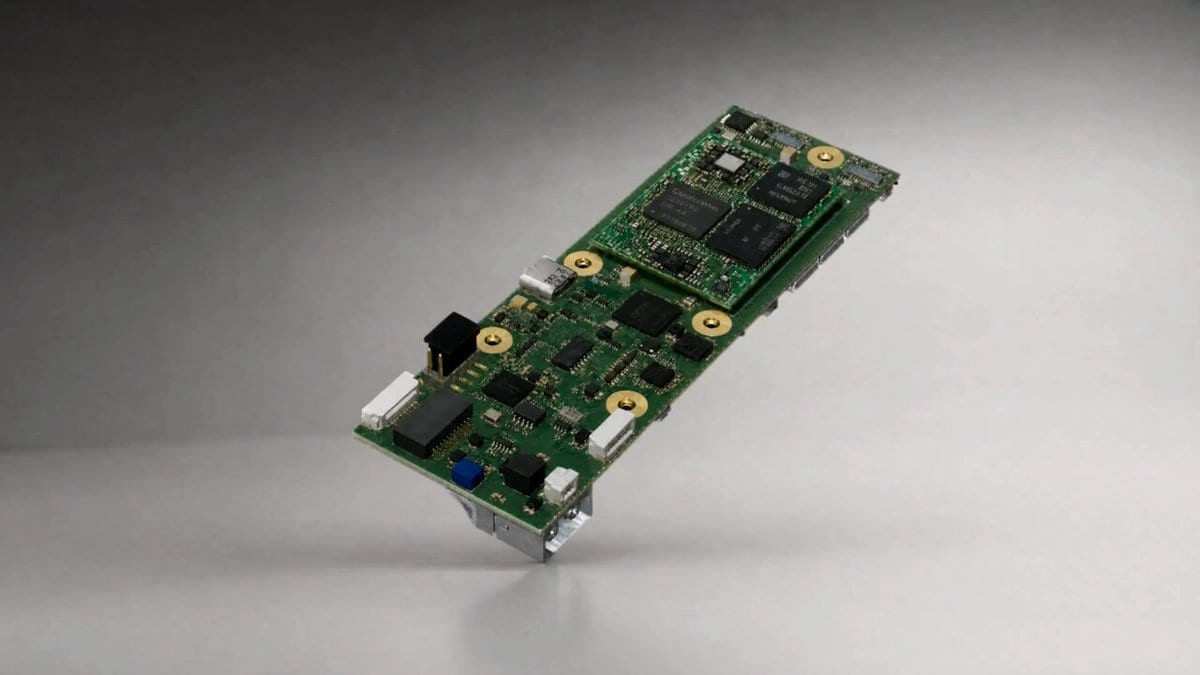
A drone that must spot a mine or navigate without GPS has to decide in flight, not after a data link round trip. "If I'm taking a second to decide, it's too long," Saleel Awsare, chief executive of Lantronix−0.25% — Lantronix, down 0.25 percent today, told Military.com 1. His Irvine company sells compact compute modules that run imagery and navigation software aboard the aircraft, and its Open-Q 8550CS module joined the Pentagon's Blue UAS vetted-component list on October 1 1.
98% out of China, with an asterisk
U.S. law already bars Pentagon purchases of Chinese-made flight controllers, radios, cameras and gimbals 1. Awsare says Lantronix has moved 98% of its supply chain outside China, to Taiwan, Thailand and Vietnam, with printed circuit boards the hardest part to relocate 1. The claim is a company statement, not an audited count, and the PCB admission undercuts the headline number: the scarce component is the one still tangled in the ecosystem Beijing controls.
A vetted module is not yet an order
The commercial leg is real but small. Fiscal first-quarter revenue rose 8% to $32.4 million, embedded IoT revenue jumped 37% on unmanned-systems demand, gross margin hit 45.3% non-GAAP, and unmanned systems are guided to 15% to 20% of fiscal 2027 revenue 4. The stock hit a 52-week low on November 14 despite beating estimates, which is where the tension lives: a vetted module does not convert into orders by itself, and the Army treats these drones as wear items, buying replacements rather than sustaining them, with circuit cards and radios swapped out as countermeasures arrive 3.
Revenue has grown for four straight quarters and is still 34% below its 2024 peak
Data
| Revenue | |
|---|---|
| Q2 '24 | $49.08M |
| Q3 '24 | $34.42M |
| Q4 '24 | $31.16M |
| Q1 '25 | $28.5M |
| Q2 '25 | $28.84M |
| Q3 '25 | $29.79M |
| Q4 '25 | $29.77M |
| Q1 '26 | $30.18M |
| Q2 '26 | $31.15M |
| Q3 '26 | $32.37M |
Lantronix is already working with one deep-strike and two close-quarters competitors in the Drone Dominance Gauntlet 2 contest, and the module is too new for the company to quantify its effect on design timelines 4. Watch whether a Gauntlet 2 competitor names the Open-Q 8550CS in a design award 4. That conversion, from vetted component to named airframe, is what turns the 98% claim 1 into revenue.
Get Robotics & Defense by email, free
Robots, self-driving vehicles, drones and AI in defense. In our daily email, every weekday.


Reader comments
0 comments