Turkey's ASELSAN says one button-press killed 51 drones, passing Epirus's US microwave record of 49
ASELSAN says one button-press microwave burst killed 51 drones and that the weapon is in serial production, passing Epirus's Leonidas at 49. The claim lands two weeks before a Pentagon shoot-off that can end in purchase orders, and no microwave made the invite list.
 Vincent Jiangthree-minute read

Fifty-one drones, one command, zero ammunition
On November 15 at ASELSAN's Gölbek Firing and Test Center near Ankara, 51 drones launched together and dropped within seconds of a single command 1. No missile, no round 1. The count was the point: the demonstration marked the Turkish defense electronics maker's 51st anniversary 2.
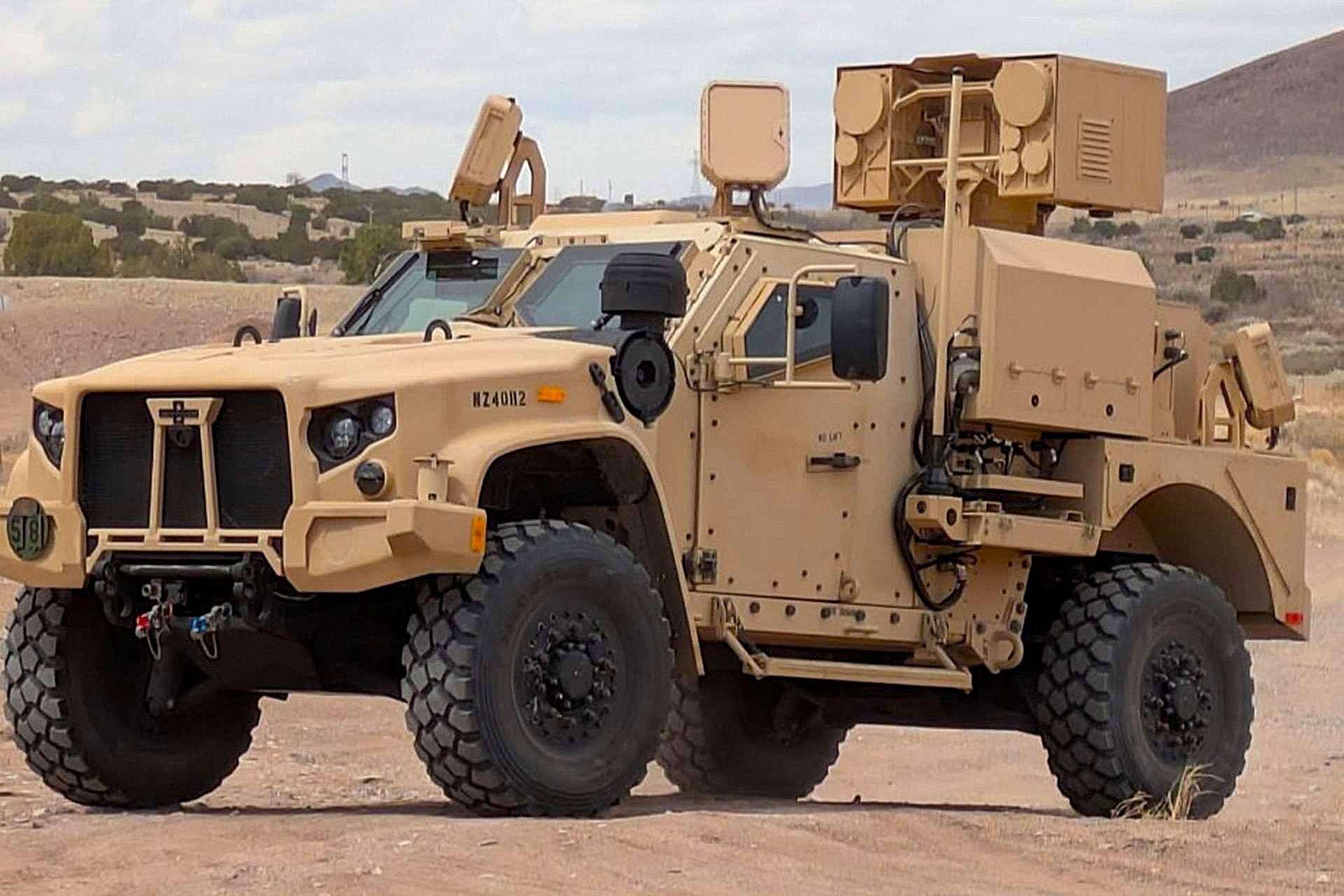
Chief Executive Ahmet Akyol called EJDERHA AD "the world's first system to successfully neutralize 51 drones with a single push of a button," and said it has "reached operational deployment, entered serial production" 1. The system also downed two cable-controlled drones at roughly 1,000 meters, a target class radio jammers struggle to touch because the control link runs through a wire 13. ASELSAN never disclosed the swarm's engagement distance 12.
Two drones more than the American record
The number to beat was American. Epirus$1.09B — Epirus, private, latest valuation $1.09B reported that Leonidas, its high-power microwave, killed 49 drones in a single burst at Camp Atterbury in September 2025, part of a 61-of-61 sweep across five scenarios 5. ASELSAN's claim clears it by two. Defense Express calls the record a marketing move: a wide-beam microwave fries everything unprotected in its cone, so swarm size says little 4.
The same analysis flags the real difference. EJDERHA's single dish is simpler and cheaper to build. Leonidas's phased array steers an independent beam per target and spares friendly drones, at the cost of price and production speed 4.
The record now sits outside the buying window
The Pentagon, the buyer with the deepest pockets, is spending this window on the other weapon class. Seven laser teams go to a mid-December live-fire shoot-off at Dugway Proving Ground, structured so strong performers "immediately result in a purchase order," with "low cost per shot" the stated criterion 67. No microwave made the invite list.
The money tracks. In September the Army gave AeroVironment−2.72% — AeroVironment, down 2.72 percent today $464.8 million to produce its LOCUST X3 laser, the first US directed-energy production contract 5. Epirus's Army microwave work remains prototype-scale: $66.1 million for four systems in December 2022, then $43.5 million in July 2025 5. The Marine Corps added an $11 million contract in August for a production-ready HAVOC due early next year 8.
| Pentagon directed energy counter-drone program | Count | When |
|---|---|---|
| Technical white papers reviewed for Phase II | 13 | November 2026 |
| Laser teams invited to the Dugway shoot-off | 7 | November 2026 |
| Sites selected for the homeland counter-drone pilot | 5 | May 2026 |
Laser money reached production scale, microwave money is still prototypes
The laser production award is four times Epirus's largest Army deal
Data
| Value | |
|---|---|
| AVAV LOCUST X3 laser, Sept 2026 | $464.8M |
| Epirus Leonidas Army, Dec 2022 | $66.1M |
| Epirus Leonidas Army, July 2025 | $43.5M |
| Epirus HAVOC Marine, Aug 2026 | $11M |
Buyers ask what a shot costs, not how many drones fell
Brig. Gen. Matthew Ross, who runs the task force, is skeptical of the metric buyers are handed: "If I procure that system and it costs me $6 million and I take one shot a year, you can't tell me that that shot only costs 8 cents" 5. The market is not waiting either. NATO allies pledged more than $40 billion for counter-drone capability over five years, and EJDERHA was not among the first 16 solutions in NATO's November marketplace 3.
Watch Dugway in mid-December, and whether a microwave gets its own purchase-order window. Listed exposure runs through AeroVironment, Lockheed Martin−1.82% — Lockheed Martin, down 1.82 percent today, IPG Photonics, Boeing−0.59% — Boeing, down 0.59 percent today and Borsa Istanbul's ASELSAN; Epirus is private. The swarm record now belongs to a weapon class the December buying window did not invite.
Get Robotics & Defense by email, free
Robots, self-driving vehicles, drones and AI in defense. In our daily email, every weekday.
Reader comments
0 comments