Lenovo lifts the Legion Go 2 to $3,082, more than double its launch price
The 2TB model's second increase in six months takes it past $3,000 for the first time, in the week Taiwan's Nanya posted the most profitable quarter in its history. Gartner sees memory prices up 130% by year-end and PC shipments down 10.4%.
 Vincent Jiang · 2 min read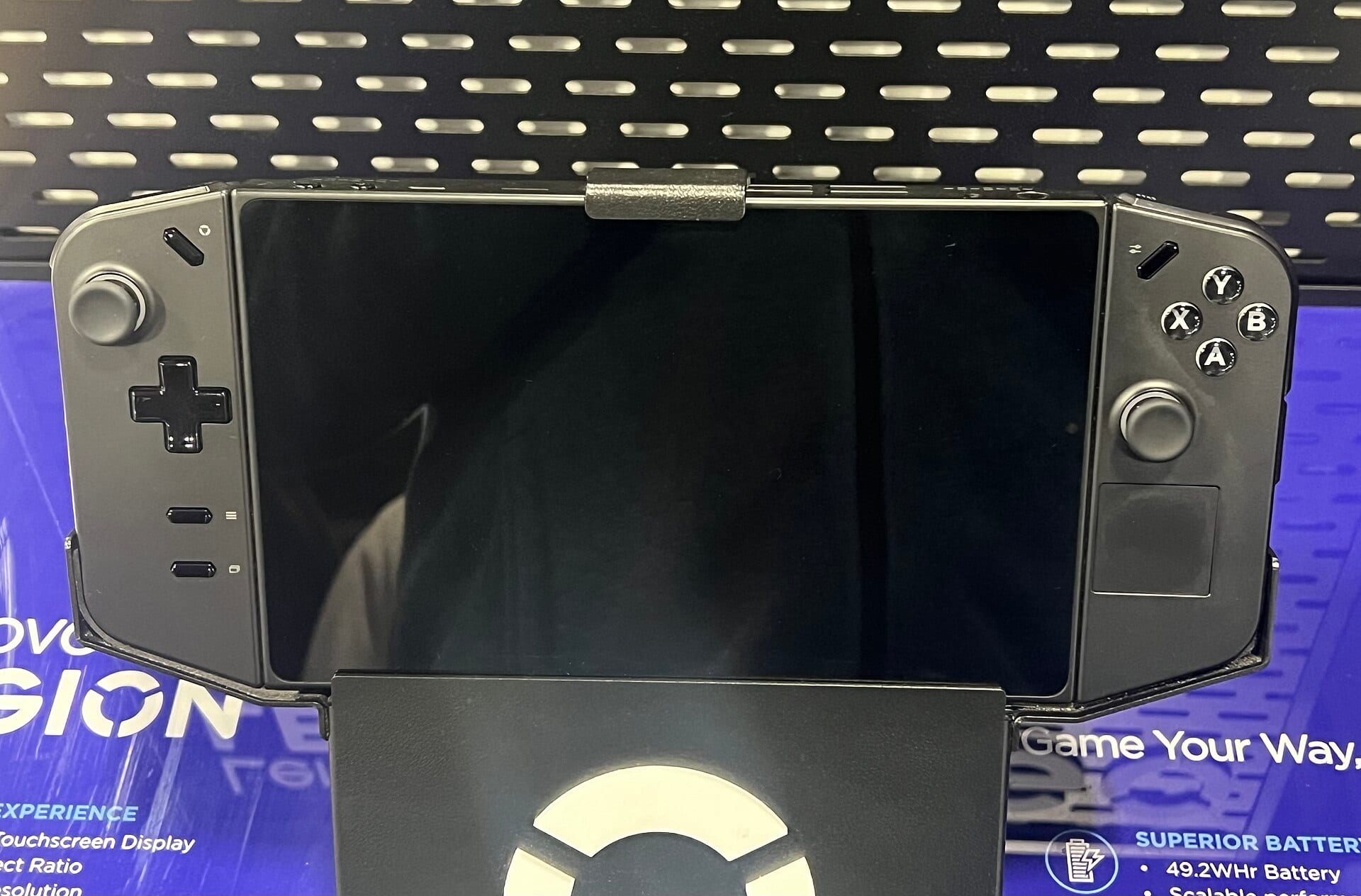
A handheld crosses $3,000
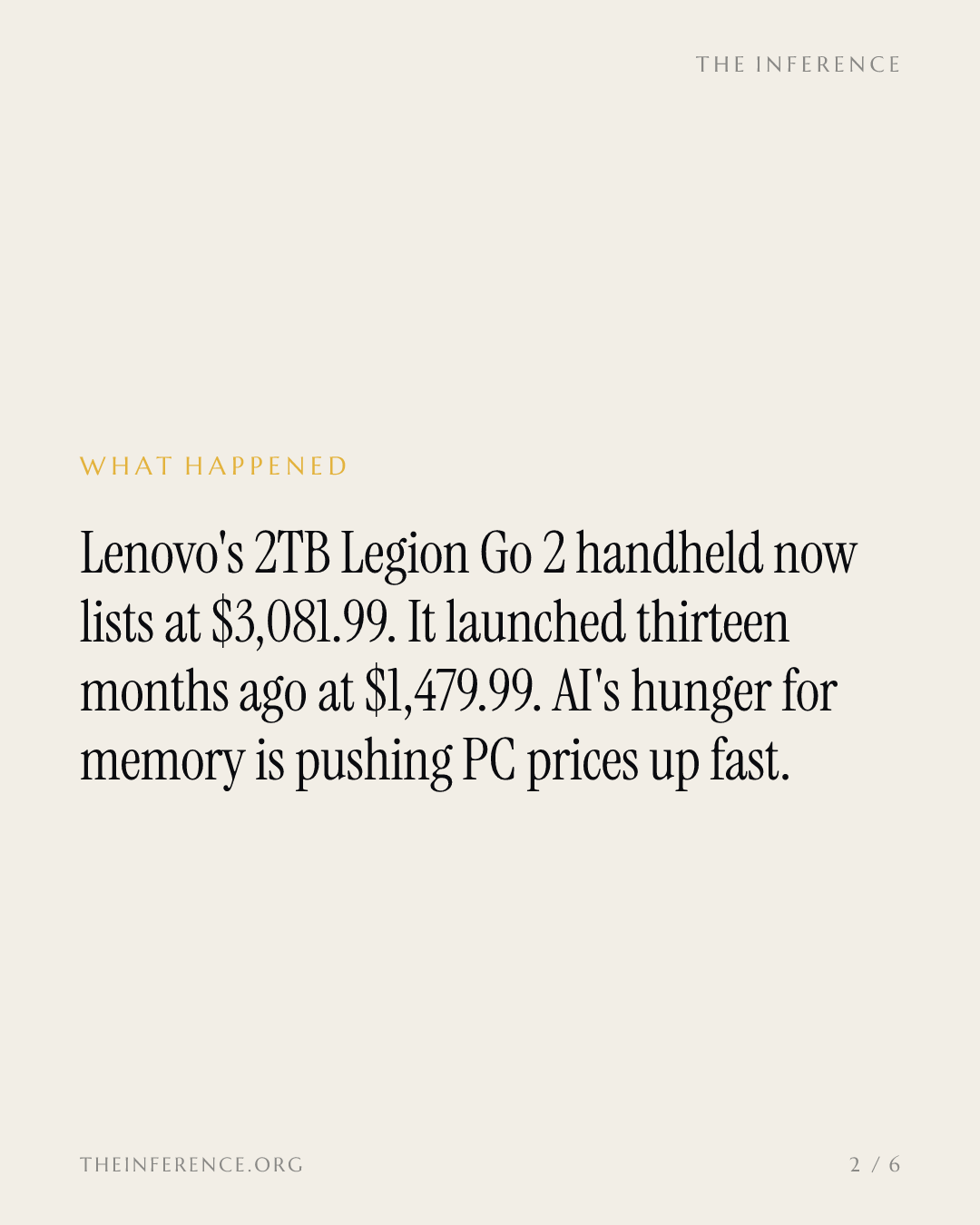
Lenovo's−3.83% — Lenovo, down 3.83 percent today US store this week lists the 2TB Legion Go 2, a Windows gaming handheld built on AMD's+2.43% — AMD, up 2.43 percent today Ryzen Z2 Extreme processor, at $3,081.99, its first price above $3,000 12. The same configuration launched at $1,479.99 in September 2025 3.
An April increase took it to $2,849.99 3; this week's adds about $232 1, a cumulative climb of $1,602, or 108% of the launch price, on the two store listings. An 8TB version lists at $3,999 2. Lenovo has not explained the increases 1.
The 2TB Legion Go 2 has more than doubled in thirteen months
Data
| Lenovo US store list price | |
|---|---|
| Sep 2025 launch | $1,479.99 |
| Apr 2026 | $2,849.99 |
| 13 Oct 2026 | $3,081.99 |
The memory seller's quarter is the most profitable in its history
Nanya Technology−7.40% — Nanya Technology, down 7.40 percent today, a Taiwanese DRAM maker with no high-bandwidth memory business, on October 12 reported an 85.7% gross margin, earnings per share of 25.40 new Taiwan dollars (TWD) against TWD 0.50 a year earlier, and DRAM selling prices up more than 500% year over year 4. Third-quarter revenue rose 61.9% from the prior quarter to TWD 133.65 billion 5.
Nanya can fill only 50–60% of customer demand 5. Contract prices rose 90–95% in the first quarter 6, and the benchmark DDR4 chip, the memory standard inside most laptops and phones, hit $20 in May, an all-time high 7.
The cause is arithmetic: a gigabyte of HBM, the stacked memory AI accelerators require, consumes roughly three times the wafer area of a gigabyte of ordinary DRAM 4.
Pass-through outruns the announcements
HP+2.54% — HP, up 2.54 percent as of its last quote told investors on February 25 that memory now makes up about 35% of a PC's component cost, up from 15–18% a quarter earlier 6. Dell, Lenovo, HP, Acer and Asus have announced 15–30% increases across their 2026 lineups 4. Gartner expects DRAM and SSD prices up 130% by year-end, average PC prices up 17% and shipments down 10.4% 4.
One flagship handheld has already repriced 108%, on thirteen months and two increases Lenovo has never explained 1; the announced band covers a single model year.
Gartner's 2026 forecasts: memory costs up 130%, PC shipments down 10.4%
- Estimate
Data
| Value | |
|---|---|
| DRAM and SSD prices (estimate) | 130% |
| Average PC price (estimate) | 17% |
| Average smartphone price (estimate) | 13% |
| PC shipments (estimate) | -10.4% |
| Smartphone shipments (estimate) | -8.4% |
The volume risk lands on Lenovo
Buyers can refuse. HP's July quarter shipped 16% fewer PCs even as PC revenue rose 18% on higher prices, and the stock fell more than 9% 8. TrendForce, a Taipei memory-market research firm, expects conventional DRAM contract prices to rise a further 10–15% in the fourth quarter 5.
Whether Lenovo holds $3,081.99 through the holiday quarter, and where January's contract resets land, will show who absorbs the cost in the end: the buyer at the register, or Lenovo on its margin line.
Deepdive
AI-generated from this story and its cited sources. Not investment advice.