Marvell agreed to buy Lumentum for $115 billion, leaving open who supplies the wafers for its AI lasers
Marvell's $115 billion purchase of Lumentum consolidates the indium phosphide laser layer of AI networking, and four days later UK wafer maker IQE raised guidance on the same boom. The open question is who ends up controlling the wafer layer between them.
 Vincent Jiang · 2 min read
Marvell Technology+3.85% — Marvell Technology, up 3.85 percent today agreed on November 2, 2026, to buy Lumentum+3.65% — Lumentum, up 3.65 percent today Holdings for $115 billion in stock, one of the largest deals in tech history 1. Lumentum holders get 4.5 Marvell shares per share, about $1,132 each, a 23.9% premium to the last unaffected price 1.
The share-price reaction said the market doubted the price and its durability: Marvell fell almost 13% and Lumentum almost 19% on announcement day 1. Marvell expects more than $1 billion in annual run-rate cost savings, adjusted EPS accretion within a year of closing, and a close in the first half of 2028, per the deal terms 1.
Investors discounted both stocks on deal day, even at a 23.9% premium
Data
| Percent move | |
|---|---|
| Marvell, deal day | 13% |
| Lumentum, deal day | 19% |
| Lumentum premium offered | 23.9% |
IQE grows the wafers under Lumentum's lasers
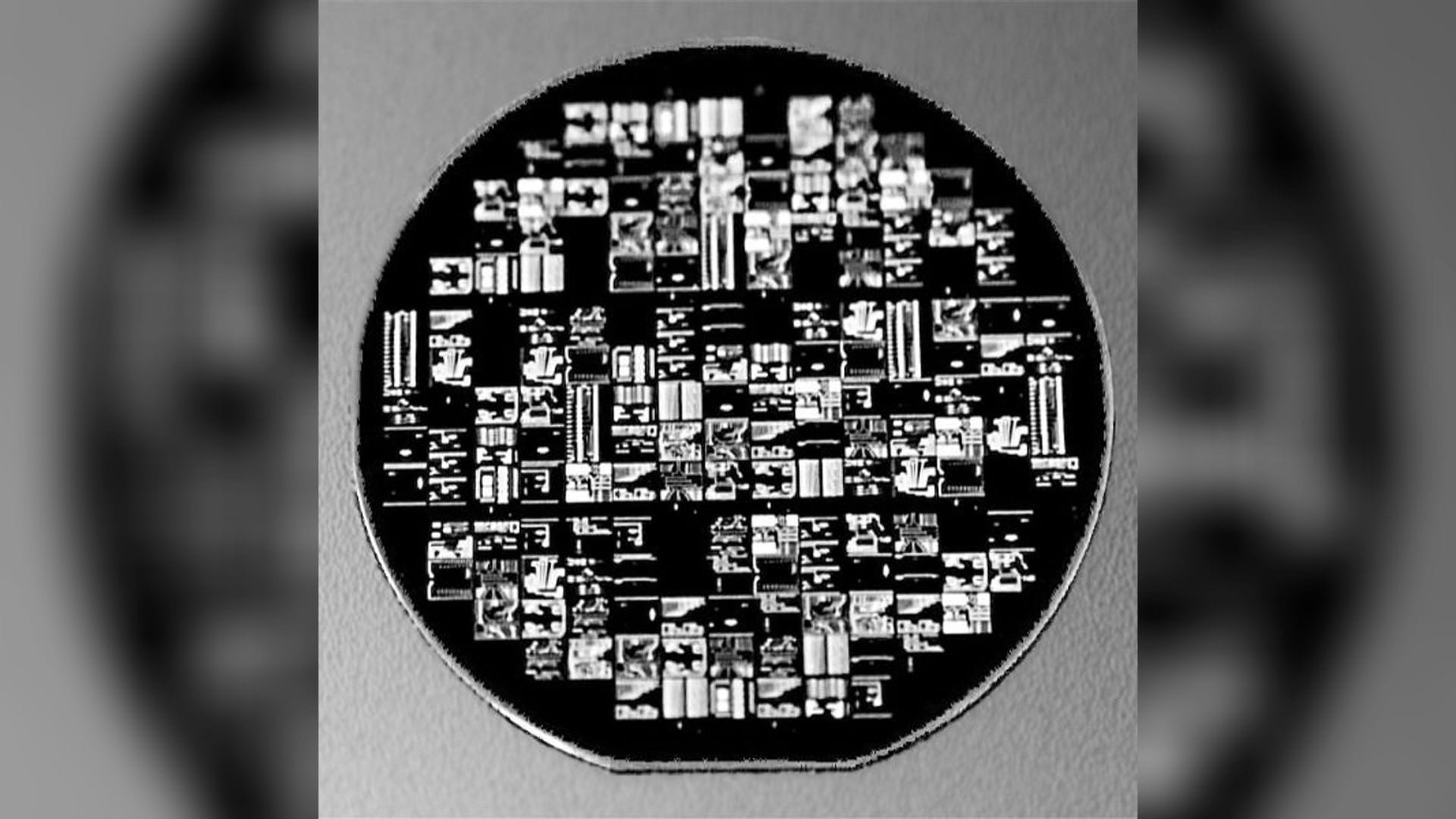
Lumentum makes indium phosphide lasers, the light sources in AI datacentre optical links 1. The wafers those lasers are grown on form the layer beneath, and that is where IQE, the UK compound semiconductor wafer maker, sits.
On November 6 IQE said first-half trading exceeded expectations, raised revenue guidance and cited accelerating demand for indium phosphide in AI datacentre photonics 2. Its shares rose 5.32% to 36.60p in morning London trade 2. The company also stated it carries no bank debt 2.
The order book moves either way
The consolidation cuts both ways for that wafer layer. If Marvell internalises indium phosphide epitaxy after closing, wafer orders that now go outside stop going outside, and IQE's order book loses those volumes; Marvell's stated rationale is supply-chain control and closer alignment of component design with its requirements 1.
If instead the combined group rationalizes manufacturing around fewer, larger lines, it could concentrate external wafer buying with the suppliers that can serve it at scale, IQE among them. The record does not say which path Marvell takes, and IQE's guidance raise came four days after the deal, so the near-term demand signal is still accelerating 2.
The substrate gate sits in Beijing
A third constraint sits beneath both outcomes: the raw indium phosphide substrates the wafers are grown on. AXT, a California semiconductor materials company that makes InP substrates, said in an August filing that it could not estimate when Chinese export permits would allow it to resume InP substrate shipments to US customers, calling the permits its most significant challenge 3.
That means whichever way Marvell resolves the make-or-buy question, it still has to source the material, and the substrate gate sits with a supplier answerable to Chinese export policy 3.
What to watch: whether Marvell signals in-sourcing of epitaxy before the H1 2028 close, per the deal terms 1, and whether IQE's raised guidance survives its next trading update 2.
Get Deals by email, free
The acquisitions, rounds and contracts that move AI money. In our daily email, every weekday.