Zhongji Innolight's revenue rose 178% and its stock fell 12.69% on the Marvell-Lumentum merger's parts risk
Nine-month revenue up 178 percent, profit up 212 percent, a buyback with cancellation, and the Shenzhen A-share still fell 12.69 percent the session after Marvell confirmed buying Lumentum. The results measure demand; the merger review in China measures whether Innolight keeps buying its DSPs and lasers from one owner.
 Richard Tang · 3 min read
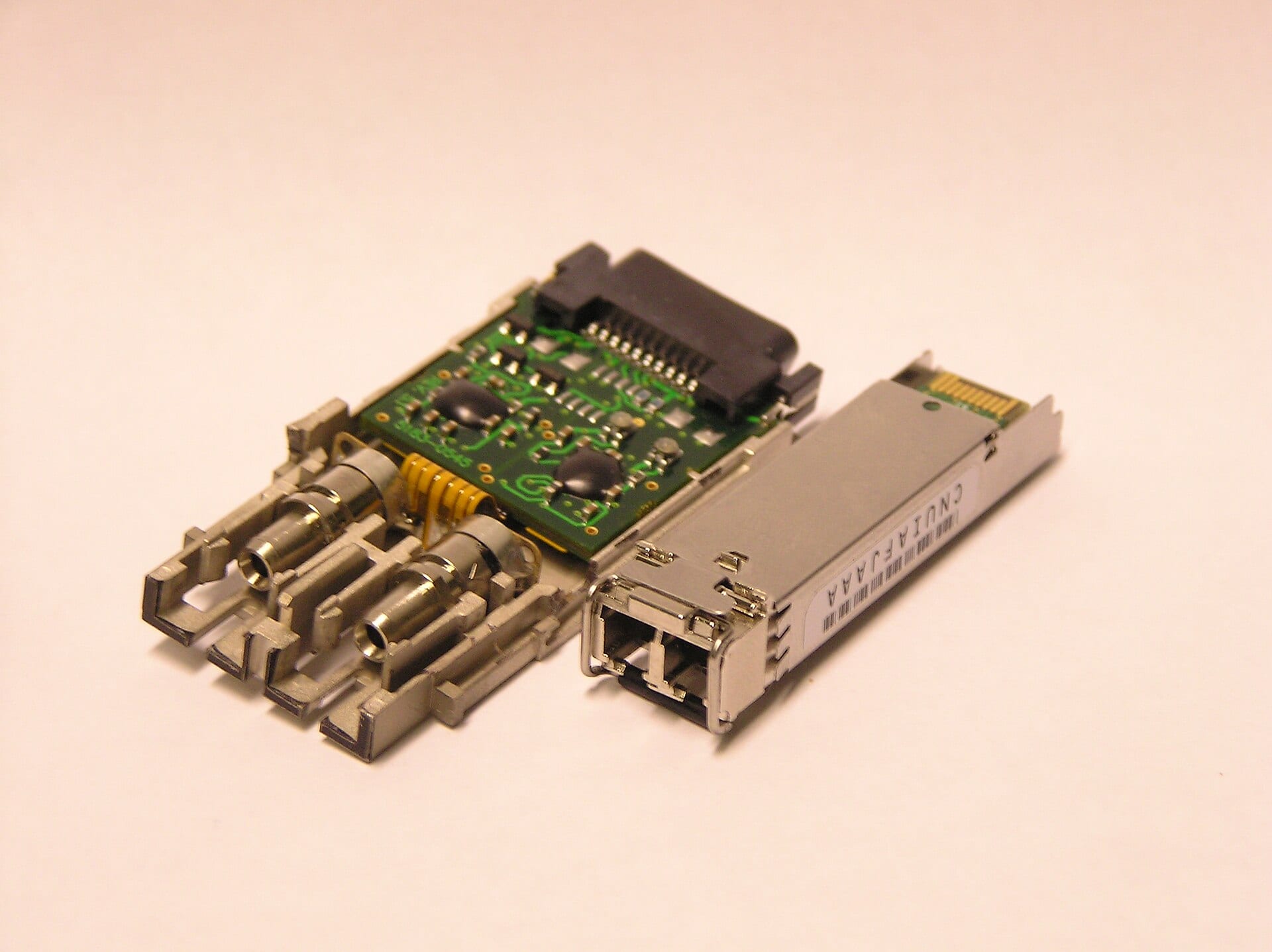
Zhongji Innolight−12.69% — Zhongji Innolight, down 12.69 percent today, the Shenzhen maker of the 800G and 1.6T optical modules that link AI accelerators, just reported the strongest stretch in its history, and its A-share still fell 12.69 percent in the first Shenzhen session after Marvell−0.65% — Marvell, down 0.65 percent today confirmed its $115 billion purchase of Lumentum 1. The quarter measures demand for the modules. The sell-off measures something the quarter cannot: whether the makers of the parts inside those modules will keep selling them to Innolight at all.
The results are not the problem. Nine-month revenue rose 178 percent and attributable net income 212 percent, on AI-datacenter demand for 800G and 1.6T modules, the two fastest data-rate classes in AI interconnect 4. Third-quarter net profit rose 174 percent year on year 3, gross margin ticked up quarter on quarter 25, the company has bought back about RMB 5 billion of stock and will cancel all of it 2, and major overseas customers have placed orders extending through 2027 2. Goldman Sachs−0.68% — Goldman Sachs, down 0.68 percent today cut its Hong Kong target to HK$2,829 anyway 5.
Innolight grew revenue 178 percent and profit 212 percent in nine months
Data
| Value | |
|---|---|
| 9M revenue growth | 178.1 |
| 9M net income growth | 211.8 |
| Q3 net profit growth | 173.7 |
One owner would hold both halves of every module
As we reported on November 2, Marvell, a chipmaker, agreed to buy Lumentum−0.89% — Lumentum, down 0.89 percent today, an optical-components maker, in an all-stock deal at $1,132 a Lumentum share, a 23.9 percent premium, closing expected in the first half of 2028 6.
What is new is what the combination does to Innolight's supply chain. Every high-end module pairs a digital signal processor (DSP), the chip that drives and cleans up the optical signal, with lasers. Innolight buys its DSPs from Marvell and its laser sources from Lumentum, and Chinese module makers, which TrendForce says lead the world in 800G and 1.6T transceivers, rely heavily on both 7. After the merger, one company would own both. TrendForce warns the merged group, at nearly 7 percent of 2026 wired-communications semiconductor revenue and behind only Nvidia+3.15% — Nvidia, up 3.15 percent today and Broadcom+3.34% — Broadcom, up 3.34 percent today, could restrict rivals' access to lasers or bundle lasers with its own DSPs, and expects China's regulators to weigh exactly that in the merger review 7.
A replacement DSP exists in theory, but switching means re-qualifying a module design, which costs quarters. That is why a parts risk discounts a company growing at 178 percent.
China's approval is the next dated event
The US side is already moving: a proposal to ban imports of new Chinese-made transceivers is live, and it points demand toward Innolight's American competitors such as Lumentum 8. Now the parts question sits in front of Chinese regulators, who must approve the merger. Watch whether their approval comes with conditions on supply of lasers and DSPs. Those conditions, more than any earnings print, decide whether the fastest-growing optical business in AI keeps its inputs.
Get Chips by email, free
How AI demand is reshaping chipmakers, memory and the fabs behind them. In our daily email, every weekday.