Mercor names chain-of-thought author Jason Wei chief scientist
The researcher behind chain-of-thought prompting and three benchmarks the industry grades itself with joins a $20 billion expert network, one week after its $750 million Series D, to lead a push selling lab-grade AI evaluations to every company.
 Vincent Jiangthree-minute read
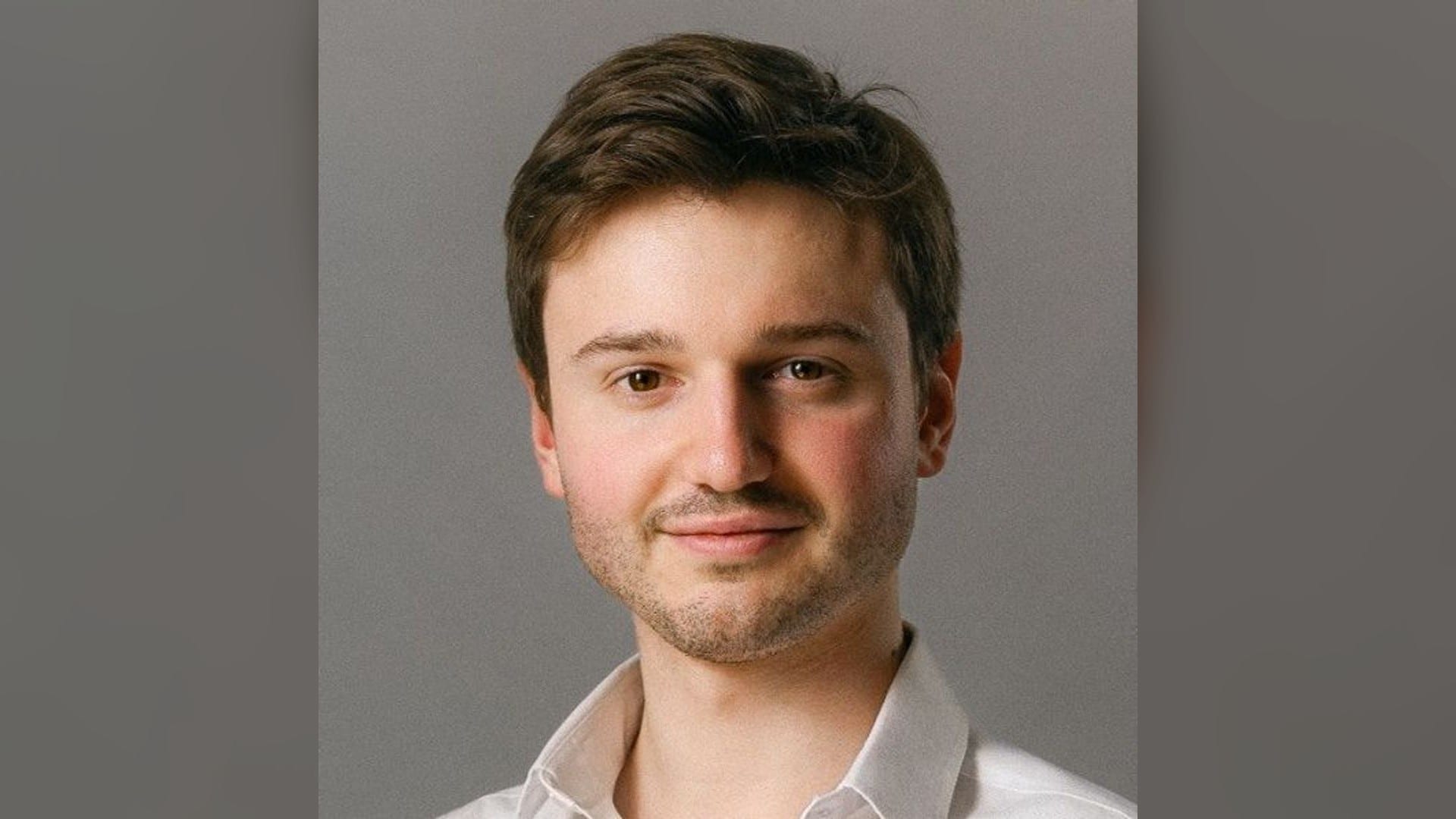
The chain-of-thought author leaves Meta's lab
Jason Wei, whose 2022 chain-of-thought paper showed that models reason better when they write out their steps, is joining Mercor~$2B — Mercor, private, latest valuation ~$2B as chief scientist 192. Mercor said so on November 18 19, and Wei confirmed it in his own words: "After an amazing year at Meta's−0.60% — Meta, down 0.60 percent today TBD lab, I am very excited to join Mercor as Chief Scientist" 2.
He made his name at Google Brain, moved to OpenAI$1.18T — OpenAI, private, latest valuation $1.18T in 2023, and created SimpleQA, BrowseComp and HealthBench, three of the tests the industry now grades itself with 19. His new employer, founded in 2023 by Brendan Foody, Adarsh Hiremath and Surya Midha, pays a network of more than five million specialists to train and grade AI models 310.
One week after the money arrived
The hire lands seven days after a $750 million Series D valued Mercor at $20 billion, with Nvidia−2.79% — Nvidia, down 2.79 percent today, Salesforce−2.73% — Salesforce, down 2.73 percent today and Zoom+2.02% — Zoom, up 2.02 percent today among corporate backers and an employee tender folded in, so an undisclosed slice is staff cash-out rather than new capital 37. The Inference covered the round and its tasker pay floor on November 11.
Foody, Mercor's co-founder and chief executive, made the market case onstage at the Cerebral Valley summit: agents now need top engineers, lawyers, doctors and bankers to design evaluations and practice environments, and the ceiling is the set of tasks humans still do better than models 6. Wei's line matches: "Data will shape the next frontier as more companies train AI models than ever before" 2.
Mercor's valuation went from an implied $2B to $20B in three rounds
Price doubled twice in under two years; the latest round landed a week before the Wei hire
- Valuation
- Estimate
Data
| Valuation | |
|---|---|
| Series B (2025, implied) (estimate) | $2B |
| Series C (Oct 2025) | $10B |
| Series D (Nov 2026) | $20B |
A research stack already assembled
Wei inherits machinery, not a blank page. The research team, announced on October 8, already includes Edward J 4. Hu, first author of LoRA, the standard recipe for cheaply fine-tuning large models 4. Mercor's APEX benchmarks score AI on consulting, banking, corporate law, accounting and software work, and a published training guide lifted Qwen3.5-397B from 16% to 27% on APEX-Agents 4.
In July, Mercor bought Deeptune, whose software recreates enterprise applications for agents to practice in, which had raised a $43 million Series A led by Andreessen Horowitz 5. Annualized revenue passed $2 billion in June, on Foody's own figure 7. The stated aim is more training signal from each expert-hour, because expert time is expensive and limited 4.
The customers are the competition
Frontier labs remain the main buyers of expert training data, says Jai Das of Sapphire Ventures, one of the round's investors 7. Mercor's announcements name no enterprise customer and no split of revenue between labs and everyone else 38. Every lab that buys Mercor's experts is also a lab that could hire its researchers. The next reading that matters is Wei's first Mercor benchmark: adopted by companies, it turns an expert-hours marketplace into a research company; ignored, the $20 billion price was set for a supplier 38.
Get Model by email, free
The AI labs, their models, and the business behind them. In our daily email, every weekday.



Reader comments
0 comments