MVB Bank outsources its anti-money-laundering alert queue to Bretton AI, paying by the finished case
For MVB Financial shareholders, the deal buys compliance capacity that no longer scales with bodies. For headcount-based compliance outsourcers, it puts hourly pricing on trial.
 Vincent Jiangthree-minute read
A bank signs away its alert queue
MVB Bank spent two decades building a national fintech business on top of a community bank 1. In August it outsourced the grinding part: a multi-year agreement has Bretton AI delivering AML transaction monitoring and KYC as completed alerts and cases, produced by a dedicated US-based Bretton team working to MVB's own policies 1. "Bretton AI gives us a way to scale monitoring and due-diligence capacity while keeping MVB in control of the program, its decisions and its filings," chief compliance officer Julie O'Connor said 1.
Capacity up, headcount flat
Parent MVB Financial (Nasdaq+0.27% — Nasdaq, up 0.27 percent today: MVBF) is growing exactly the volumes that create compliance work. Q2 2026 deposits rose 7.4% from the prior quarter to $3.11 billion, net income reached $12.3 million, and management expects roughly 20 new fintech clients onboarded this year 23. Those figures, and the chart below, predate the August signing: the wager is that the volume curves keep climbing while the back-office cost line goes flat.
MVB's cost-to-income ratio fell 25 points in four quarters
Data
| Efficiency ratio | |
|---|---|
| Q2 2025 | 84.7% |
| Q1 2026 | 76.7% |
| Q2 2026 | 59.5% |
The bill arrives per finished case
The disruption is the pricing. Bretton's fees tie to completed work, not analyst hours, and a trained analyst reviews every AI-assisted output before it reaches MVB, so the software never files alone 1.
Bretton, founded in 2023 by chief executive Will Lawrence, raised a $75 million Series B led by Sapphire Ventures in February after rebranding from Greenlite AI 46. It reports more than 1.2 million completed L1 and L2 investigations and average contract values of $201,000, figures the company publishes itself 4. Neither side disclosed the contract's value beyond multi-year 1.
Washington leans the same way
On July 6 the Federal Reserve Board voted 6-1 to propose risk-based AML program rules, aligning with FinCEN's April proposal; the OCC, FDIC and NCUA moved in parallel 5.
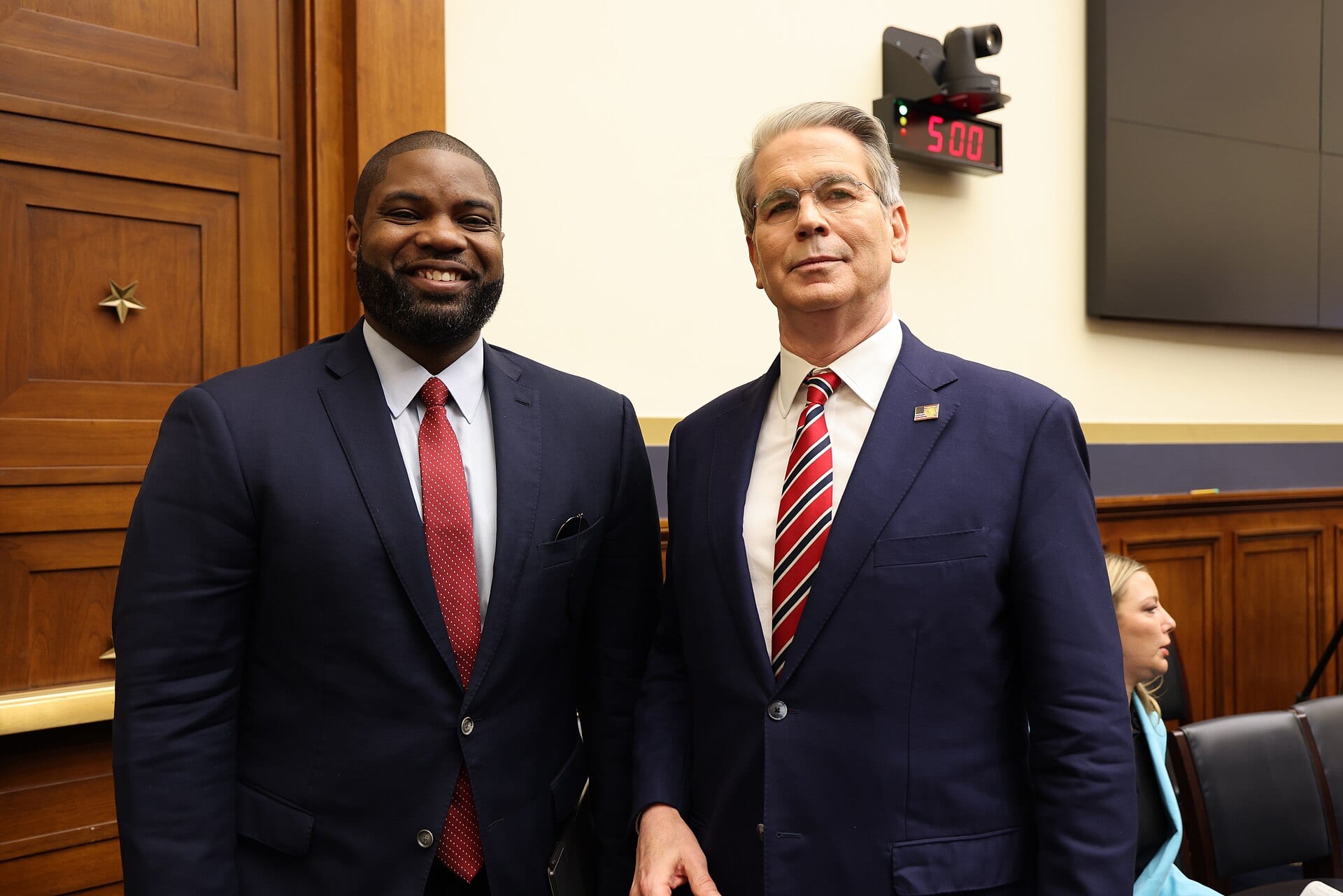
Treasury Secretary Scott Bessent said institutions had been asked to "measure success by the volume of paperwork" 5. The money agrees: RegTech firms drew $2.17 billion across 23 deals in the latest window, more than a third of global fintech deals, and US RegTech took $2 billion across 103 deals in Q1 2026, up 28% year on year 6.
The outsourcing floor collapses, if the agents hold
Bretton's homepage says it plainly: the company "replaces your BPOs," and claims an 87% cut in compliance review time at an FDIC-insured bank 7. That is the threat to headcount-based outsourcers, and it is unproven at scale.
Fed Governor Michael Barr dissented on July 6 over a looser enforcement standard 5. If agent quality slips, the filings and the fines still belong to MVB.
The tell is in the staffing line
Risk management headcount at MVB already fell from 123 to 116 during Q2, before the deal, and chief executive Larry Mazza told analysts 31 AI "digis" are built or being built, especially in risk and compliance 3. If that line keeps falling while fintech deposits climb, the hour-billed compliance contract is finished.
Get Applications by email, free
How AI is changing the software people and companies use. In our daily email, every weekday.