Nine hundred robotaxis later, Los Angeles Uber drivers are working 17.8% fewer hours
Gridwise's driver-level data shows Los Angeles ride-hail drivers' hours down 17.8% and quarterly pay down 14.7% since Waymo's launch, the clearest measurement yet of robotaxis inside a rideshare marketplace, and it lands days before Uber reports Q3 on November 4.
 Vincent Jiangthree-minute read
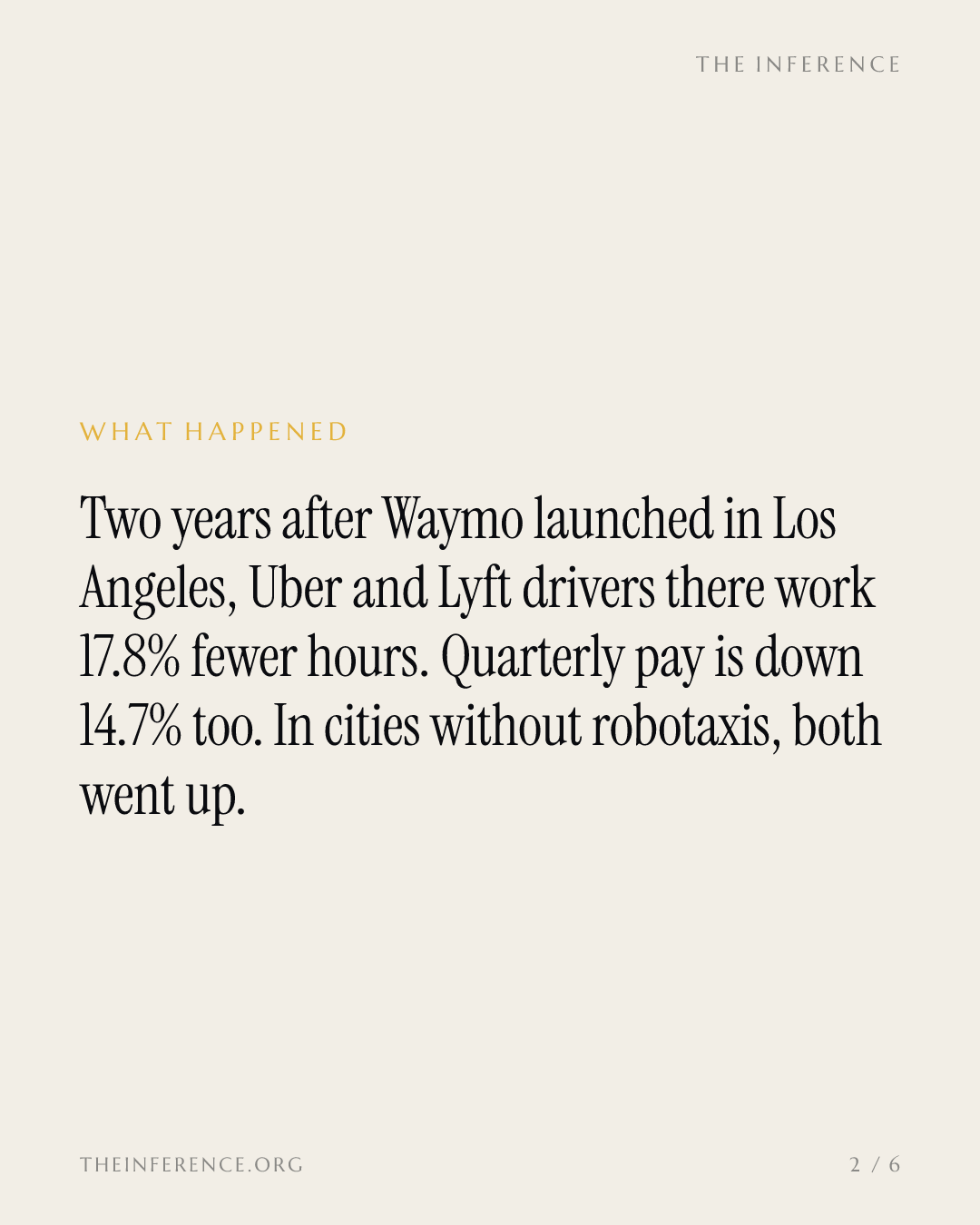
Two years after Waymo arrived in Los Angeles, the people driving for Uber−1.48% — Uber, down 1.48 percent as of its last quote and Lyft+1.43% — Lyft, up 1.43 percent as of its last quote there have less work. Gridwise, a firm that tracks gig workers' earnings and mileage, compared the second quarter of 2024, before Waymo's public launch, with the same quarter this year: total work hours fell 17.8% and quarterly pay fell 14.7% 1. In cities without autonomous vehicles, both hours and pay rose over the same period 1.
More drivers are splitting a shrinking pie
The complication is that the number of Los Angeles drivers grew during the study window, Gridwise says 1. More people competing for less work is the unambiguous reading of those two facts together. Average pay per trip and per hour actually rose, which sounds like relief until the totals are counted: rates up, revenue down, hours down. The rising per-trip rate is a point of comparison with human-driver scarcity, not a counterweight to a shrinking market 1.
Where the work went
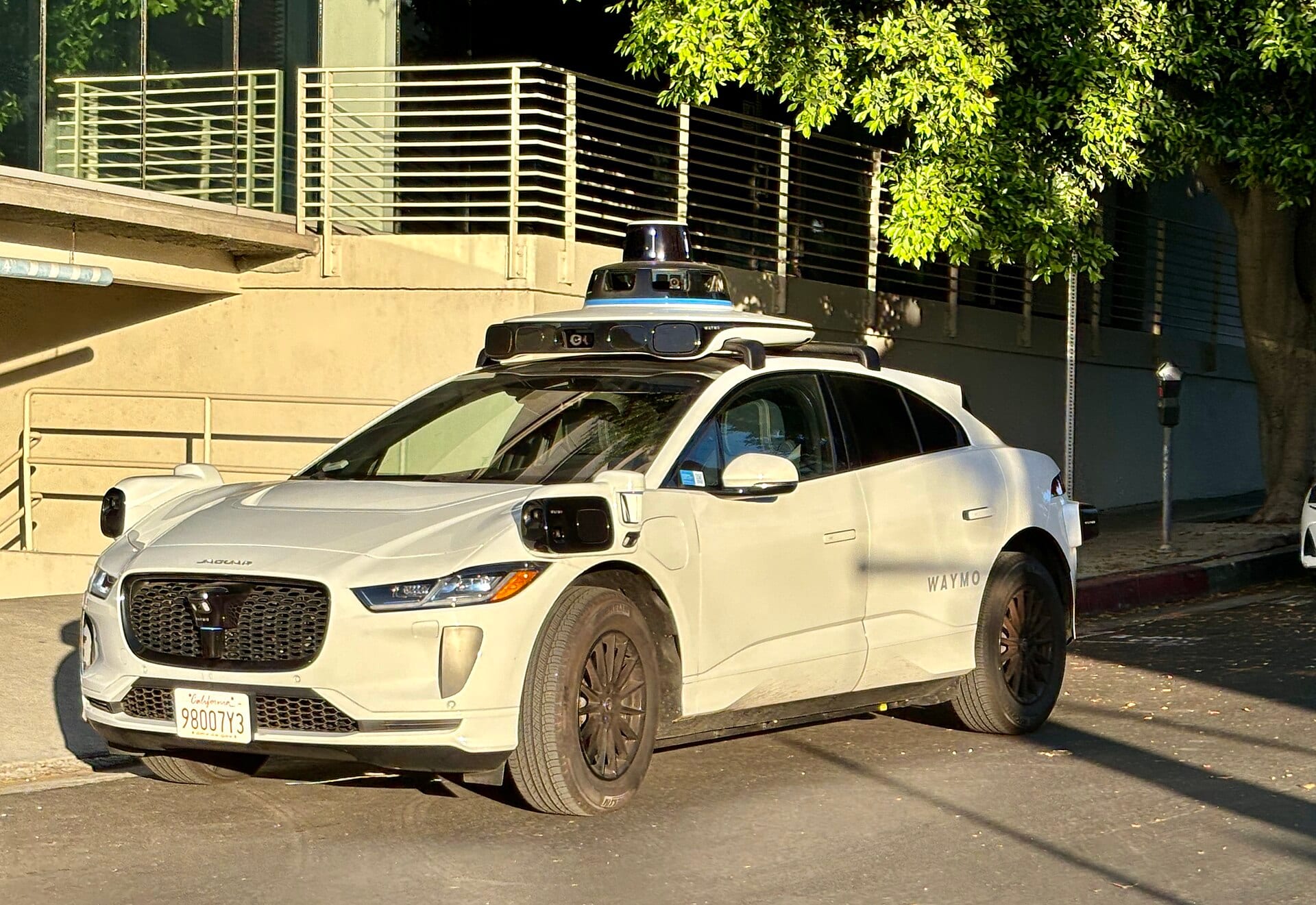
About 900 Waymos, owned by Alphabet+0.40% — Alphabet, up 0.40 percent as of its last quote, now run on Los Angeles streets 1, and Waymo processes more than 250,000 paid trips a week 2. The routes being absorbed first are the profitable ones: airport runs and late-night downtown pickups 2. Los Angeles has the second-largest autonomous fleet in the country after the Bay Area, and Uber plans to add vehicles from partners including Amazon's+1.71% — Amazon, up 1.71 percent as of its last quote Zoox within the next year 1. Uber's own prior coverage of the driver-level per-trip rate is here: Uber is paying drivers more per trip than in the 2021 driver shortage 1.
The partner template spreads
Uber's answer to robotaxis is partners, not owned cars, and the same week a rival wrote the template cheaper. inDrive, which operates in more than 1,200 cities across 47 countries, signed a memorandum with Pony.ai and Nvidia to run Pony's Gen-7 robotaxis through its app in Astana, Kazakhstan, from the first half of 2027, on Nvidia's−4.66% — Nvidia, down 4.66 percent as of its last quote Hyperion and Halos systems 3.
Pony.ai targets more than 3,500 robotaxis in over 20 cities by end-2026, up from 1,975 at end-June 3. A partner fleet means Uber books the ride but owns neither vehicle, sensor stack nor depreciation, so the robotaxi margin likely sits with whoever built the car, not whoever dispatches it.
The counterpoint, and the date
The shift will be slow. Independent analyzes project up to 60% automation of rideshare by 2040, and even if a robotaxi cost only twice a standard rideshare car, rider prices would fall just 10% to 20%, because human drivers subsidize rides with their own depreciation 2.
Drivers in weather-heavy or rural regions stay insulated for now 2. But the LA pattern, hours and pay falling while driver counts grow, is the measurement investors have lacked, and Gridwise's own analysts say it could foreshadow other markets 1. Uber reports Q3 results on November 4 4, the first print with its robotaxi supply strategy on the line.
The landlord's question stands: when the car drives itself, who owns the car?
Get Robotics & Defense by email, free
Robots, self-driving vehicles, drones and AI in defense. In our daily email, every weekday.