Nvidia's supply commitments jumped from $279 billion to $390 billion in a quarter
The jump came from multi-year memory deals that SK hynix, Samsung and Micron have signed with price floors and ceilings. For Arrow Electronics holders it sets a floor under the distributor's $7.3 billion of inventory and a ceiling on the price inflation that produced its record quarter.
 Richard Tangthree-minute read

The memory makers have largely sold their 2027 and 2028 output forward, under contracts with agreed price floors and agreed ceilings 1. Nvidia's−3.17% — Nvidia, down 3.17 percent today supply commitments rose from $279 billion to $390 billion in a single quarter, an increase the company tied "primarily" to multi-year memory procurement 2. More than half of the total, $203 billion, falls in fiscal 2028, largely calendar 2027 1. For Arrow Electronics+0.30% — Arrow Electronics, up 0.30 percent today, the components distributor whose record quarter was memory price inflation, that is a floor under what it owns and a ceiling on what it can earn from it.
More than half of Nvidia's $390 billion of commitments lands in fiscal 2028
The memory-driven commitments land in fiscal 2028, largely calendar 2027
Data
| Value | |
|---|---|
| FY2027 (remainder) | $69B |
| FY2028 | $203B |
| FY2029 | $92B |
| Later years | $26B |
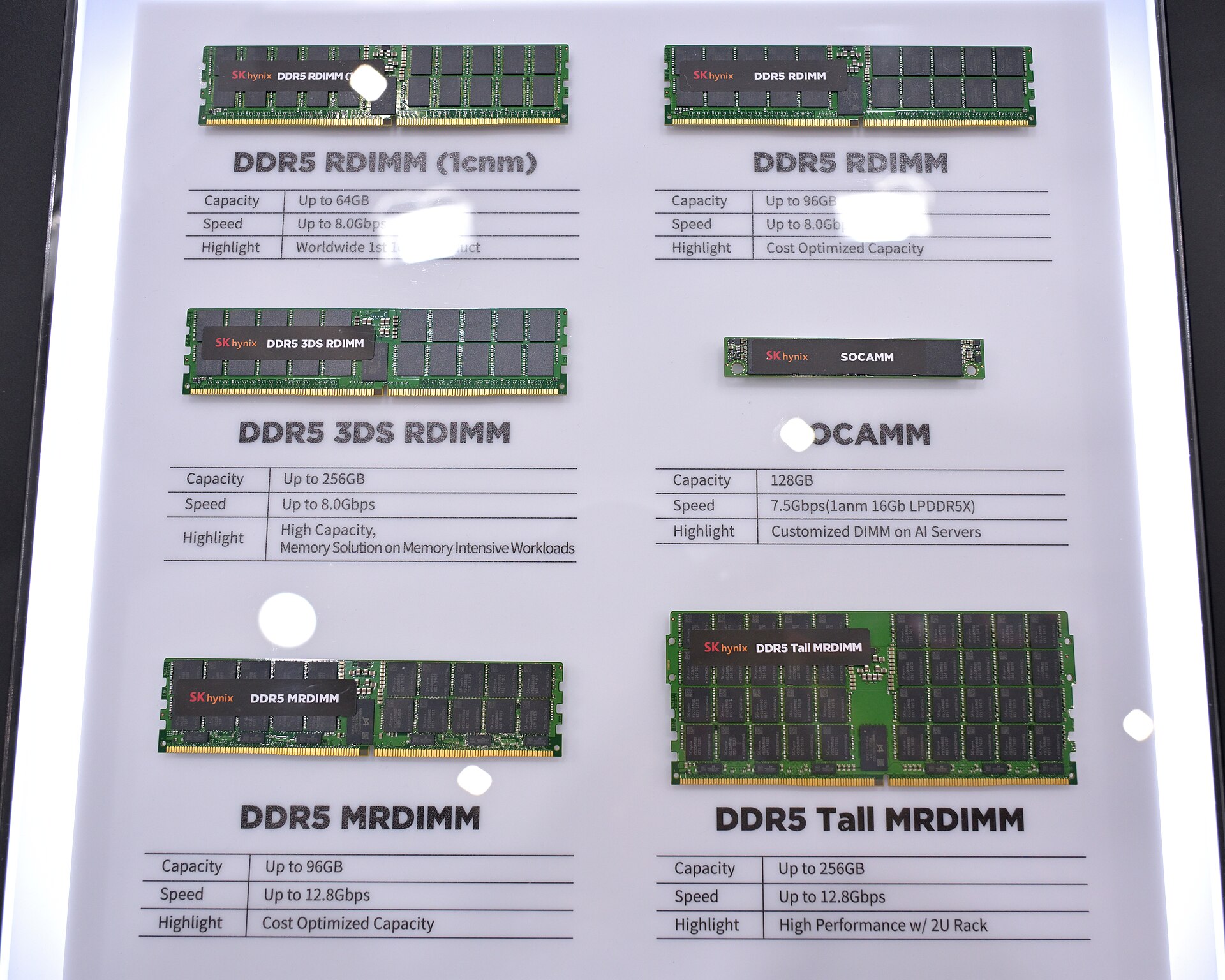
Memory makers have sold 2027-28 output under banded prices
SK hynix−1.08% — SK hynix, down 1.08 percent today said on October 28 that its DRAM and high-bandwidth memory is effectively sold out through 2029 3, and its signed agreements cover more than half of its 2027 and 2028 capacity, across 14 major customers 1. Samsung's+2.31% — Samsung's, up 2.31 percent today planned HBM supply for 2027 is already sold out at agreed target prices, and Micron−2.11% — Micron, down 2.11 percent today has contracted the vast majority of its calendar-2027 HBM 1. Micron has described these agreements as take-or-pay, meaning customers owe the money whether or not they take the product, generally running five years with quarterly pricing inside floor-and-ceiling bands 4.
A floor under the inventory, a ceiling on the earnings
For Arrow that cuts both ways. With the supply spoken for at floored prices, a writedown of the memory in its inventory is unlikely; with ceilings on the same paper, the spike cannot repeat. Nvidia has not said how much of the total is memory 1, and the banding is the new part: in September, The Inference tied Nvidia's then-smaller book to roughly 37 percent of the world's 2027 high-bandwidth memory, on Morgan Stanley−1.39% — Morgan Stanley, down 1.39 percent today estimates 5.
Price increases drove Arrow's record quarter and are now capped
Arrow's fiscal third quarter, reported on November 5, booked that inflation as profit 6. Sales rose 39 percent to a record, and chief financial officer Raj Agrawal said most of the components business's revenue growth came from price increases, on "pockets of limited capacity" in component categories, "most notably memory" 6. His summary: "If we had gotten our hands on more product, we would have sold more" 6.
The record quarter used $441 million of cash
The profit stayed on the shelf. Operations used $441 million of cash, and about $600 million of the inventory build sits in Arrow Intelligent Solutions, the unit that designs, builds and tests compute and storage racks for AI data centers 6. The fourth quarter is guided on units: Arrow has assumed little further memory price inflation, after a quarter whose growth was price-driven 6.
Arrow's operating cash flow swung to a $441 million outflow as inventory built in the September quarter
Data
| Operating cash flow | |
|---|---|
| Q4 '24 | $0.33B |
| Q1 '25 | $0.35B |
| Q2 '25 | -$0.21B |
| Q3 '25 | -$0.28B |
| Q4 '25 | $0.2B |
| Q1 '26 | $0.7B |
| Q2 '26 | $0.32B |
| Q3 '26 | -$0.44B |
Fourth-quarter cash decides the multiple
The market prices Arrow at 9.78 times trailing earnings, below fellow electronics distributors Avnet and TD SYNNEX, as if the memory spike is about to reverse 7.
Arrow trades at a discount to fellow distributors Avnet and TD SYNNEX
The market prices Arrow as if its record quarter is about to reverse
Data
| Value | |
|---|---|
| Arrow Electronics | 9.78x |
| Avnet | 12.3x |
| TD SYNNEX | 13.7x |
The multiple moves when the racks ship
The contracts argue for something narrower: the floor holds the inventory, the ceiling holds the earnings, and the multiple moves when the racks ship. Backlog running into mid-2027 and book-to-bill (orders against shipments) well above parity are unit facts, not price facts 6. The supply SK hynix has contracted with its 14 large customers also flows direct from maker to buyer, not through a distributor's pool 1.
Interim chief executive Bill Austen takes investor questions at the UBS Global Technology and AI Conference on November 30 7. The number to ask about is fourth-quarter operating cash flow: if the racks ship, the inventory turns back into cash; if memory flattens first, it sits.
Demand is not the risk; Nvidia says it still exceeds supply 8. The contracts pay the memory makers and the customers they name, and the distributor in between now has to earn its margin on units.
Get Chips by email, free
How AI demand is reshaping chipmakers, memory and the fabs behind them. In our daily email, every weekday.

More about NVIDIA
NVDAFiscal Q2 2027Revenue rose 106% to $96.2B, 92.5% of it from Data Center, “driven by the ramp of our Blackwell Ultra infrastructure”. Gains on equity stakes of $7.8B lifted net income to $59.7B.
Show as a table
| Line | Value |
|---|---|
| Revenue | $96.2B |
| Gross margin | 75.0% |
| Operating margin | 66.2% |
| Net income | $59.7B |
| Hyperscale | $48.7B |
| AI clouds & enterprise | $40.3B |
| Data Center | $89.0B |
| Edge Computing | $7.2B |
| Gross profit | $72.1B |
| Cost of revenue | $24.1B |
| Other income | $7.8B |
| Operating income | $63.7B |
| Operating expenses | $8.4B |
| Tax | $11.8B |
| R&D | $7.1B |
| SG&A | $1.4B |




Reader comments
0 comments