Oracle's case study: 3 admins moved 100,000 invoices a day off MongoDB, erasing the customer's bill
Oracle's case study shows a logistics distributor cut its entire annual MongoDB bill with a three-person team and zero code changes, right as MongoDB's own pay-per-use launch concedes pricing pressure. With Atlas at about three quarters of revenue, the switching barrier investors priced is now auditable.
 Richard Tang · 3 min read
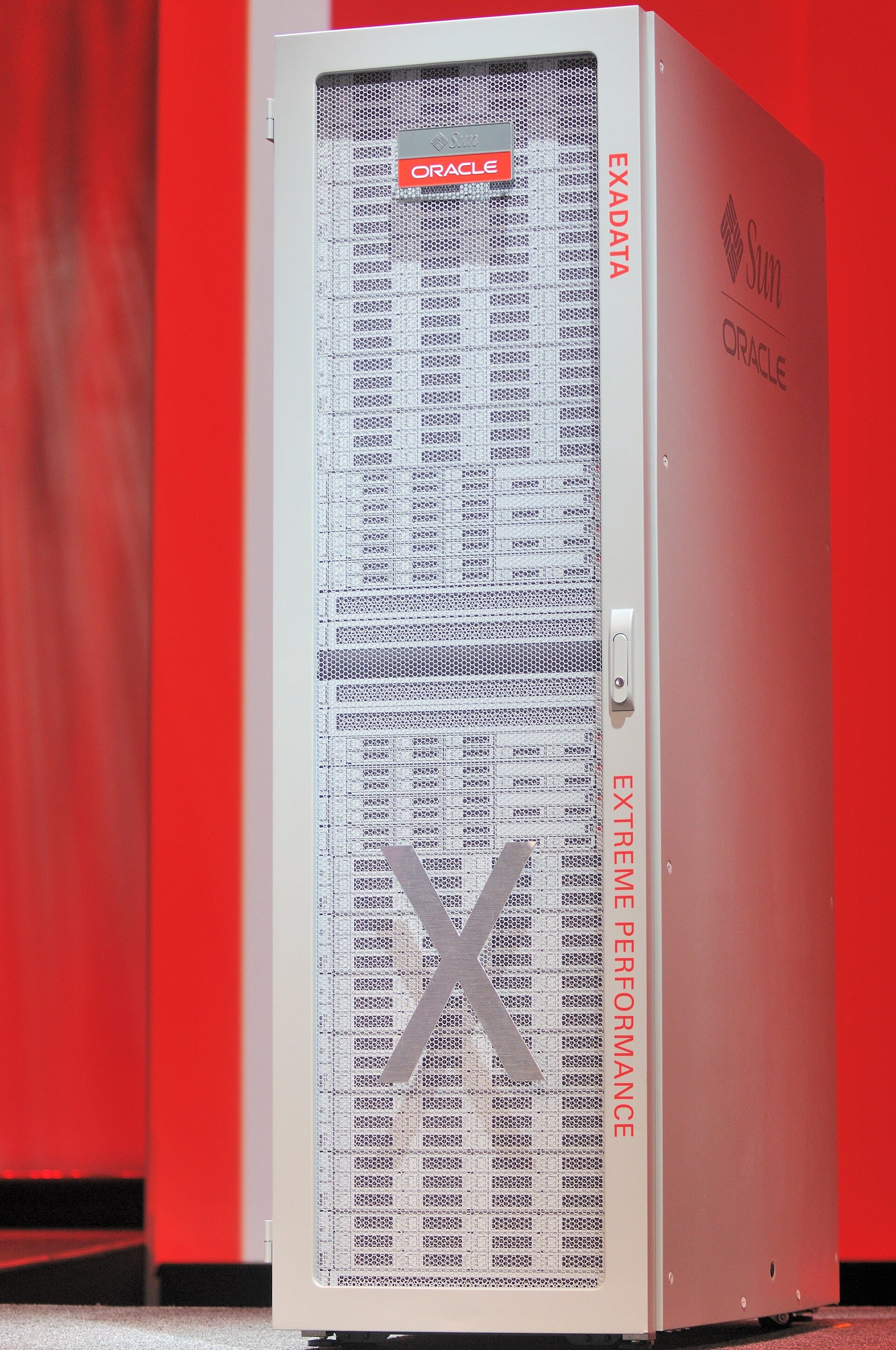
MongoDB−7.97% — MongoDB, down 7.97 percent today lost a customer, and how it lost them is the story. Oracle−6.21% — Oracle, down 6.21 percent today published a case study on October 28 in which S.P 1. Richards, a US logistics distributor, moved its core sales order management system, which processes roughly 100,000 invoices a day, off MongoDB onto an Oracle Exadata machine it already owned 1. Three database administrators, two Oracle and one SQL Server, did the work with no backend code changes and no application rewrite, after rising MongoDB pricing made cost a concern.
The company says it eliminated its entire annual MongoDB bill by running the workload under an existing unlimited Oracle license. The study sits on Oracle's own site, no other outlet has picked it up, and neither the bill's size nor the timing of the switch is disclosed. Take the marketing with salt. The mechanism is the part to take seriously.
A compatible API halves the cost of leaving
Oracle's API for MongoDB let the application switch over, in the customer's own words, "without modification or disruption," while the director of finance and reporting applications, Mike Holland, says the API "did everything promised" 1. That is the hop everyone prices past. For years, the real exit cost from Atlas, MongoDB's cloud service, was rewriting the data layer, and the exit cost is what protected the pricing.
If three admins can absorb the workload onto hardware already paid for, switching becomes a procurement decision instead of an engineering project. MongoDB's own launch concedes the pressure. On September 29 it put Atlas Infinite into public preview, billing only for the compute and storage a customer actually uses 2, and the adopter it named, the login provider Okta−3.93% — Okta, down 3.93 percent today, describes the appeal in savings language, not growth language: scaling "without paying for idle resources" 2. Bank of America's October 13 note puts the bear case in one line: Infinite "compresses Atlas spend through improved efficiency" 3. When the seller launches a cheaper way to pay, buyers gain leverage.
Where the risk sits on the revenue line
Atlas was about 73% of MongoDB's $771.8 million in revenue for the quarter ended July 31, and most of the company's revenue moves with customer usage 3. That is the exposure one walked-away account points at.
MongoDB's quarterly revenue climbed from $529 million to $772 million in eight quarters
Data
| Revenue | |
|---|---|
| Q3 '24 | $529.38M |
| Q4 '24 | $548.4M |
| Q1 '25 | $549.01M |
| Q2 '25 | $591.4M |
| Q3 '25 | $628.31M |
| Q4 '25 | $695.07M |
| Q1 '26 | $687.62M |
| Q2 '26 | $771.77M |
The signal is not isolated. Ubiquiti's UniFi Network 11.0.97, shipped in late October, migrated the product's internal database from MongoDB to PostgreSQL, and users who had scripted against the old database watched their scripts break overnight 4. A distributor and a networking vendor are not representative of MongoDB's customer base, but both are buyers, and both chose the door marked cheaper.
Value moves to whoever makes the commodity useful
Infrastructure commoditizes eventually. The news here is which link moved: the compatibility layer, the hop between "the engine is replaceable" and "leaving is affordable." The three-person team that closed that gap is the builder worth copying. Database administrators who can run a compatible-API migration capture the savings on the buyer's side, and every renewal season hands them the opening.
For holders of MDB, the debate shifts from the leadership churn we covered in recent weeks to the moat itself: the document model, where developers already lean toward PostgreSQL, or the operations and data gravity around it, which are real but not priced per query 3. Watch Atlas growth as Infinite leaves preview. Even Bank of America's−2.19% — Bank of America, down 2.19 percent today bull case models Atlas growth slowing to 24% by fiscal 2028 3.
Lock-in is a cost, and the cost just fell
One case study does not threaten a $28 billion company 6. It prices the exit: lock-in is worth only what it costs to leave, and leaving just got a lot cheaper.
Get Platforms by email, free
The cloud, data and developer software AI is built on. In our daily email, every weekday.