Oracle's two ledgers: a $27 billion subpoena file and a $664 billion backlog
The Senate Veterans' Affairs Committee's minority set an October 23 deadline for the files behind a VA health-record contract whose ceiling jumped from $10 billion to about $27 billion. The same week, Oracle stock rose on OpenAI's near-$70 billion run rate, the customer behind almost half its $664 billion backlog.
 Vincent Jiangthree-minute read
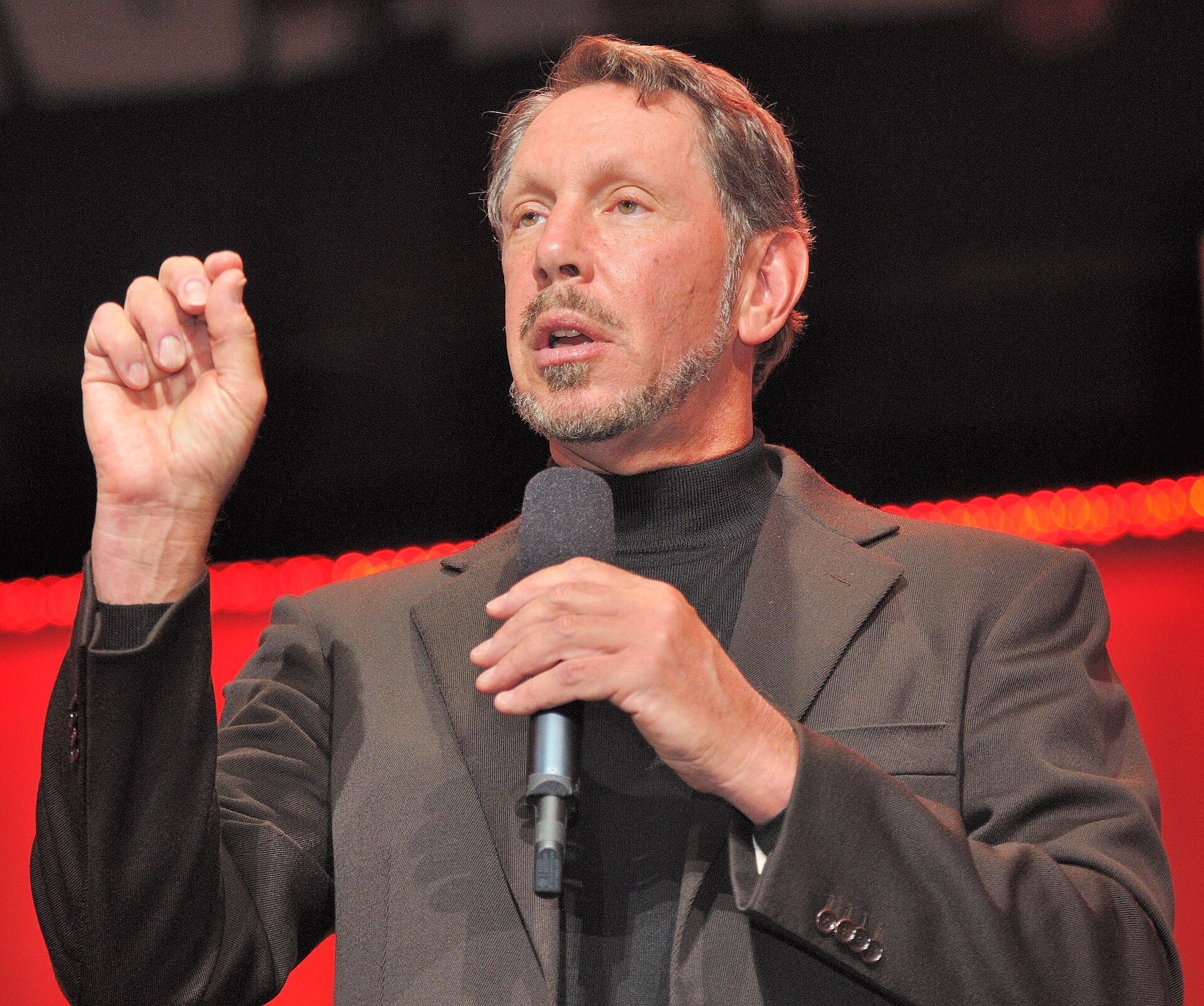
Seven Senate Veterans' Affairs Committee members, led by Richard Blumenthal, have given Oracle's−4.06% — Oracle, down 4.06 percent today Larry Ellison and Mike Sicilia until October 23 to hand over the files behind the VA electronic health record contract. The no-bid contract's ceiling moved from $10 billion to about $27 billion 12.
The senators want Oracle's internal lifecycle cost projections through 2031, a full itemization of the "unanticipated complexities" behind the increase, and a reconciliation with Sicilia's 2022 Senate pledge to deliver the system "without exceeding the contracted cost" 12. They also want to know why Congress heard about the ceiling jump from reporters before it heard from Oracle or the VA 1.
A 19-0 vote against a broken fixed-price promise
Oracle accepted, then declined, the invitation to the House Veterans' Affairs Committee's September 2 hearing, citing time constraints; the panel voted 19-0 to subpoena both executives, now scheduled to testify in November and December 234. VA Deputy Secretary Paul Lawrence could not say what drove the $17 billion increase 3. Lawmakers also cited roughly 300 dermatology patients whose referrals were canceled after go-lives, some with cancer diagnoses, and GAO counts 14 of its 18 program recommendations still not fully implemented 34.
The ceiling tripled; full-program estimates run near $50 billion
The $27 billion is a ceiling, not a check: work is negotiated beneath it on a time-and-materials basis 3. VA's own arithmetic points higher, about $37 billion to deploy through 2031 plus $11 billion to sustain, roughly $48 billion, not, Lawrence conceded, an independent estimate 3. The Institute for Defense Analyses put lifecycle cost at $49.8 billion in 2022 1. Contract filings say VA hit its ceiling "sooner than originally planned," after weighing Epic, Veradigm, Athenahealth and Meditech and finding "no other source than Oracle" 4.
The VA ceiling nearly tripled to $27 billion; full-program estimates sit near $50 billion
- Estimate
Data
| Value | |
|---|---|
| 2018 ceiling | $10B |
| 2026 ceiling | $27B |
| VA deploy to 2031 (estimate) | $37B |
| VA lifecycle total (estimate) | $48B |
| IDA 2022 estimate (estimate) | $49.8B |
Half the backlog rides on one customer, with no published conversion schedule
Oracle stock rose 4.27% on September 29 after a report that OpenAI's$1.18T — OpenAI, private, latest valuation $1.18T annualized revenue run rate neared $70 billion, with enterprise sales more than doubling since July 56. Roughly $300 billion of Oracle's $664 billion backlog, about 45%, rides on that one customer 7. In the material available, Oracle has published no maturity schedule for how much of that backlog converts in which quarter 8.
Oracle calls it routine; its lenders price it otherwise
Oracle calls the week's darker headline routine: force majeure notices are "commonplace," "Project Jupiter remains on our planned schedule," and Oracle Health's Seema Verma says the company "remains committed" to the VA build 94.
The lease behind Jupiter is hell-or-high-water, though, and the notice defers full rent for up to three years on a campus carrying $18 billion of bank construction loans 9. One arranger has sold that paper below 90 cents, a loss of at least $1.8 billion, and S&P holds Oracle at BBB-, one notch above junk, citing AI infrastructure risk 97.
Quarterly capital spending, $28.5 billion in the August quarter, has now passed quarterly revenue twice this year 10.
Capital spending caught quarterly revenue this year, then passed it
- Revenue
- Capital expenditure
Data
| Revenue | Capital expenditure | |
|---|---|---|
| Q4 '23 | $12.94B | $1.08B |
| Q1 '24 | $13.28B | $1.67B |
| Q2 '24 | $14.29B | $2.8B |
| Q3 '24 | $13.31B | $2.3B |
| Q4 '24 | $14.06B | $3.97B |
| Q1 '25 | $14.13B | $5.86B |
| Q2 '25 | $15.9B | $9.08B |
| Q3 '25 | $14.93B | $8.5B |
| Q4 '25 | $16.06B | $12.03B |
| Q1 '26 | $17.19B | $18.64B |
| Q2 '26 | $19.18B | $16.49B |
| Q3 '26 | $19.35B | $28.5B |
The markers are dated, and they are close
Oracle's answer to a fixed-price promise was a bigger ceiling; its answer to a hell-or-high-water lease was a force majeure notice. If slippage gets absorbed that way, the counterparties holding $664 billion of cloud contracts, and the syndicates financing the buildings, own the other side of the trade. Documents are due October 23, Sicilia testifies in November, Ellison in December, and December's quarterly results give the first hard read on whether the backlog converts 147.
Get Policy & Labor by email, free
The rules governments write for AI, and what AI does to jobs. In our daily email, every weekday.


Reader comments
0 comments