Robinhood's $173 million event-contract line, bigger than equities, is being shut off state by state
Robinhood has agreed to stop selling new sports event contracts in Ohio and to close existing Michigan positions while appeals run. The line being clipped out-earned its stock-trading business in the September quarter.
 Richard Tang · 3 min read

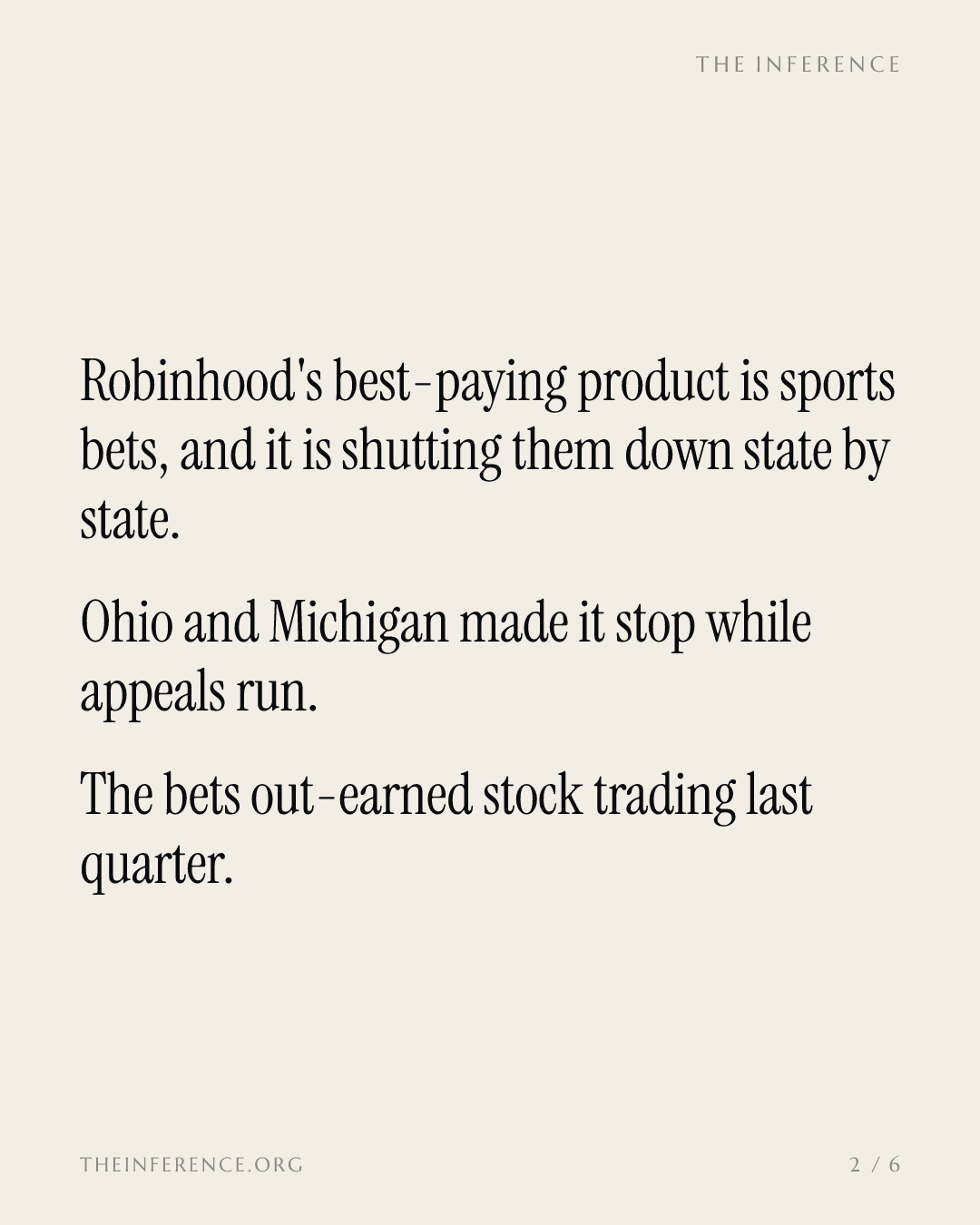
Robinhood−9.13% — Robinhood, down 9.13 percent today is shutting down its best-paying product to buy legal peace, state by state. Its quarterly filing discloses that on October 26 the brokerage agreed to stop offering new sports event contracts in Ohio by November 2, a deadline now passed, in exchange for the state's casino regulator holding off enforcement while appeals run 4. A parallel deal with Michigan went further and closed existing customers' sports positions by October 9 4. Robinhood made the same trade in Nevada almost a year ago 4.
Twelve cents on a stock order, twenty-one dollars on a bet
The stakes are in the price list. A $1,000 stock order earns Robinhood about 12 cents 2. The same money in event contracts, fixed-price bets that pay $1 if the predicted outcome happens, earns about $21, because the platform takes roughly a cent on every contract that fills the order 2. Launched through the exchange Kalshi in March 2025 2, the line passed equities in the September quarter at $173 million, cushioning a crypto business that fell by half 3. The four cuts behind that gap are the ones we charted in September.
Event contracts passed equities and crypto in Q3
The betting line is now Robinhood's second-biggest trading revenue source
Data
| Value | |
|---|---|
| Options | $399M |
| Event contracts | $173M |
| Equities | $121M |
| Crypto | $120M |
The bottleneck moved from distribution to jurisdiction
Robinhood had solved distribution: it carried contracts listed on an exchange regulated by the Commodity Futures Trading Commission into 28.7 million funded accounts 3. The industry's theory was that such contracts sit under exclusive federal jurisdiction, out of state gaming regulators' reach 5.
A September 25 ruling by the Sixth Circuit Court of Appeals rejected that theory for sports: the contracts are not "swaps" under the Commodity Exchange Act, the court held, and federal law does not override Ohio's or Tennessee's gambling statutes 15. Ohio's Casino Control Commission sent cease-and-desist letters to ten prediction-market operators on October 2, the move we reported when it landed 1. Robinhood agreed 24 days later 4.
Courts, not customers, now cap the line
What limits this line now is how each court classifies the contracts, not customer demand, and the circuits have split: the Third Circuit ruled for the operators, the Ninth and the Sixth against them 5.
The enforcement protects Ohio's licensed sportsbooks
Michigan customers have been closed out of positions they chose 4. Robinhood reports event-contract revenue as a single line, so the clipped share of the $173 million cannot be measured from the filing 3. The Ohio commission also told its licensed sportsbooks to stop serving unlicensed event-contract operators 1. Robinhood's replacement book is already revenue: bitcoin and gold contracts, and Rothera, its exchange venture with the trading firm Susquehanna International Group, past $100 million in annualized revenue 23.
The December quarter is the first clean print
The watch item is the December-quarter report, the first print with no new Ohio or Michigan sports contracts on the books. Until then the line's size is being decided elsewhere: Kalshi's request for a full-court rehearing at the Sixth Circuit, Robinhood's petition to the Supreme Court, and a proposed Commodity Futures Trading Commission rule that would define event contracts as swaps, which two appeals courts have said they are not 145.
Get Economy by email, free
How AI moves rates, banks, payments and the wider economy. In our daily email, every weekday.