Sandisk and Kioxia bet $31 billion on AI storage demand, and Sandisk owes half the fixed costs
Kioxia and Sandisk have pledged six years of NAND fab spending on the strength of an AI demand decade. Sandisk trades 43 percent below its peak and reports on October 29 into slowing price gains.
 Vincent Jiang · 3 min read
Six years of money against one bad week
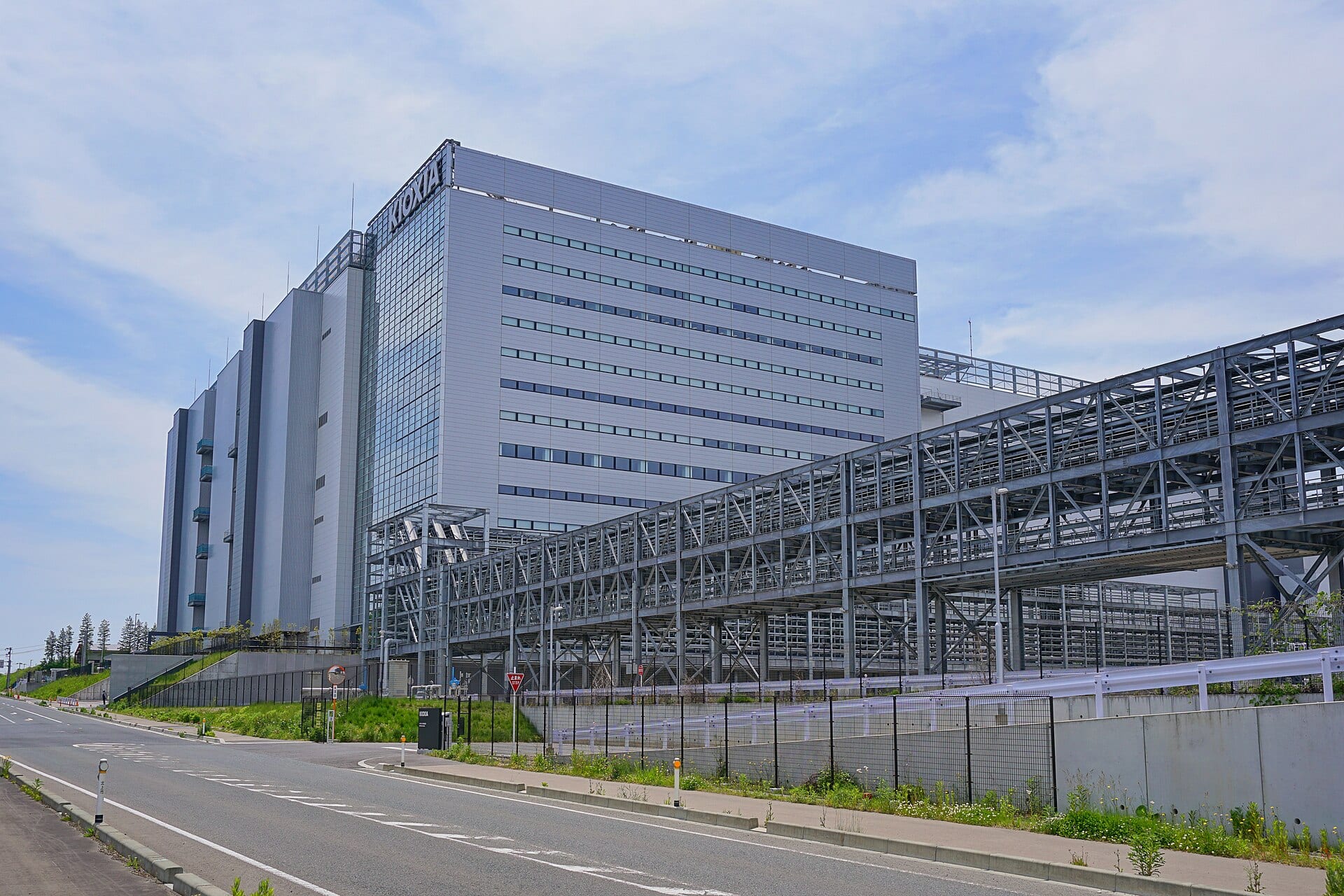
Kioxia, the world's third-largest NAND flash maker, and its joint-venture partner Sandisk−3.30% — Sandisk, down 3.30 percent today said on August 27 they would spend more than ¥5 trillion, about $31 billion, on their Japanese fabs through 2032, contingent on government support 12. NAND flash is the storage AI datacenters buy, and both companies expect AI-driven demand to last a decade or more 32.
The venture's terms decide who bleeds if the bet misses. Kioxia runs the fabs day to day; Sandisk owns 49.9 percent of each Flash Ventures entity, buys about half the wafers at cost plus a small markup, and owes half the fixed costs whether or not it takes them 34.
Seven weeks later the sellers arrived. Sandisk fell 6 percent on Monday October 12 even as S&P raised it to investment grade, BBB from BB+, on a forecast that fiscal 2027 free cash flow would top $23 billion, an upgrade The Inference reported on October 13 56. That forecast and the ¥5 trillion plan rest on the same demand decade.
Two-thirds of the ¥5 trillion has no home
Only one project in the envelope is public: a third fab at Kitakami in Iwate Prefecture, about ¥1.8 trillion ($11.3 billion), with output targeted for fiscal 2029 31. Roughly two-thirds of the money has no named home, and Kioxia has disclaimed reports of a further new plant 3.
The rest waits on politics. Kioxia chief executive Hiroo Ota expects Tokyo to cover about one-third of the total; the government has decided ¥243 billion so far, and Prime Minister Sanae Takaichi's welcome carried no figure and no date 31.
Rivals are building on the same assumption: Micron's−0.37% — Micron, down 0.37 percent today $24 billion Singapore fab started construction in January, and SK Hynix−2.69% — SK Hynix, down 2.69 percent today begins a 680,000-square-meter plant at Cheongju in February 2027 3.
Sandisk's share of the bill arrives before any new fab opens. Its Flash Ventures cash commitments for fiscal 2027 total $2.627 billion, against $177 million of its own equipment spending in fiscal 2026, with capital spending guided to about 6 percent of revenue 4.
The boom the $31 billion bet rests on: revenue up nearly fivefold in eight quarters
- Revenue
- Estimate
Data
| Revenue | |
|---|---|
| Q3 '24 | $1.88B |
| Q4 '24 | $1.88B |
| Q1 '25 | $1.7B |
| Q2 '25 | $1.9B |
| Q3 '25 | $2.31B |
| Q4 '25 | $3.03B |
| Q1 '26 | $5.95B |
| Q2 '26 | $8.97B |
| Q3 '26 (estimate) | $10.55B ($10.3–10.8B) |
The selloff's exhibit is a claim without numbers
The boom the plan leans on is real on paper. Fiscal 2026 revenue was $20.25 billion, up 175 percent, and the final quarter added 51 percent sequentially at an 84.6 percent gross margin 74.
The bear case runs on thinner evidence. ChangXin Memory Technologies, China's leading DRAM maker, told a Shanghai conference on October 9 and 10 that it had laid groundwork for a 4F² design, a denser layout that shrinks the memory cell by about a third, promising server DDR5 modules by year-end with no yields, specifications or process disclosed 58. Western Digital−5.31% — Western Digital, down 5.31 percent today, which makes no DRAM, fell 6.19 percent premarket on the claim 8.
Morgan Stanley's−1.09% — Morgan Stanley, down 1.09 percent today Shawn Kim wrote that "the easy money is past," though the bank still expects memory prices to hold firm through 2027 5. TrendForce forecasts NAND contract-price increases of 10 to 15 percent this quarter, down from 70 to 75 percent last quarter 4. The sellers have voted on that slowdown already: Sandisk trades 43 percent below its peak, Micron 30 percent, SK Hynix 57 percent 9.
The sellers have already voted: memory leaders 30 to 57 percent below their peaks
Data
| Value | |
|---|---|
| Micron | 30% |
| Sandisk | 43% |
| SK Hynix | 57% |
One date is on the calendar; Tokyo's is not
Sandisk, under chief executive David Goeckeler, reports on October 29 against guidance of $10.30 to $10.80 billion in revenue and an 83 to 85 percent gross margin, with $59.8 billion of contracted future revenue on the books 47. Samsung's full results land the same day, carrying the 2027 supply picture 5.
Tokyo's subsidy decision, the trigger for the unspent two-thirds, has no date 3. If the decade arrives, Kioxia and Japan's industrial policy own the new capacity; if it stalls, Sandisk's shareholders still owe half the fixed costs 4. The builders and the sellers are reading the same demand curve, six years apart.
Deepdive
AI-generated from this story and its cited sources. Not investment advice.