Siemens orders jump 58% to a record €34.8 billion as AI data centers wait five years for power gear
Data-center orders doubled in Siemens's record quarter, and the backlog behind it rests on customers waiting more than five years for power equipment. Beijing has told its turbine makers to use that shortage to break Western dominance by 2030, which is what investors in Siemens, GE Vernova and Mitsubishi Heavy now have to price.
 Richard Tangfour-minute read

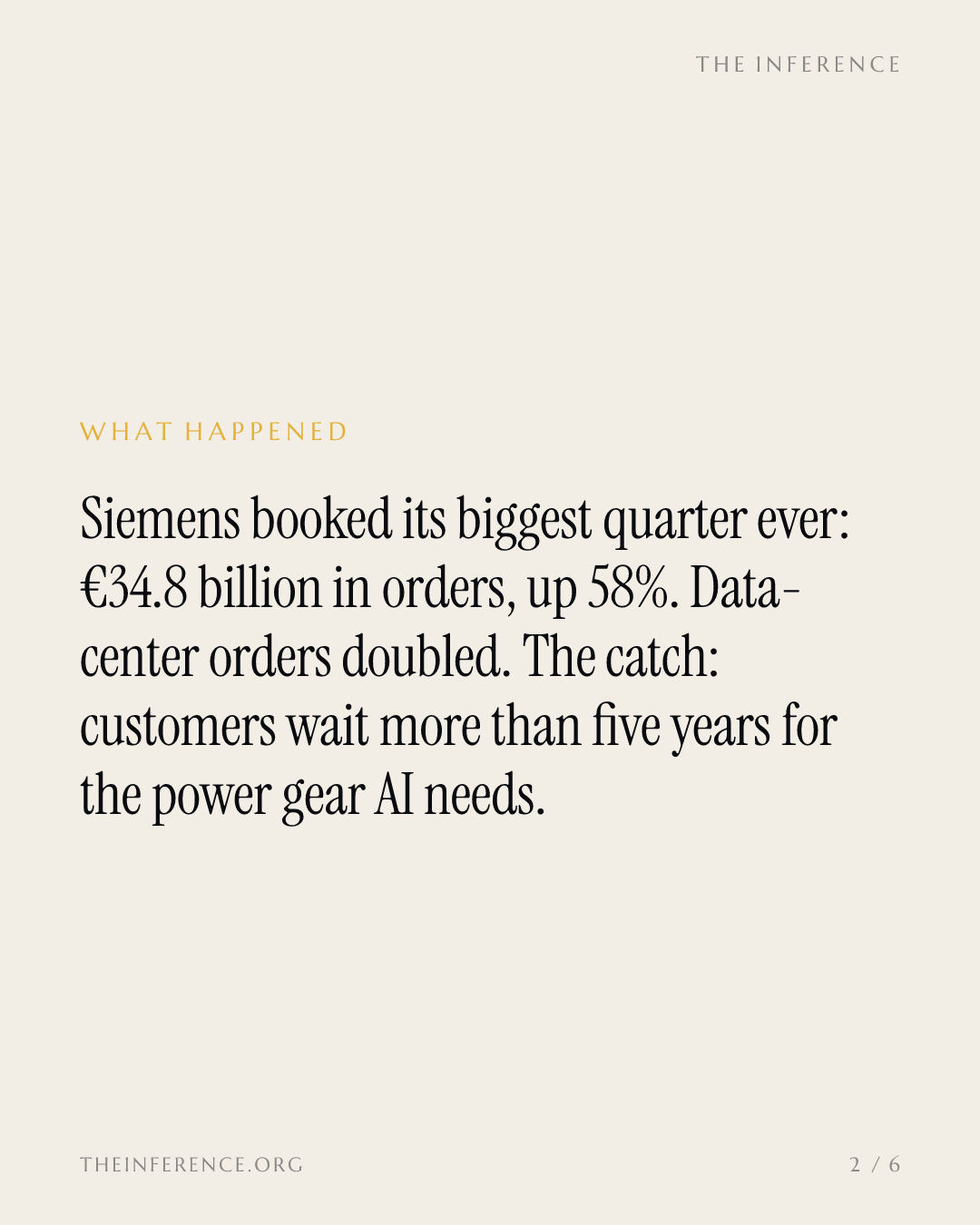
Siemens has booked the biggest order quarter in its history, and what sets its multiple from here is how long customers keep waiting. Orders reached a record €34.8 billion in the three months to September 30, up 58% 18, and the backlog of sold-but-undelivered work now stands at €143 billion 68. The company raised its medium-term revenue growth target to 7–11%, from 6–9% 16.
The pricing power is scarcity: customers wait more than five years for the turbines and heavy electrical gear that AI data centers run on 2. Scarcity pays Siemens today, and Beijing has told its turbine makers to use the same shortage as their opening 2.
Trains, not data centers, booked the largest divisional order intake
Data-center orders doubled during the quarter, and about €7 billion of that backlog is data-center equipment 68. The demand lands in Smart Infrastructure, the division supplying electrical distribution and building systems, where data centers are roughly a fifth of revenue and the second-largest vertical behind industrial customers 34.
Mobility, the train business, booked the largest divisional order intake of the quarter, ahead of a record of its own at Smart Infrastructure 34. Growth was not exclusively AI: Siemens noted that major transportation contracts contributed significantly to the increase 8.
Trains outbooked data centers: Mobility took €10.7B of a record €34.8B quarter
Data
| Value | |
|---|---|
| Mobility (trains) | €10.7B |
| Smart Infrastructure | €8.7B |
| Group total | €34.8B |
The five-year wait is the margin
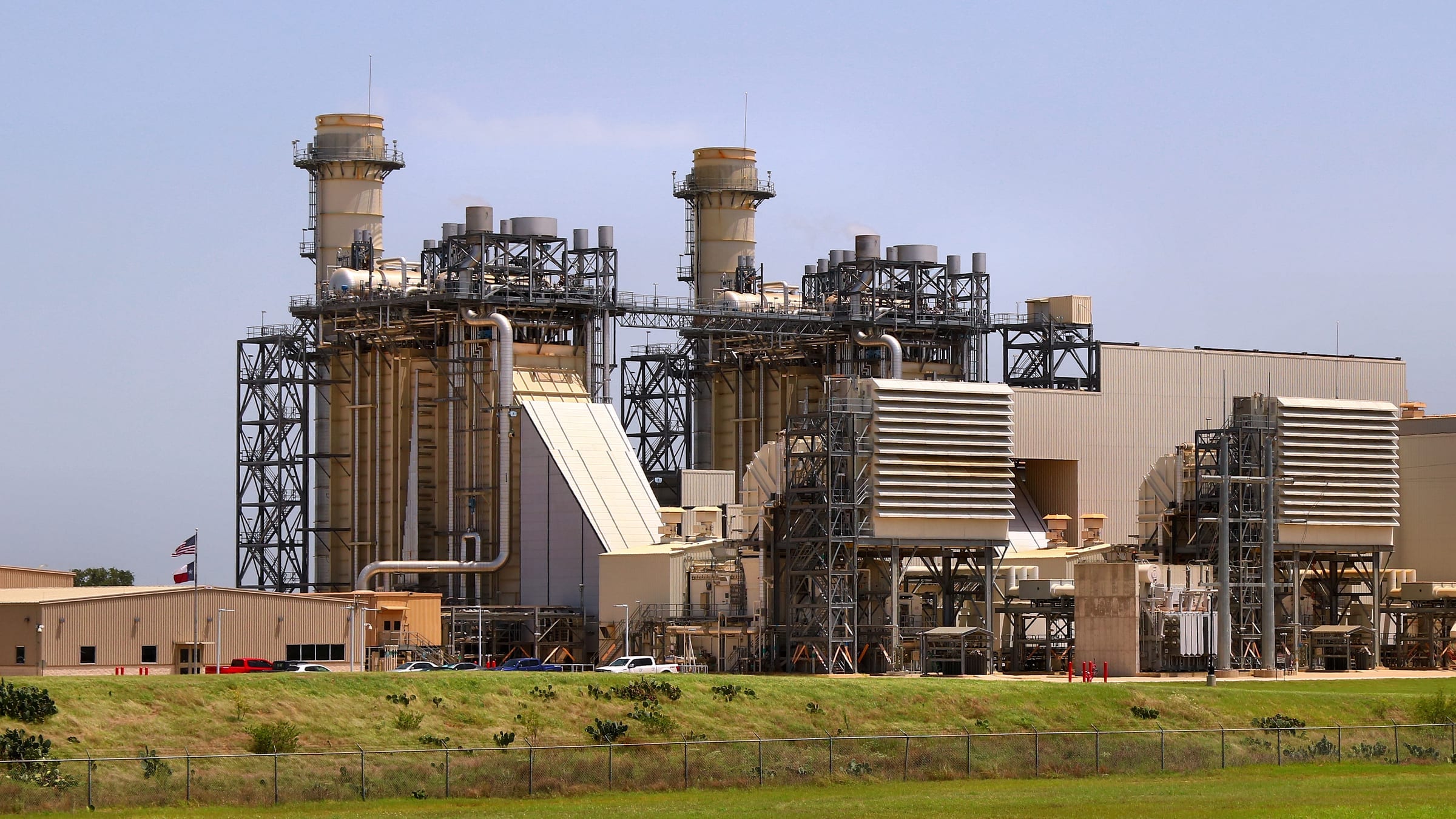
Follow the chain down from the chips: an AI cluster is a power station with computers attached, and the research service BloombergNEF expects data-center electricity demand to quadruple to 2,354 terawatt-hours by 2035 2. The turbines answering that demand come from GE Vernova−2.66% — GE Vernova, down 2.66 percent today and Mitsubishi Heavy, the US and Japanese makers that with Siemens dominate the market 2.
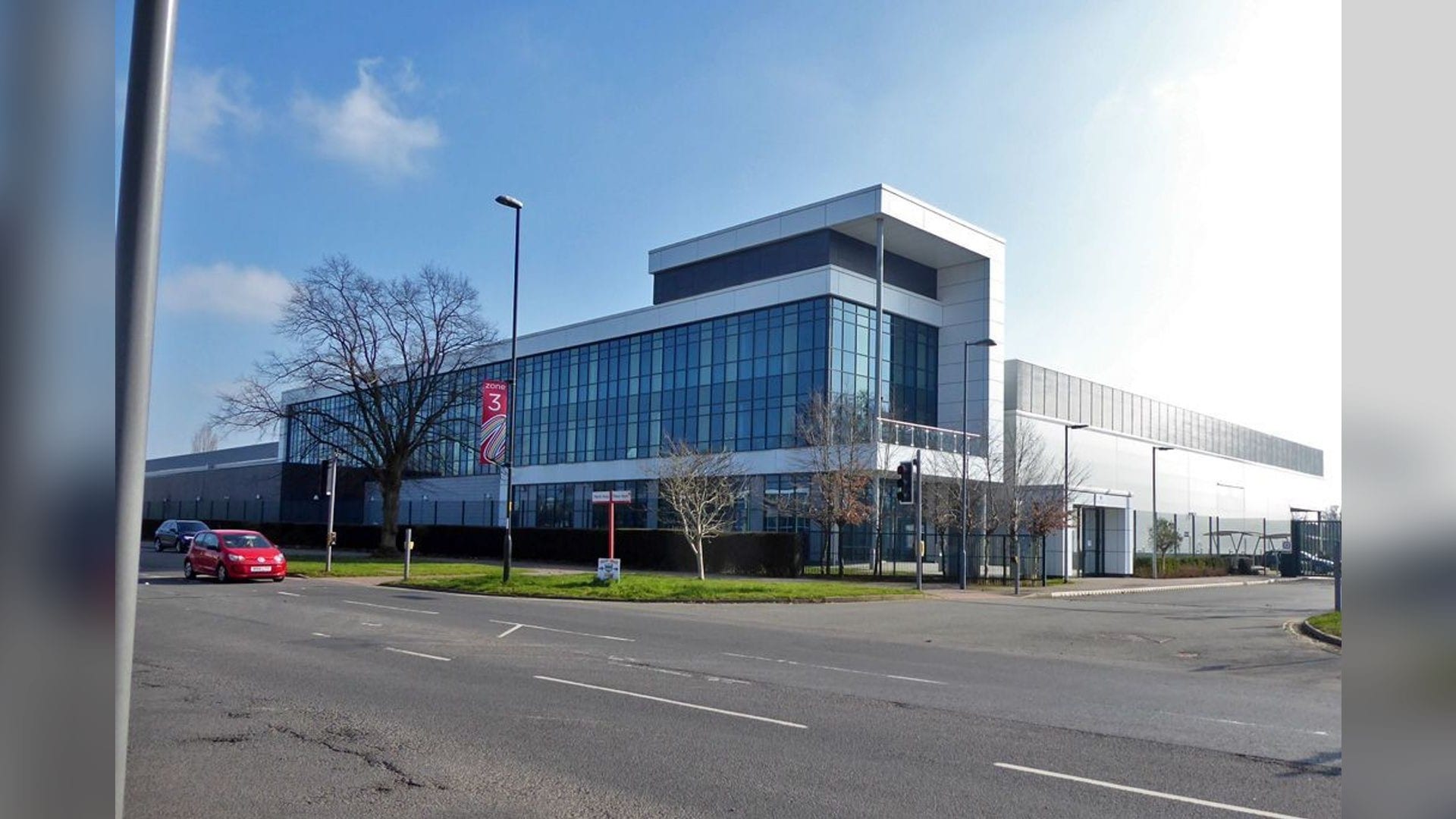
Global gas-turbine orders hit a record 38 gigawatts in the second quarter, and manufacturers hold no inventory 5. Siemens sells the layer around the chips, power distribution and cooling among it; unlike the businesses developing and operating AI cloud infrastructure, it earns from selling equipment and engineering 8. The insulation is real but not total, and the flagged risk is rising yields and financing costs cutting construction activity 8.
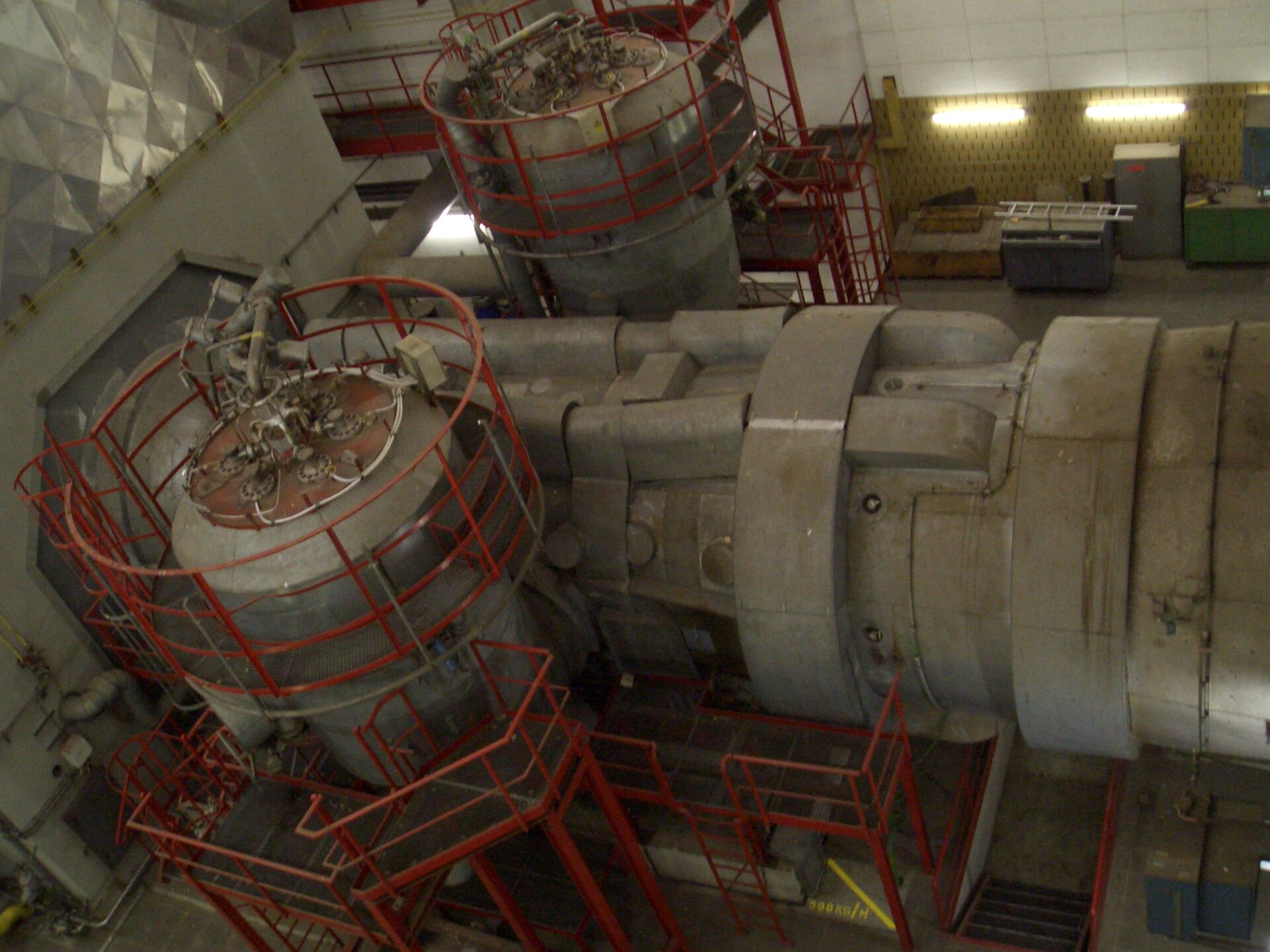
Siemens Energy sells the turbines into the same queue
Siemens Energy−0.94% — Siemens Energy, down 0.94 percent today, spun off in 2020, sells the turbines themselves: about €15 billion of its €164 billion backlog is data-center work 7. Siemens chief executive Roland Busch, asked about a slowdown, sees "nothing that worries us, at least not for the next couple of years" 6.
Beijing has aimed its turbine makers at the queue
The same shortage is China's opening. A policy paper published this month tells Dongfang Electric and Shanghai Electric, China's biggest turbine makers, to close the technology gap and build an independently controlled supply chain by 2030, and the energy regulator is pushing them toward offshore data-center projects 2.
The exports are real: a Dongfang unit went to Kazakhstan in August, Shanghai Electric is supplying a power plant in Malaysia, and Dongfang has signed 2.1 gigawatts of turbines with Eco DC Solutions, a Canadian data-center developer 25. What Chinese machines still lack is operating reliability at scale, in blades and high-temperature materials, exactly what the policy targets 2.
The watch item is the wait, not the quarter
The nearer risk than China is money. Siemens Energy chief executive Christian Bruch said this week that some data-center growth forecasts "were unrealistic, it's just that nobody wanted to hear it" 7. Siemens Energy's shares have already traded on that link between AI credit and equipment orders, as when CoreWeave's bond yield knocked them lower in late October 7.
A five-year queue can also book a peak early, with orders placed in a rush arriving as capacity all at once. Whoever turns AI capability into powered floor space is creating the value, and today that is Siemens, Siemens Energy, GE Vernova and Mitsubishi Heavy 27.
The moat lasts exactly as long as the queue: if Western waits shorten before Chinese turbines earn Western references, the incumbents keep their pricing power. Beijing's deadline for its supply chain is already on the calendar; the delivery times will answer first 2.
Get Power by email, free
How AI's hunger for electricity moves utilities, power plants and the grid. In our daily email, every weekday.




Reader comments
0 comments