SpaceX's orbital AI plan needs 180 Starship flights a year; the rocket has flown 14 times ever
On October 16 Elon Musk said the SpaceX-Nvidia Starmind computer reaches volume production in 2027. What decides whether that becomes orbital AI revenue is launch cadence: Google's peer-reviewed math needs Starship flying 180 times a year, Musk just cut his 2027 forecast to 50–100 flights, and the rocket's best year so far is five.
 Richard Tang · 3 min read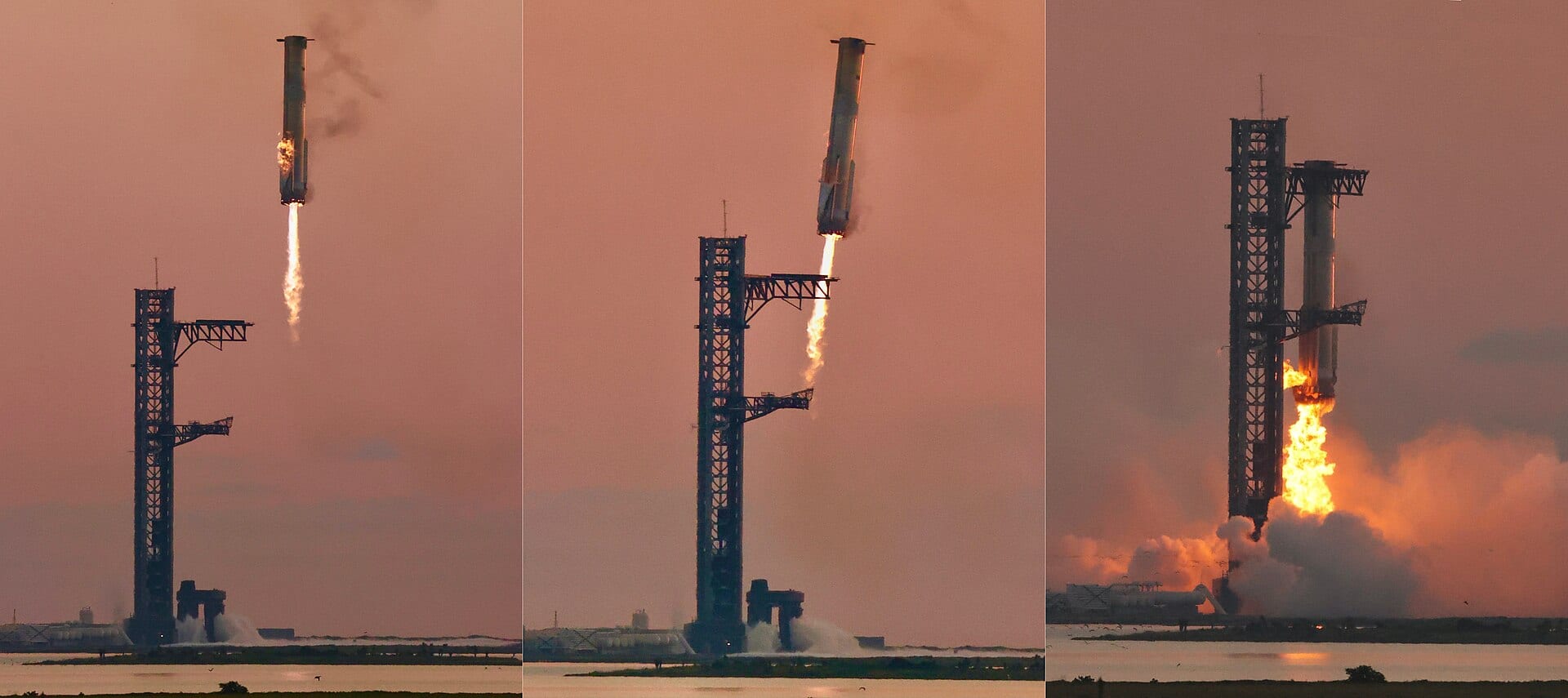
Elon Musk said on October 16 that Starmind, the orbital computer SpaceX−2.17% — SpaceX, down 2.17 percent today is building with Nvidia−1.59% — Nvidia, down 1.59 percent today, will reach volume production in 2027 and be "far better than almost anyone expects" 1. Whether that milestone turns into orbital AI revenue depends on how often Starship flies. Holders of SPCX, SpaceX's Nasdaq-listed stock since June, carry that question at a market value near $2 trillion on $23 billion of trailing sales 23.
What Musk has endorsed so far is a specification: about 72 Nvidia chips and up to 175 kilowatts per satellite, roughly 5,700 satellites per gigawatt, all confirmed by Musk himself 4. None of it has flown. He has said the first satellite launches could begin in the fourth quarter of 2027, running a space-optimized version of Nvidia's Vera Rubin system, with significant deployment in 2028 15. The one part of the plan already flying is the rocket, whose 2027 schedule Musk cut days after it reached orbit 6.
The silicon is no longer the hard part
Google supplied the field evidence on October 1. The same day its launch-economics paper appeared in the journal Joule, its first Tensor Processing Unit, its answer to Nvidia's chips, reached orbit aboard a SpaceX rocket 7. Radiation testing puts error rates low enough to run large inference workloads for a satellite's five-year life, though not the months-long training runs that span thousands of chips 7. Orbital compute is arriving as an inference business first. Musk sizes the end state at around 200 gigawatts of compute in orbit, toward a proposed maximum of a million satellites 61.
The bottleneck moved to the launch pad
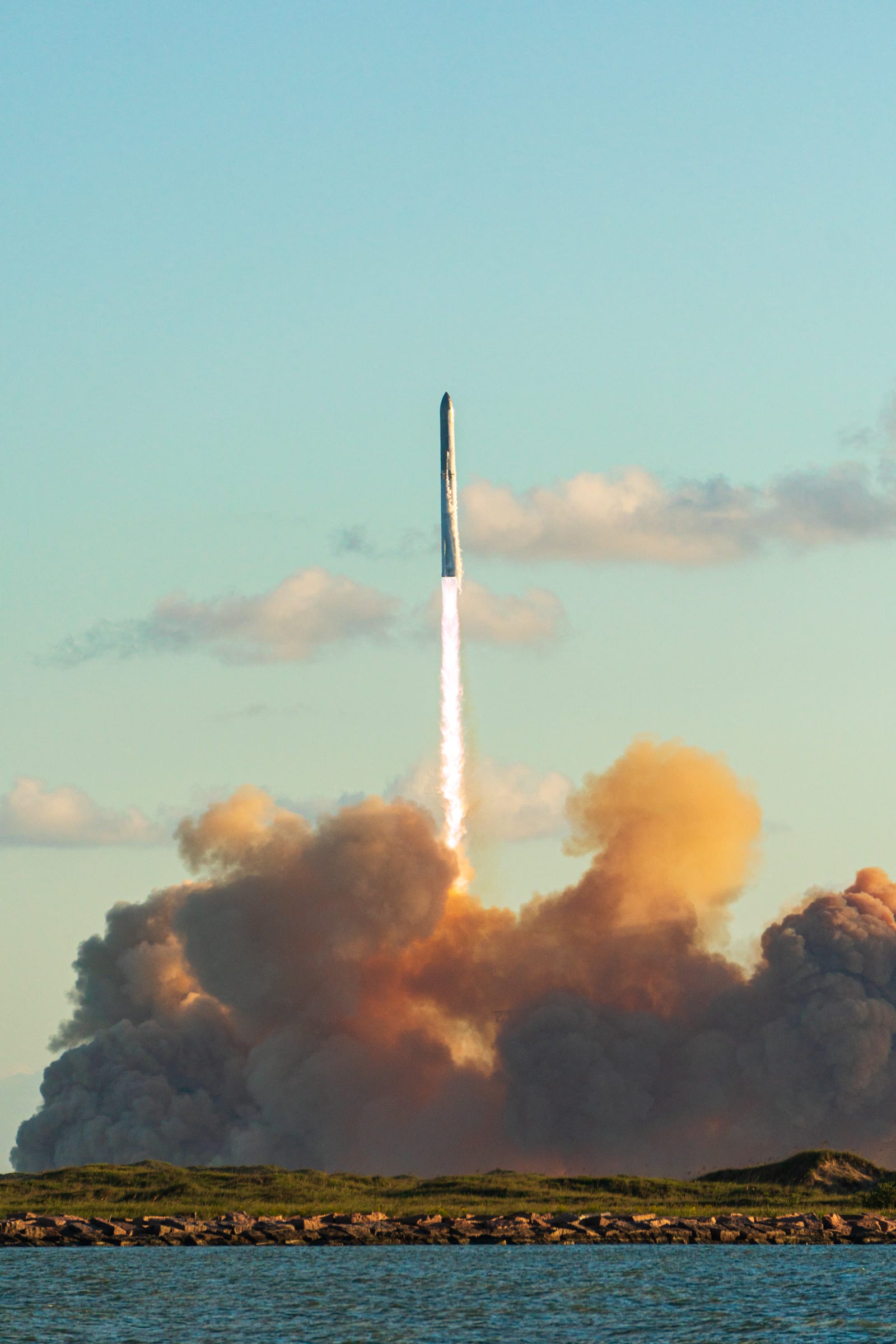
Only Starship can lift a constellation counted in the thousands, and SpaceX's own plans tie the rocket to Starlink and the many thousands of Starmind satellites 97. Starship has flown 14 times since April 2023, and its busiest year was five flights 8. Flight 14, on September 28, was its first to reach orbit; it deployed 26 operational Starlink satellites despite an engine shutdown during ascent, then came home early 8. Google's−2.89% — Google, down 2.89 percent today paper, published that week, sets the bar for the economics: launch prices near $200 a kilogram by 2035, which takes roughly 1,800 flights over a decade, 180 a year at 200 tonnes each 7.
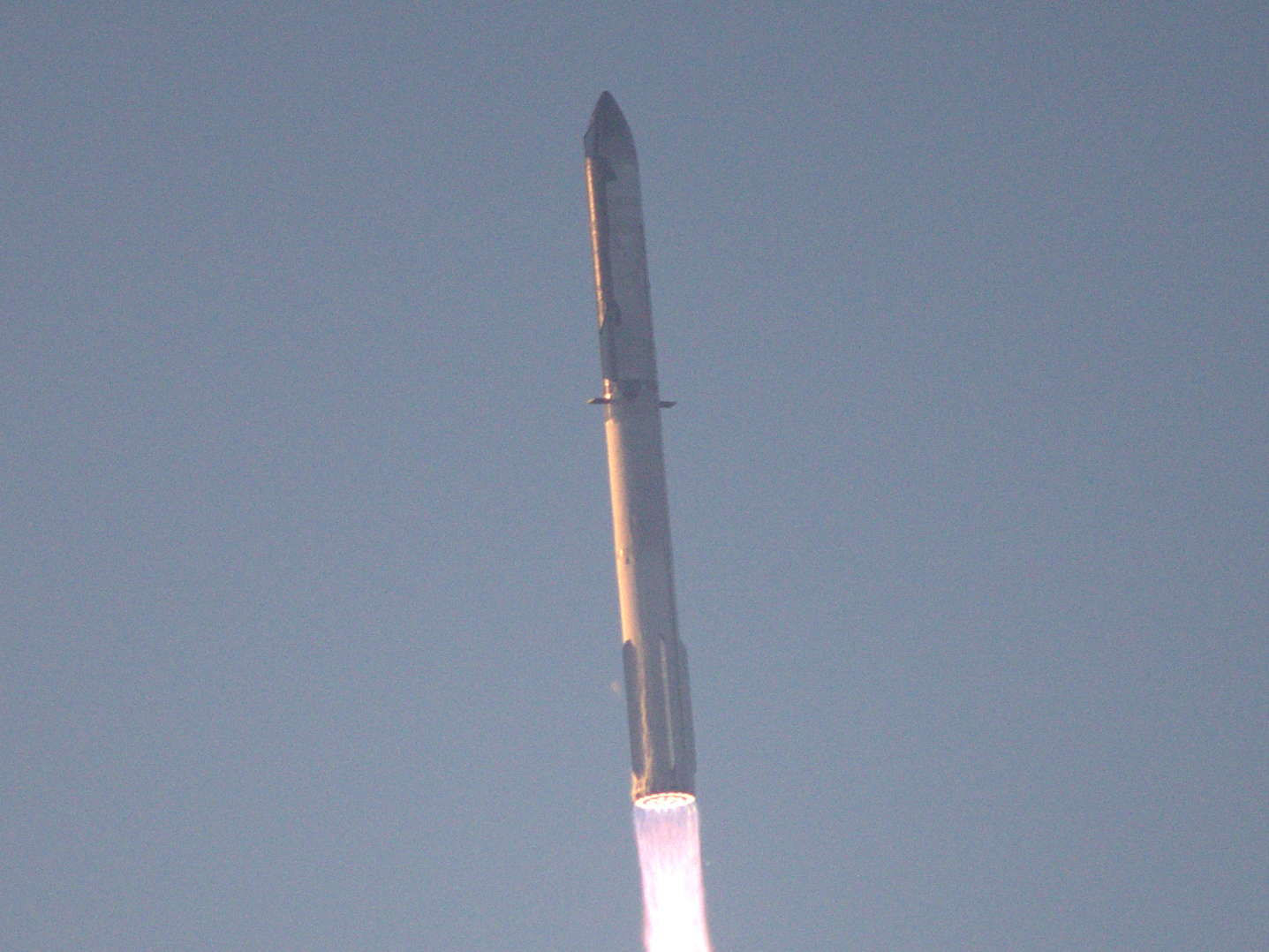
Days after that flight, Musk cut his 2027 forecast from the one-launch-a-day he had promised investors in August to once or twice a week, or 50 to 100 flights 6. Even the reduced schedule sits above anything the vehicle has flown, and below the cadence Google's math requires.
Starship's best year is five flights; the space-data-center math needs 180
- Estimate
Data
| Value | Range | |
|---|---|---|
| 2023 | 2 | — |
| 2024 | 4 | — |
| 2025 | 5 | — |
| 2026 so far | 3 | — |
| 2027 target (estimate) | 75 | 50–100 |
Two compute plans, one rocket
SpaceX stands on both sides of this market. It flew Google's prototype, and analysts report its Falcon 9, the workhorse rocket outside customers launch on today, will not be buyable after 2028, with Starship reserved for Starlink and the Starmind fleet 9. Launching for others was just 8% of SpaceX's $12.5 billion first-half revenue; to this company the rockets matter mostly as the delivery system for its AI business 9.
| Musk's Starmind plan | Google's launch math | |
|---|---|---|
| Compute end state | About 200 GW in orbit | |
| Satellites proposed | Up to 1 million | |
| Satellites per gigawatt | About 5,700 | |
| Silicon per satellite | About 72 Nvidia chips, up to 175 kW | |
| First launches | As early as Q4 2027 | |
| Launch price required | Near $200 a kilogram by 2035 | |
| Flights required | About 1,800 over a decade: 180 a year at 200 tonnes |
The first test arrives within weeks
Volume production in 2027 is a factory milestone; whether it becomes revenue depends on how often the rockets fly. The first test arrives within weeks: Flight 15 is provisionally set for no earlier than November 8 and is expected to carry Starship's first attempt to catch the ship with the launch tower, the missing half of rapid reusability 83. Watch flights per quarter through 2027. Whoever raises that rate, SpaceX's pad crews or the rivals courting the customers SpaceX has pushed away, is doing the work that turns specified silicon into paid inference 9.
Deepdive
AI-generated from this story and its cited sources. Not investment advice.