Tesla Must Swear by Tuesday Why a Car With No Steering Wheel Is Legal
NHTSA gave Tesla until 30 September to answer under oath how a car with no steering wheel or pedals meets safety rules written for human drivers. The production line is already shipping a drive unit every 10 seconds, and a $1.4 trillion valuation is priced for the answers to hold.
 Vincent Jiangtwo-minute read
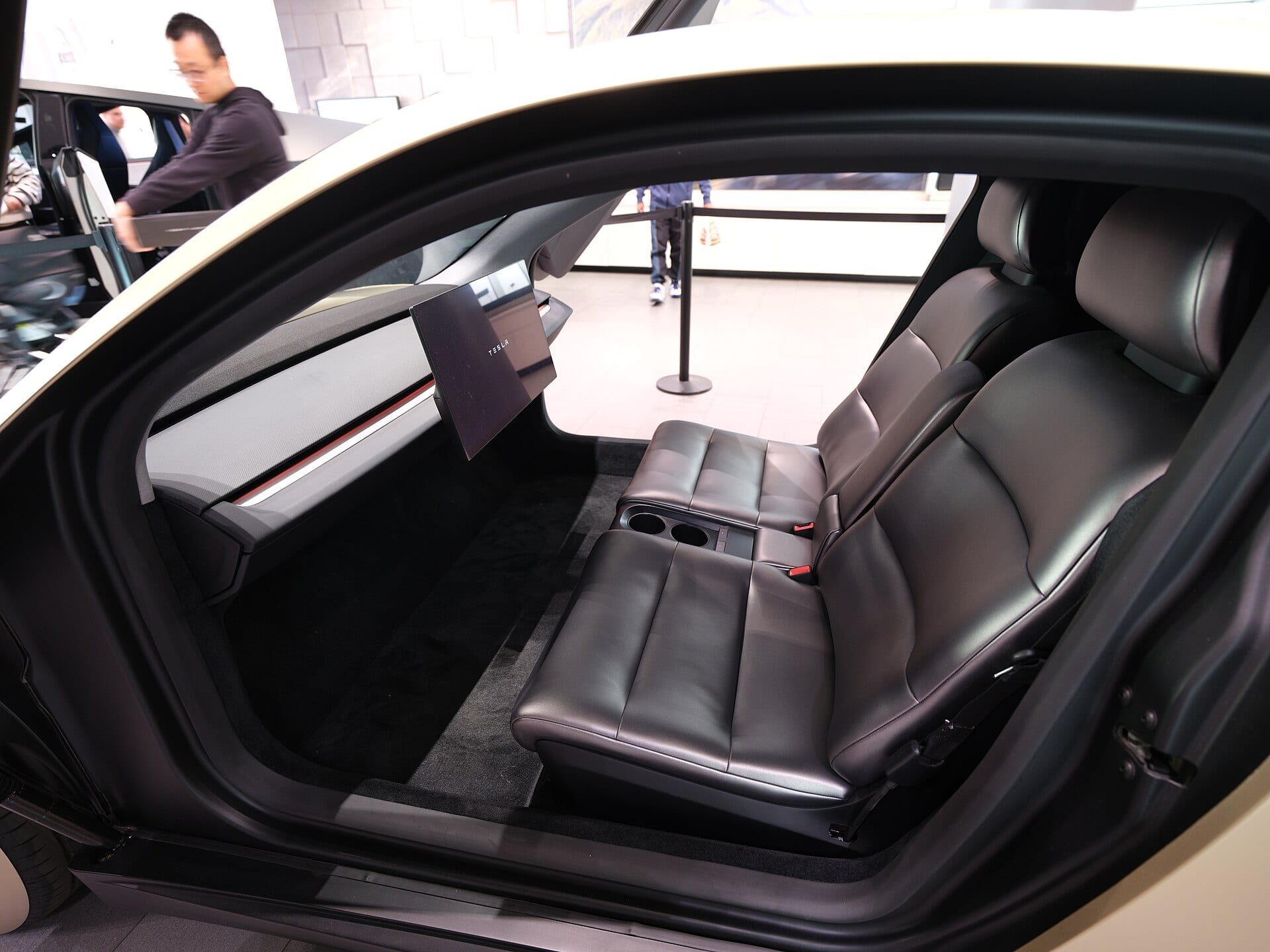
Tesla−2.61% — Tesla, down 2.61 percent today opened commercial Cybercab service in Austin on 3 September, and hours later NHTSA opened an audit of about 1,000 of the vehicles 12. On 10 September the agency escalated: a Special Order with 21 requests, sworn answers due 30 September, signed by its chief counsel 2.
The sharpest request quotes federal brake standard FMVSS 135: service brakes "shall be activated by means of a foot control." The Cybercab has no foot control, no steering wheel, no pedals, no mirrors 12. The order also asks whether the temporary bolt-on steering wheels in Tesla's first-responder guide were part of the certification basis, and how removing them squares with the law's ban on making safety equipment inoperative 23. Incomplete or false answers risk civil penalties up to about $139 million, plus criminal exposure 23.
The ramp runs the other way
A drive unit leaves the Giga Texas line every 10 seconds, roughly 8,640 a day, on a motor built without rare-earth metals 4. The Robotaxi app is open to anyone in Austin 4, and everyone who hails one sits in a car built without the very equipment the cited rules require: riders carry the physical risk, shareholders the financial one. On 19 September, a Houston lot was filmed packed with Cybercabs and Model Y robotaxis, many still wearing their steering wheels, which reads as staging for a second city rather than service yet 56.
The money is the bet
Second-quarter revenue was $28.2 billion, up 25.5 percent, on a 1.4 percent operating margin 78. The market carries that as a $1.4 trillion valuation, 417.7 times forward earnings 7: a robotaxi claim, not a car claim.
Operating margin fell from 10.8% to 1.4% in the eight quarters before paid Cybercab service began
Data
| Operating margin | |
|---|---|
| Q3 '24 | 10.8% |
| Q4 '24 | 6.2% |
| Q1 '25 | 2.1% |
| Q2 '25 | 4.1% |
| Q3 '25 | 5.8% |
| Q4 '25 | 5.7% |
| Q1 '26 | 4.2% |
| Q2 '26 | 1.4% |
The compliant path is real, and it is capped
Zoox self-certified a control-free vehicle, withdrew the claim under investigation, then waited for an exemption granted in July that covers eight standards and 2,500 vehicles a year 21. Waymo, layering autonomy onto ordinary cars, runs more than 4,000 vehicles across 14 US cities and over 500,000 paid rides a week 9.
NHTSA hasn't ruled the Cybercab illegal: the standards hold until rewritten
NHTSA has not called the Cybercab illegal; it holds the old standards in force even as it proposes loosening the foot-brake rule 623. The answer to watch is the narrow one: whether the bolt-on wheels were in the certification basis. Accept it and the ramp continues; reject it and three former senior agency officials expect the clash in court, where NHTSA "has not always won" 1. Zoox asked permission and waited. Tesla built the factory and left the question to an affidavit due Tuesday.
Get Policy & Labor by email, free
The rules governments write for AI, and what AI does to jobs. In our daily email, every weekday.

Reader comments
0 comments