The Market Paid 8% for a Memory Fix That Ships in 2030
Intel closed up about 8% Thursday on a Reuters-reported talk about SK hynix making memory at its delayed Ohio campus, a fab due in 2030 at the earliest. The shortage it would relieve is already compressing Apple's margins and adding $100 to an iPhone.
 Richard Tangfour-minute read
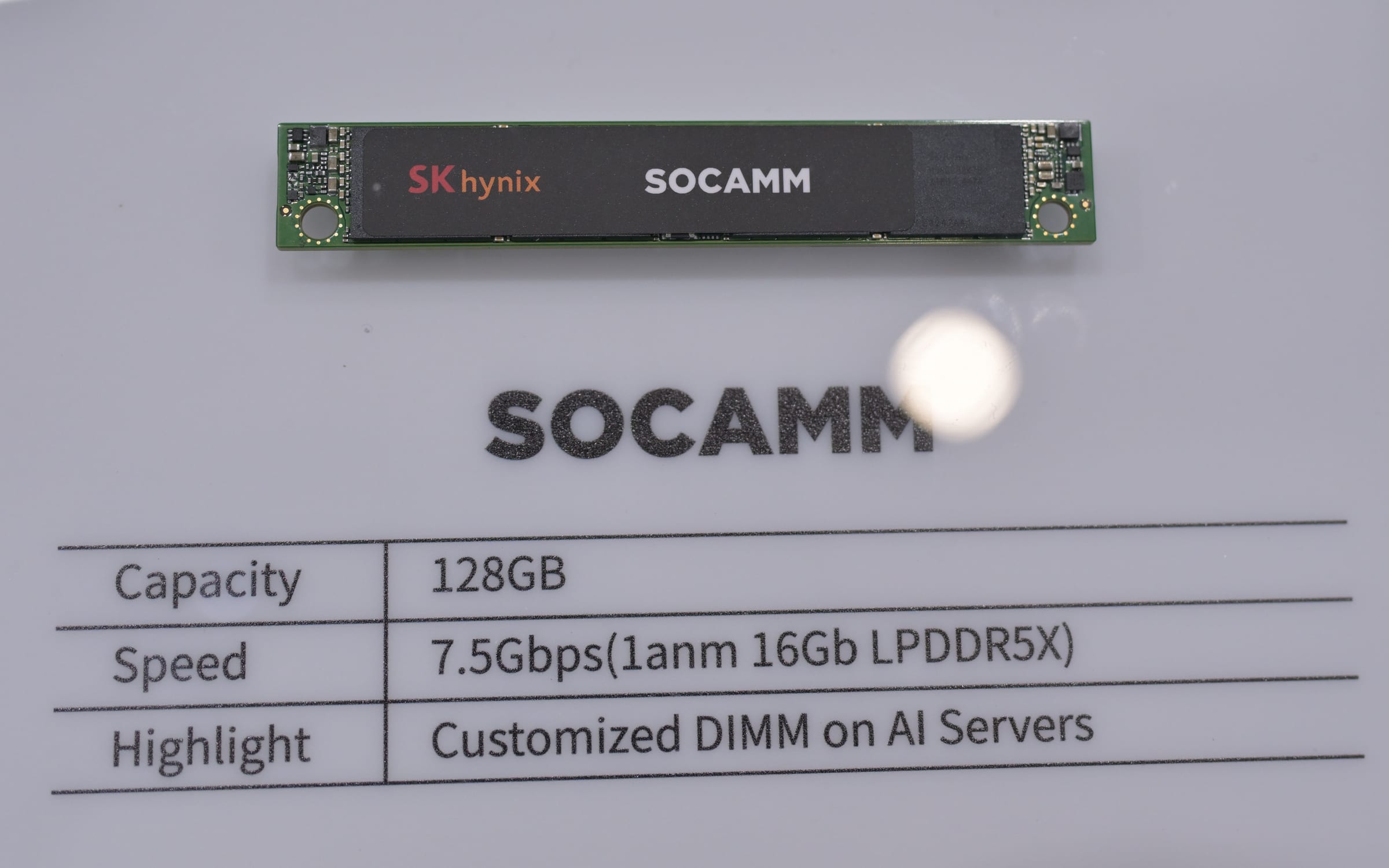
Intel−4.19% — Intel, down 4.19 percent today finished Thursday up about 8%, after a 4% rise on Wednesday, on the strength of a conversation 12. Reuters reported that SK hynix−5.27% — SK hynix, down 5.27 percent today, the leading supplier of high-bandwidth memory, is in exploratory talks to make memory chips on US soil for the first time, either by leasing part of Intel's Ohio complex or through a venture with Intel and cloud firms keen to lock in supply 3. One source described the talks as exploratory and stressed no decisions have been made; SK hynix said "no matters have been determined at this stage," and Intel declined to comment on what it called speculation 3. The two Ohio fabs were announced in 2022 at up to $100 billion, with production originally due in 2025; completion has since slipped to 2030 and 2031 3.
That is the strange part: a fab that cannot produce a wafer this decade added eight points to Intel. The market is not pricing supply relief. It is pricing permanence.
The squeeze has reached the income statements
The same day, Barclays strategist Venu Krishna named memory as the earnings risk the Fed's first rate hike since 2023, delivered Wednesday, cannot fix 4. His evidence is the buyers. Apple+0.12% — Apple, up 0.12 percent today attributed all of its recent gross-margin compression to memory costs; HP+0.83% — HP, up 0.83 percent today expects memory and storage to take a larger share of its bill of materials; Samsung, maker and buyer at once, said pre-booked demand implies a wider supply-demand gap in 2027 than in 2026 4.
Apple's own guidance shows the arithmetic. Gross margin was 50.1% in the June quarter, guided down to 47–48% for September, and Tim Cook has called memory pricing "a 100-year flood" 5. The iPhone 18 Pro starts $100 higher at $1,199, yet TrendForce had modeled a $150–$200 increase, with the 256GB model's memory cost nearly 400% above a year earlier 5. The phones reach stores on 18 September 5.
Upstream, the numbers get steeper. Intel CEO Lip-Bu Tan said Tuesday that memory prices have climbed five- to seven-fold and the shortage could worsen next year 67. SK hynix CEO Kwak Noh-jung has called 2027 the worst supply year in the industry's history 6. TrendForce estimates server DRAM contract prices rose 64% in the second half of 2025 and could rise another 270% during 2026 6. Intel is reportedly raising PC processor prices about 10% on 5 October, its third hike since late 2025 7. The bill is moving to the shelf.
Who collects
Suppliers have largely sold out premium AI memory capacity through much of 2026 4. Micron's−4.50% — Micron, down 4.50 percent today fiscal third-quarter revenue reached $41.46 billion, against $9.30 billion a year earlier, at an 84.9% gross margin, with roughly $50 billion guided for the current quarter 6. Fourteen of its first sixteen strategic customer agreements carry about $100 billion in minimum contracted revenue, the insurance policy we described on Monday 6. When Tan warned about surging prices this week, Micron rose 5.3% to $975.86 8: a warning about input costs is a revenue forecast for the seller.
Data
| Quarterly revenue | |
|---|---|
| FQ3 2025 (actual) | $9.3B |
| FQ3 2026 (actual) | $41.46B |
| FQ4 2026 (guided) | $50B |
Thursday's pattern confirms the read. SK hynix fabricating memory in the US should, on paper, narrow the domestic scarcity premium Micron enjoys. Instead Micron rose more than SK hynix: 24/7 Wall St read that as the market pricing scarcity and group pricing power ahead of any competitive consequence 9. Scarcity beat share.
The fix arrives after the flood
Look at what the Ohio story actually contains 3. The structures are a lease or a cloud-backed venture; Seoul could block either, because advanced memory counts as national core technology in South Korea and a transfer abroad triggers government review; the trade ministry told Reuters as much 3. Two sources said US manufacturing costs much more than Korea's 3. SK hynix chairman Chey Tae-won wants it anyway. "I think we need to build a factory in the United States," he said in July, under pressure from customers and from Washington, where Commerce Secretary Howard Lutnick has threatened tariffs of up to 100% 3. Reuters could not learn which chips SK hynix would even make there.
Timing is the part no statement can fix. Micron's Sanjay Mehrotra expects supply to improve only gradually in 2028, and one industry estimate puts factories that materially ease the shortage at full production no earlier than 2028–29 6. Ohio's fabs arrive in 2030 and 2031 3. The 2027 gap Samsung describes opens before any of it.
The binding constraint on memory is no longer demand or capital: buyers sign minimums and press Washington 36. It is wafer-making time. So what moves the needle is capacity that ships before 2028: conversions and packaging, like SK hynix's Indiana packaging plant now under construction 3, not a greenfield campus this decade. Watch Micron's 30 September report for how long the pricing power runs 6, and watch Seoul, since one government statement can walk back Intel's whole move 9. Until then the shortage collects where it already does: two to three points of gross margin in a single quarter at Apple 5, $100 on a phone 5, and, if the reports are right, 10% on the next PC processor 7.
Get Chips by email, free
How AI demand is reshaping chipmakers, memory and the fabs behind them. In our daily email, every weekday.





Reader comments
0 comments