Uber's allies spent a record $10.9 million in Albany; its draft rule would keep 85% of robotaxi rides human
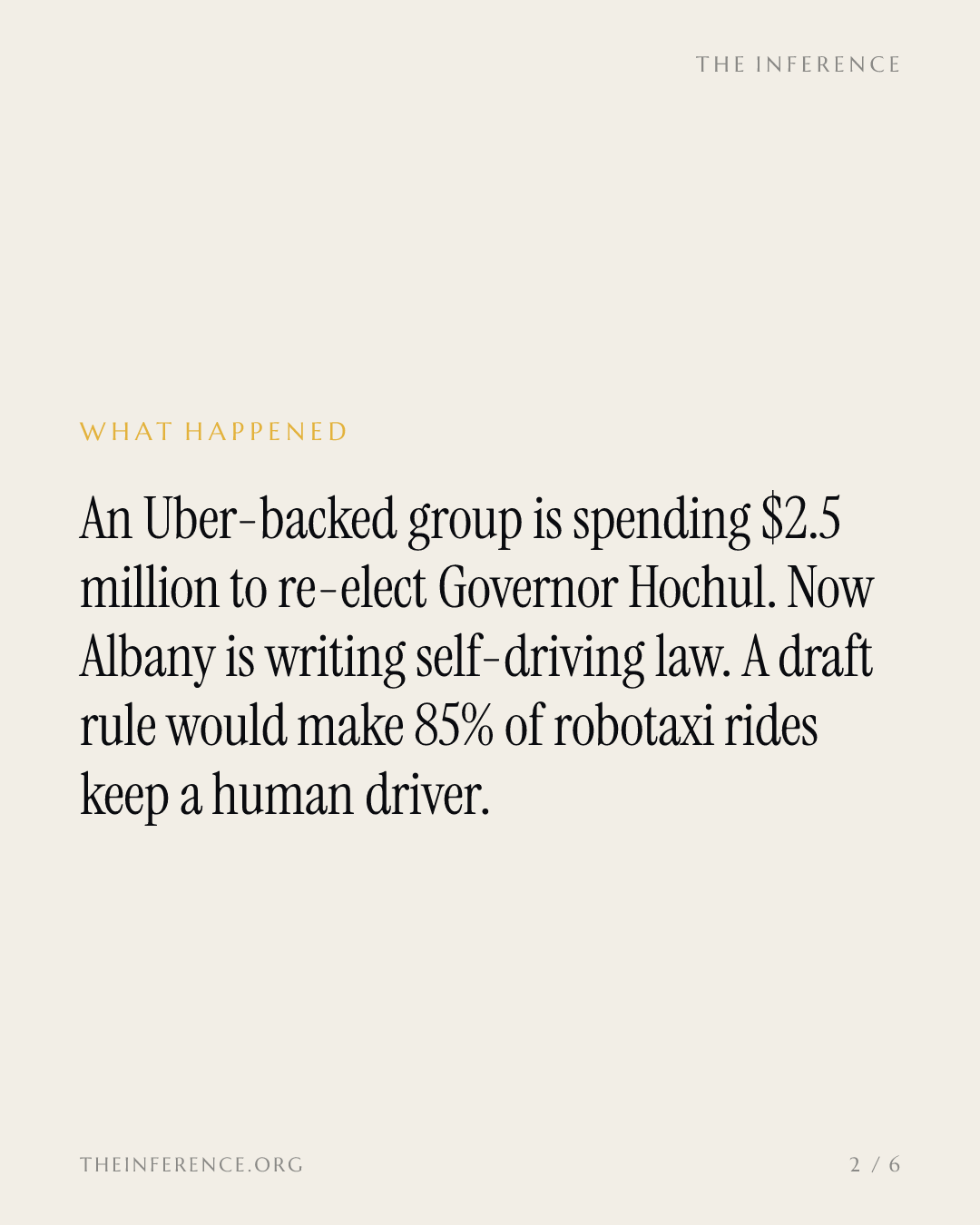
An Uber-backed super PAC is expected to spend $2.5 million to re-elect Governor Kathy Hochul, on top of a record $10.9 million the company's allies spent on an insurance campaign this year. Albany's next project is autonomous-vehicle law, and one idea on the table would keep a share of ride-hail trips in human hands.
 Vincent Jiang · 3 min read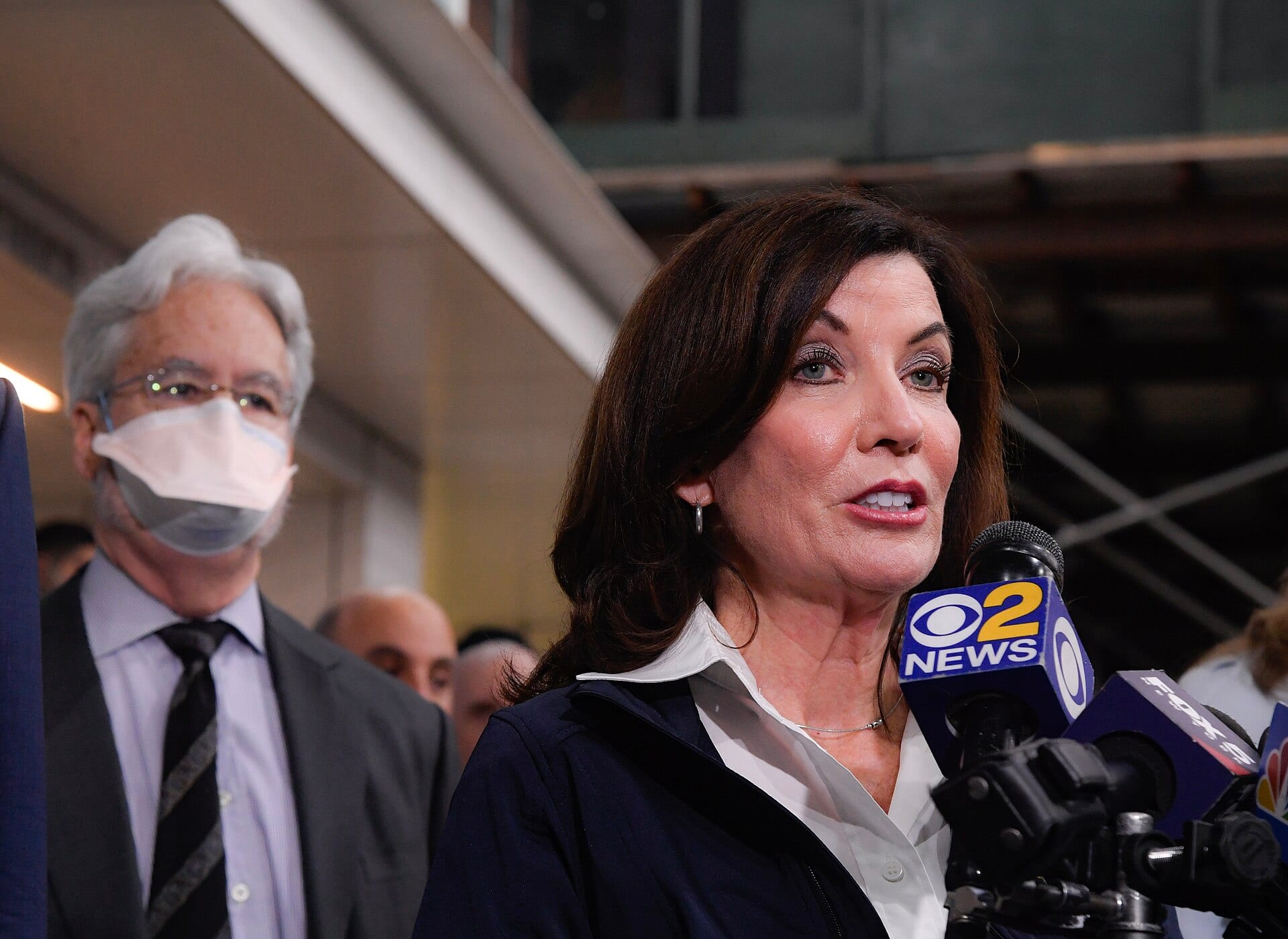
The money lands before the bill does
An Uber+1.31% — Uber, up 1.31 percent today-backed super PAC is expected to spend $2.5 million to re-elect Governor Kathy Hochul, one of the biggest Democratic-side outlays in New York's state races this fall 1. It follows a record $10.9 million that an Uber-backed group spent this year on ads behind Hochul's successful rewrite of New York's car insurance laws, changes that stand to benefit Uber 1. The audience is narrow: State Senator Jeremy Cooney, who chairs the Senate's transportation committee, plans autonomous-vehicle legislation next session and says he is open to requiring that a share of ride-hailing trips stay in human hands. Uber has handed him no model legislation, for now 1.
A quota with Uber's fingerprints
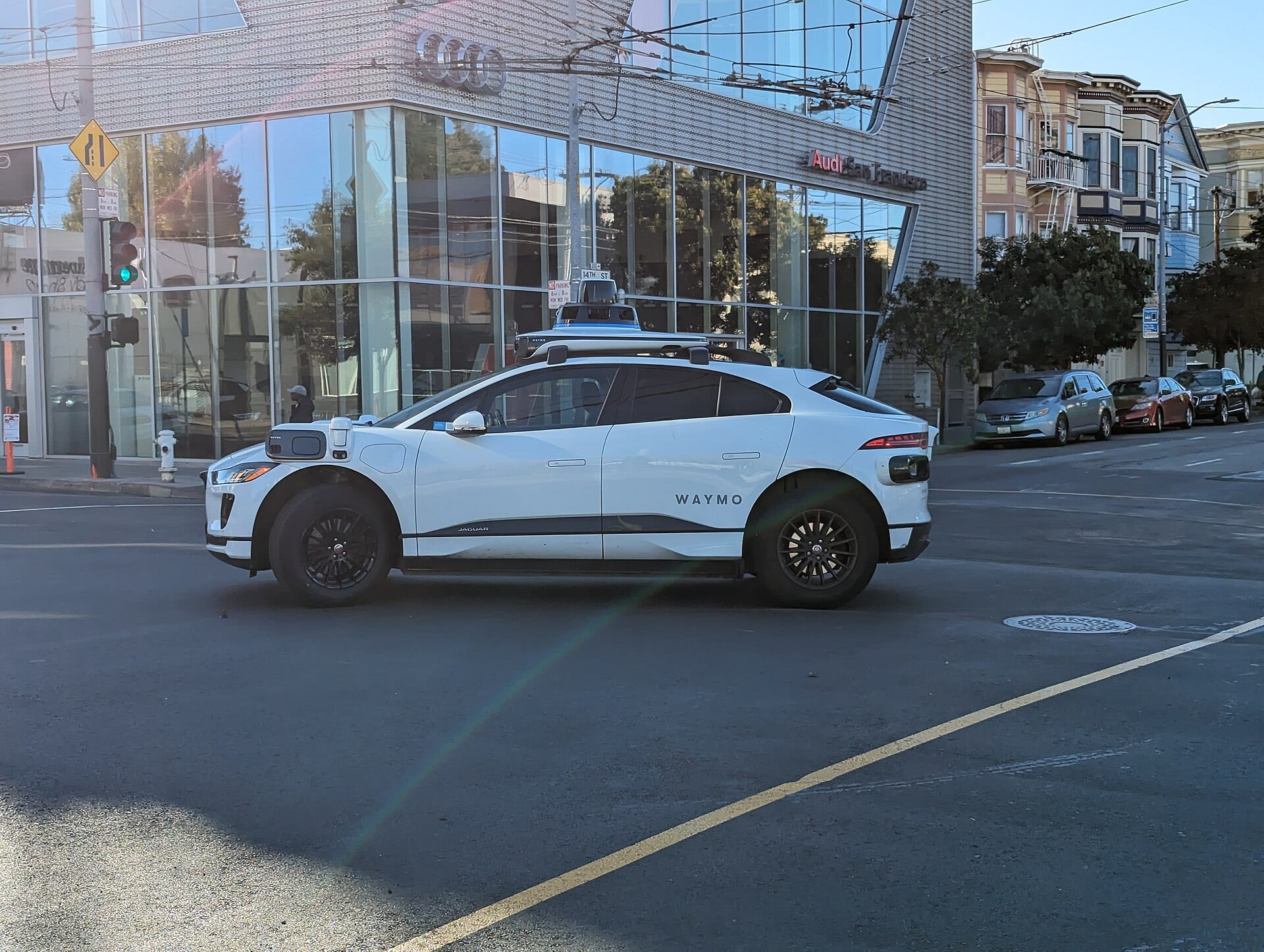
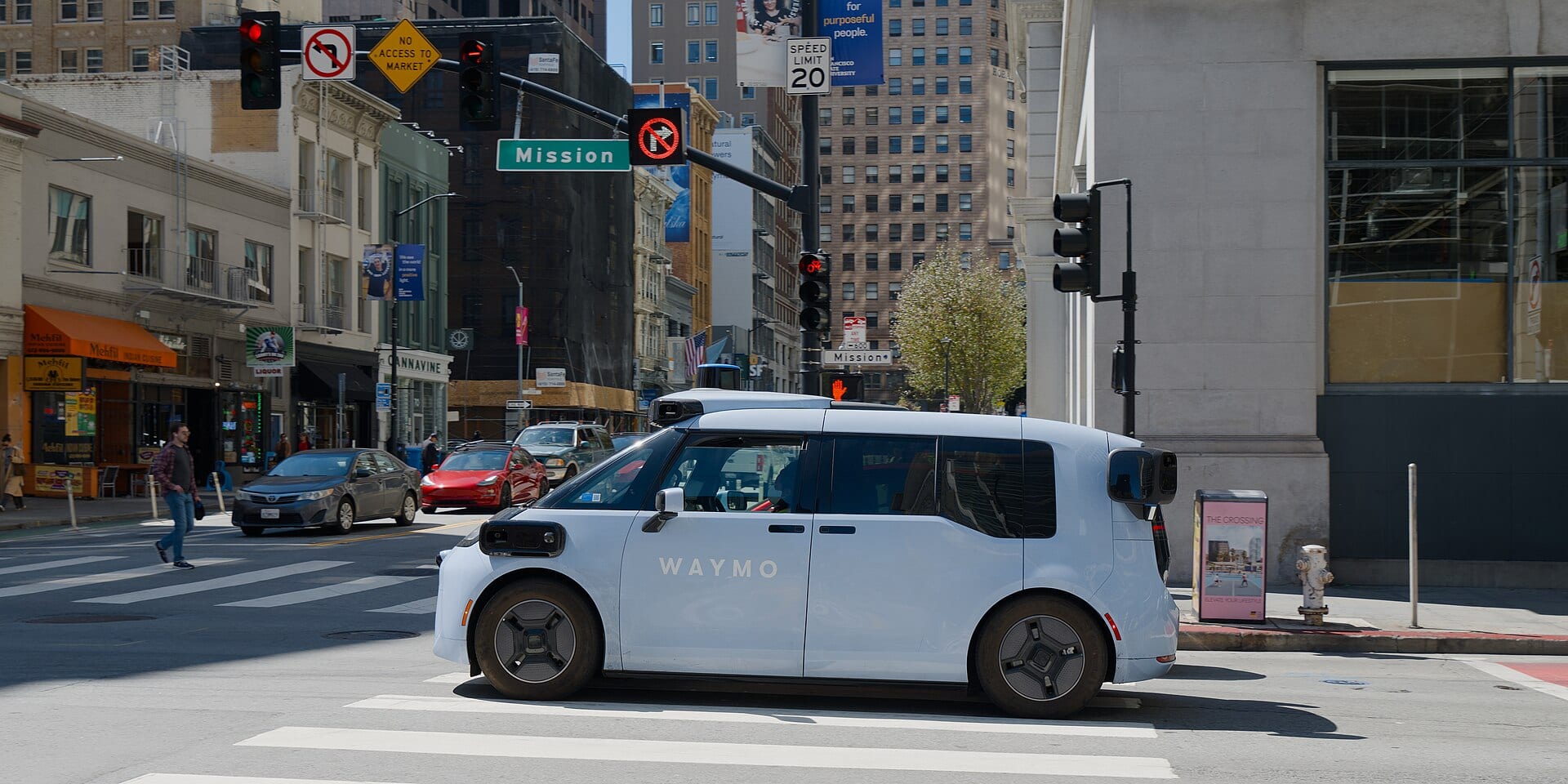
That idea already exists in draft, in Uber's handwriting. A lobbyist for the company circulated language in New Jersey that would force any platform offering driverless rides to keep human drivers on 85 percent of them for three years, wording that would likely bar Waymo, Zoox and Tesla+2.32% — Tesla, up 2.32 percent today from running their own ride-hail apps in the state 2. Uber's United States policy lead put it plainly: "there should be a requirement for consumers to be able to take an Uber that's driven by a human" 3. Waymo, which sells driverless rides directly through its own app and runs fully autonomous service in 14 cities, rejects network limits 14. Uber counters that rivals' bills have "tried to cynically lock out competitors and create monopolies" 2; Greg Rogers of the think tank The Innovation Majority calls Uber's move regulatory capture, "charging rent on anyone who seeks to operate AVs" 3.
London shows what the gate is worth
The partner-first model is already earning abroad. Uber and Wayve put London's first robotaxis on the street on September 3, fewer than 20 Ford Mustang Mach-Es with safety drivers aboard; riders cannot order one, only opt in and hope for a match on the Uber app 45. More than 140,000 Londoners have opted in 6. Pony.ai, listed on Nasdaq, begins Gen-7 road tests there within weeks, with rides eventually flowing through Uber's app under a plan for more than 2,000 robotaxis across Europe 78. The same arrangement has carried paying passengers in Zagreb since August 74. Uber counts more than 30 autonomous-vehicle partners and expects self-driving trips in up to 15 cities by the end of 2026 37.
What Albany decides
A human-share mandate would gate Waymo's direct lane into New York, and it would bind Uber's own partners just as tightly: if robotaxis must run beside human drivers, everyone's cost curve bends slower. Watch Cooney's bill for a share requirement, and for whether Uber supplies the words this time. Uber does not need to build the robotaxi; it needs to own the door it drives through.
Deepdive
AI-generated from this story and its cited sources. Not investment advice.