Wagga Wagga council demands 1.5% of IREN's Redbank capital costs for community funds
Wagga Wagga wants 1.5% of IREN's Redbank capital costs for community funds, a levy that lands while $18.9 billion of commitments sit against $3.5 billion of cash and $6 billion of the build's financing is not yet secured.
 Richard Tangthree-minute read
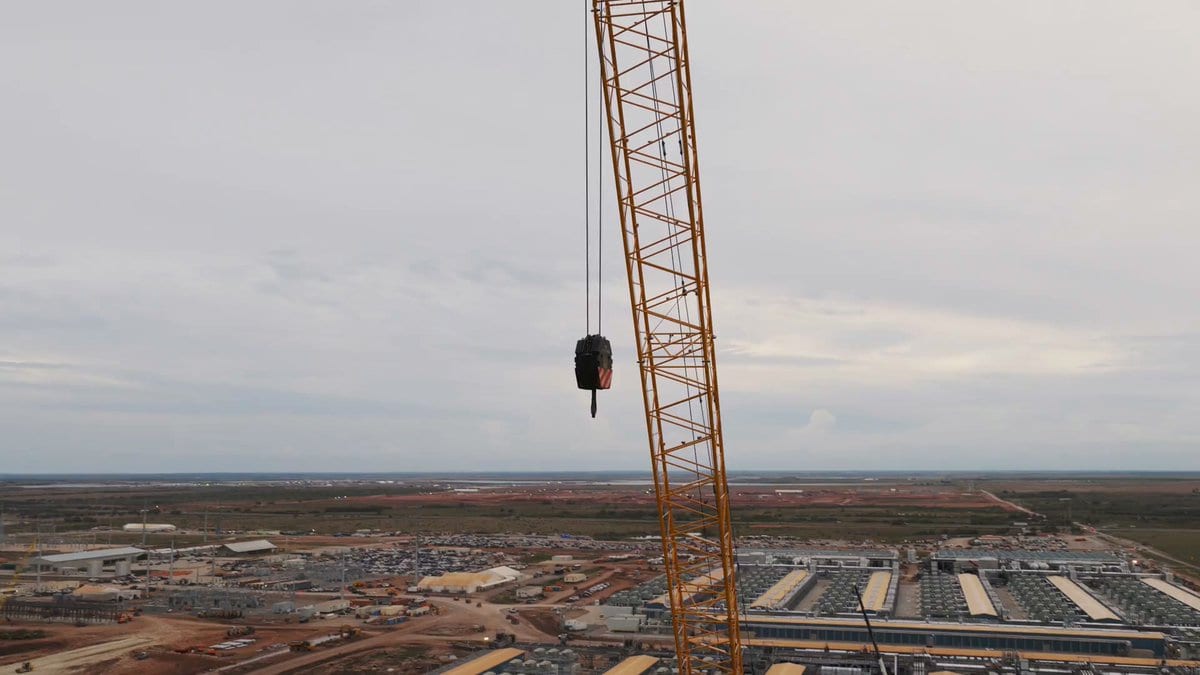
Wagga Wagga's council has put a price on hosting IREN's−3.92% — IREN, down 3.92 percent today next data center, and it lands on a company already short of funded money. On November 16 the New South Wales council finalized a demand that IREN pay 1.5% of the Redbank project's total capital costs, including components, machinery, plant and equipment, into community funds, with 1% run by the council and 0.5% managed jointly 1. IREN has not confirmed the cost of Redbank; figures up to $10 billion have been reported, which would put the levy near $150 million. 1
The demand doubles what IREN already offered the town
This is the financing story wearing a civic face. Redbank needs approval from the NSW Government, and IREN wants it built by 2029 with 500 construction jobs attached 1. IREN's own materials offer the town 200 ongoing jobs and $200 million of community support over 30 years 1. The council's benchmark asks for roughly that again, front-loaded, at the moment of construction rather than spread across decades. 1
The levy lands on a build racing the market's patience
Commitments of $18.9 billion sit against $3.5 billion of unrestricted cash
- Estimate
Data
| Value | |
|---|---|
| Capital commitments (estimate) | $18.95B |
| Dell hardware orders (estimate) | $6.7B |
| Target financing (unsecured) (estimate) | $6B |
| Unrestricted cash | $3.52B |
The money question is concrete. IREN's Form 10-Q at September 30, 2026, shows $18.9 billion of capital commitments against $3.5 billion of unrestricted cash, and purchase orders for roughly $6.7 billion of Dell hardware that ship in tranches from the second half of 2027, each installment due within 30 days of delivery. 2
Of the roughly $15 billion IREN plans to spend this fiscal year, about $6 billion is "target" financing, subject to market conditions. 3 A levy charged on capital cost sits inside the commitment base that funding must still cover. For a stock down 63% this year, the negotiation before NSW decides is cost and delay added to a build already racing the market's patience. 1
IREN's quarterly capital spending rose 24-fold in two years, to $4.77 billion
Data
| Capital spending | |
|---|---|
| Q2 '24 | $0.2B |
| Q3 '24 | $0.27B |
| Q4 '24 | $0.18B |
| Q1 '25 | $0.44B |
| Q2 '25 | $0.36B |
| Q3 '25 | $0.28B |
| Q4 '25 | $0.73B |
| Q1 '26 | $1.33B |
| Q2 '26 | $1.98B |
| Q3 '26 | $4.77B |
The shareholder pays for the community's toll
Daniel Roberts, IREN's co-CEO, framed the pattern on the earnings call: whether it is Texas, Australia or Spain, people want data centers to pay their own way, and "it feels completely reasonable." 3 He is right on the first count. Communities hosting power-hungry infrastructure, and Australian data centers draw about 3% of national electricity, are entitled to extract a toll; the interesting question is who pays it. 1
Here the shareholder pays, and the mechanism is the financing clock. Every levy is money that cannot go toward a Dell installment, so the gap between commitments and committed cash widens, the terms of the "target" financing get worse, and equity absorbs the difference. Watch the three outcomes: IREN accepts the benchmark, haggles it down, or risks the approval. Whichever it picks, the market is no longer pricing contracts, it is pricing whether the money to build them arrives before the bills do. 23
Get Data Center by email, free
Who is building AI's data centers, and who is paying for them. In our daily email, every weekday.




Reader comments
0 comments