X-FAB spent $1 billion on capacity running near 60%; October 29 results test its 30% margin promise
Chief executive Damien Macq has promised an EBITDA margin above 30% on capacity the company already paid for. Q3 results due October 29 guide to the high teens instead, and Melexis's recovery this morning shows demand arriving before the margin does.
 Richard Tang · 3 min read
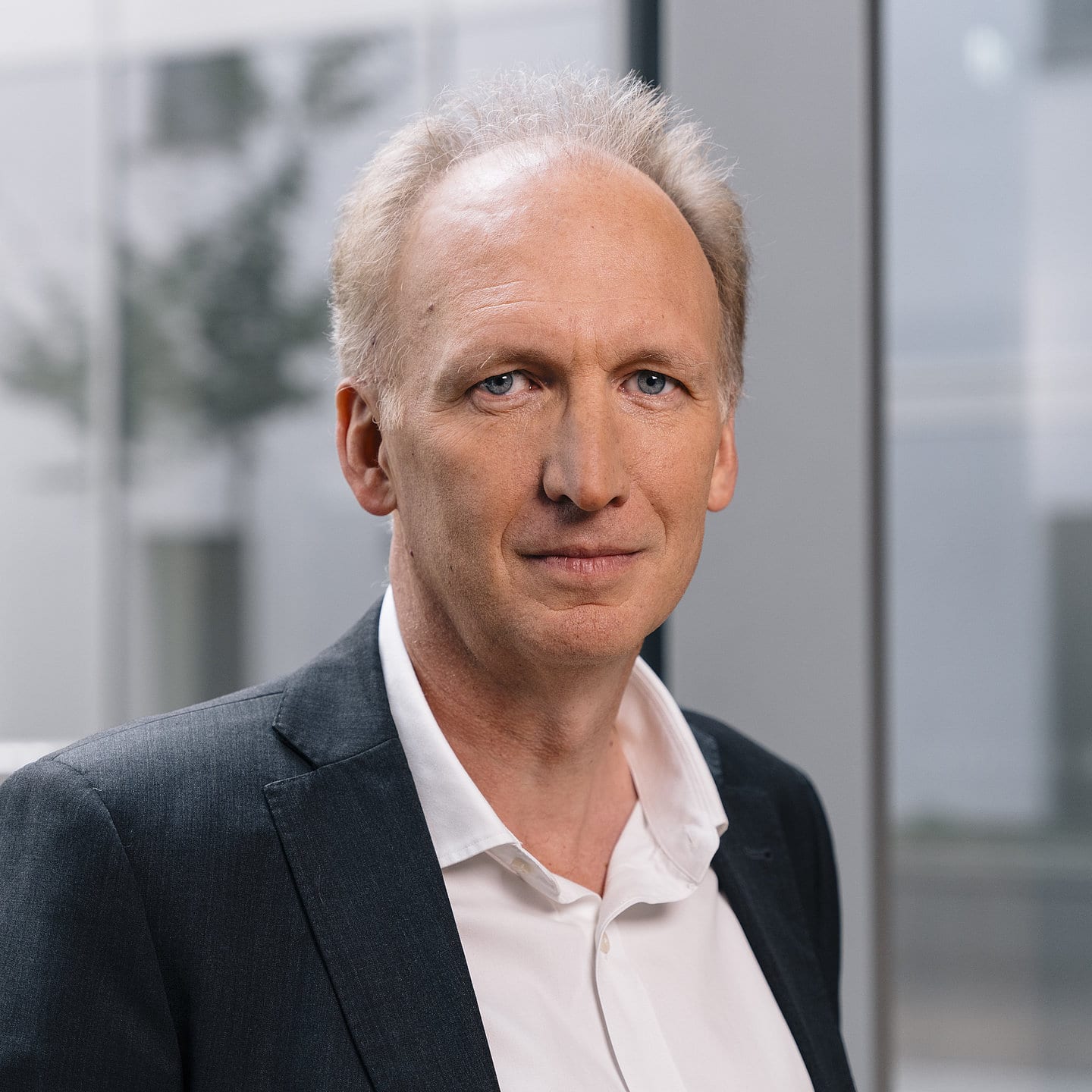
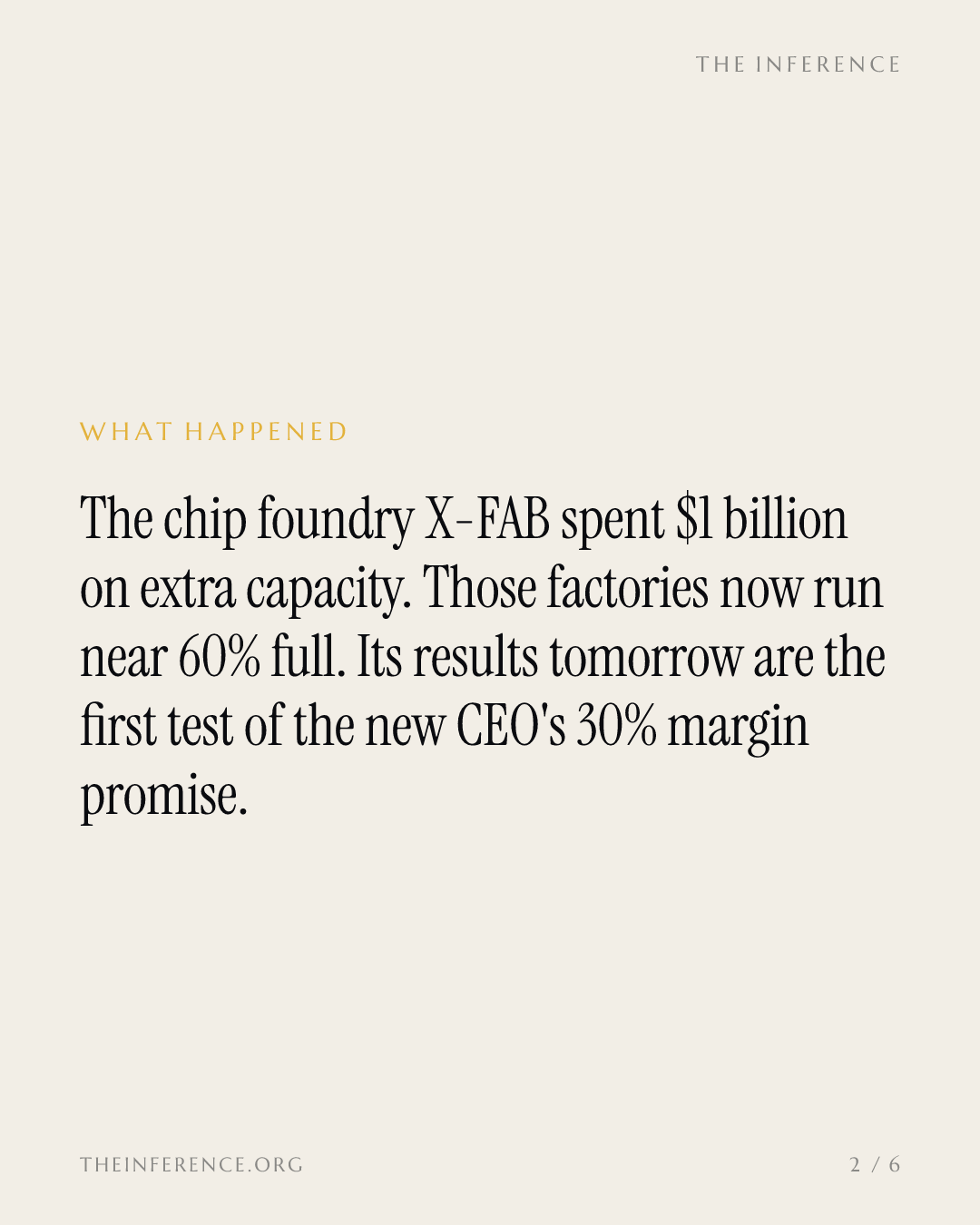
Tomorrow, October 29, X-FAB Silicon Foundries+0.74% — X-FAB Silicon Foundries, up 0.74 percent today reports third-quarter results, and the print is the first test of the plan its new chief executive laid out two weeks ago 1. Damien Macq, who took over from founder Rudi De Winter at the start of 2026, told the French trade outlet VIPress he wants to run the only European foundry in the global top 10 on a three-part plan: specialization in MEMS, photonics and wide-bandgap chips; diversification away from automotive, about 60% of revenue, and away from Melexis, the Belgian automotive sensor maker that is X-FAB's largest customer and historically brought close to 45% of its revenue; and discipline, with capital spending back to 10-15% of revenue 2.
The margin promise is the part the market will score.
A billion dollars bought capacity the company has not yet sold
X-FAB spent $1 billion on capacity between 2022 and 2025, chasing the post-COVID auto shortages and early data-center demand 2. Revenue was about €870 million in 2025 2. Macq says the installed capacity can generate €1.0 to €1.3 billion with the right product mix 2. That distance between what is built and what is sold is the story: a foundry's margin is mostly factory load, and load stood near 60% at the end of the second quarter 3. The company's own model targets a working level in the high eighties 3.
Sold so far: €870 million of what the $1 billion buildout can hold
Data
| Millions of euros | |
|---|---|
| Revenue 2025 | €870M |
| Capacity, low end | €1,000M |
| Capacity, high end | €1,300M |
The margin gap the new CEO must close: high teens guided, 30 promised
- Estimate
Data
| Value | |
|---|---|
| Q2 2026 reported | 16.8% |
| Q3 guided, low end (estimate) | 17% |
| Q3 guided, high end (estimate) | 20% |
| Macq target (estimate) | 30% |
The demand hop is arriving first
The capacity matters because AI data centers need these chips: X-FAB's parts handle power conversion, heat and the precise clocking of high-end systems, and management sizes that market at roughly $300 million a year for the company over time, against a few tens of millions today 3.
The signal that demand is turning came in the Q2 call: underlying book-to-bill went above 1.0 for the first time since Q2 2024 3. This morning Melexis reported third-quarter revenue up 4% year over year, with customer inventories normalized and a framework purchase agreement with BYD 4. That confirms the recovery at the anchor, and it also shrinks Melexis's share of X-FAB revenue, which is what the diversification half of the plan wants 2.
What tomorrow decides
Guidance for the quarter keeps the EBITDA margin in the high teens, far short of the 30%-plus Macq promised 3. The market prices the doubt: shares closed at €5.00 on October 23, down about a tenth this year 5. The median analyst target sits at €7.40 6.
The money is spent, so the revenue now depends on selling the capacity that money built. That is a gap-closing story, and the gap is execution, not technology: load the factories, shift the mix toward data centers, photonics and wide-bandgap, and the promised margin follows from arithmetic the company already ran. One check on that discipline is the €127.4 million of European Chips Act money awarded for the Fab4Micro expansion in Erfurt, which public funding makes possible while the company promises to cut its own capital spending 3.
Tomorrow, watch utilization and margin together. If both rise with orders above 1.0 3, the plan is credible and the distance to the target closes on load, not hope. If the margin stalls while orders improve, Macq's 30% becomes a later-cycle promise, and the Asian and American rivals above X-FAB in the top 10 set the pace instead 2.
Get Chips by email, free
How AI demand is reshaping chipmakers, memory and the fabs behind them. In our daily email, every weekday.