California may cut PG&E's 5,000-mile fire-safety plan to 1,100 miles, and with it the growth engine
A California Public Utilities Commission vote on November 19 would force PG&E's $16 billion undergrounding program to compete against cheaper covered conductor, and PG&E itself says the plan could fall from 5,000 miles to 1,100. For a utility that earns by deploying approved capital, that is a vote on the size of its growth engine.
 Richard Tangthree-minute read
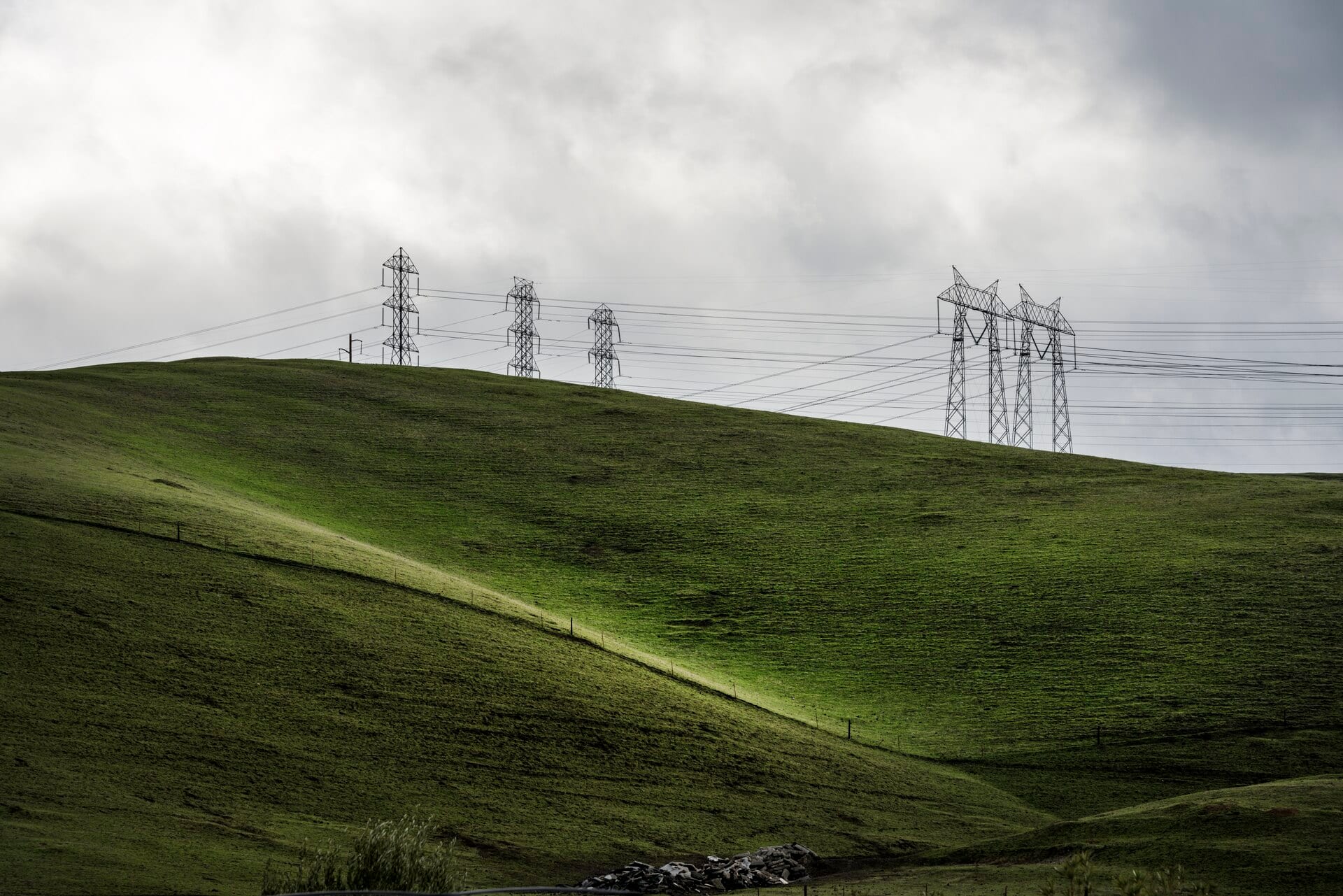
On November 19 the California Public Utilities Commission votes on a proposed decision that, by PG&E's own account, could shrink its plan to bury 5,000 miles of power lines in high fire-risk districts to as few as 1,100. For a regulated utility, the product is capital: what the commission approves goes into rate base and earns the allowed return. This vote is therefore a vote on how much PG&E−3.27% — PG&E, down 3.27 percent today gets to grow.
What the proposal actually does
The proposed decision, written to implement 2022's SB 884, would prioritize the highest fire-risk areas and require PG&E to compare undergrounding against cheaper alternatives such as covered conductor, insulated line hung where the old line sits 12. The plan under review costs about $16 billion and would add roughly $9 to the average monthly bill 1.
At the plan's per-mile arithmetic, a program cut to 1,100 miles would leave most of that $16 billion unspent, though the commission has not finalized anything 1. Precedent points the same way: in November 2023 the commission approved 1,230 miles plus 778 miles of covered conductor, less than PG&E had asked for 1.
The third squeeze in a month
This lands on a utility already pressed. A December 2025 ruling cut PG&E's allowed return on equity to 9.98%, the first time below 10% in 20 years, and third-quarter earnings fell 9% year over year 5.
After the legislature let the wildfire liability deal die, PG&E deferred about $2 billion of 2027 work and warned some 25,000 customers of connection delays, touching more than 60 renewable and storage projects totaling at least 15 GW 3. Its ask for a permanent shareholder cap on wildfire payouts, $5.1 billion at PG&E, sits stalled ahead of a requested special session 4.
PG&E's 5,000-mile burial plan versus what regulators allowed in 2023 and may allow now
A 1,100-mile program would be smaller than what regulators already allowed in 2023
Data
| Miles to bury | |
|---|---|
| Proposed floor | 1,100 miles |
| Allowed 2023 | 1,230 miles |
| PG&E plan | 5,000 miles |
The counterfactual is a utility that gets paid
American Electric Power−1.33% — American Electric Power, down 1.33 percent today, building in states that pay for growth, just raised its five-year capex plan 30% to $100 billion and reported third-quarter earnings up 22%, with 15 GW of new load signed 5. PG&E reaffirmed guidance after its softer quarter 6, but that guidance leans on the rate-base growth this vote can shrink; the offset is a smaller financing need 56.
PG&E kept building through Q3 2026; the deferral lands in 2027
The capital engine is still running; the vote decides whether it stays that way
Data
| Capex | |
|---|---|
| Q2 '24 | 2.3B |
| Q3 '24 | 2.61B |
| Q4 '24 | 2.83B |
| Q1 '25 | 2.64B |
| Q2 '25 | 3.07B |
| Q3 '25 | 2.93B |
| Q4 '25 | 3.16B |
| Q1 '26 | 3.36B |
| Q2 '26 | 2.97B |
| Q3 '26 | 3.3B |
The paradox to watch
The same state that needs PG&E to stop starting fires is trimming the one program that reduces fire risk on treated lines by 98%, in PG&E's own figures, to spare customers $9 a month, while the liability rules that make the utility hard to finance stay broken 14. The comparison with covered conductor is fair; undergrounding is the most expensive fix.
But cutting the capital and withholding the shield at the same time means the cost shows up as delayed housing, solar and storage hookups, not just a smaller utility 3. California is asking PG&E to grow less and stay more exposed at once, and the bill for that arrives at the connection queue. Watch the November 19 vote: the guidance on the stock is only as good as the miles the commission approves 3.
A 1,100-mile program would be smaller than what regulators already allowed in 2023
Get Power by email, free
How AI's hunger for electricity moves utilities, power plants and the grid. In our daily email, every weekday.