Musk's SoftBank default claim tests GE Vernova's $5.3 billion of customer cash
GE Vernova collected $5.3 billion of customer down payments in one quarter, its chief executive said nobody had asked to leave the turbine queue, and nine days later Elon Musk said SoftBank was walking away. The 130 gigawatt year-end figure now decides what the order book is worth.
 Vincent Jiangthree-minute read

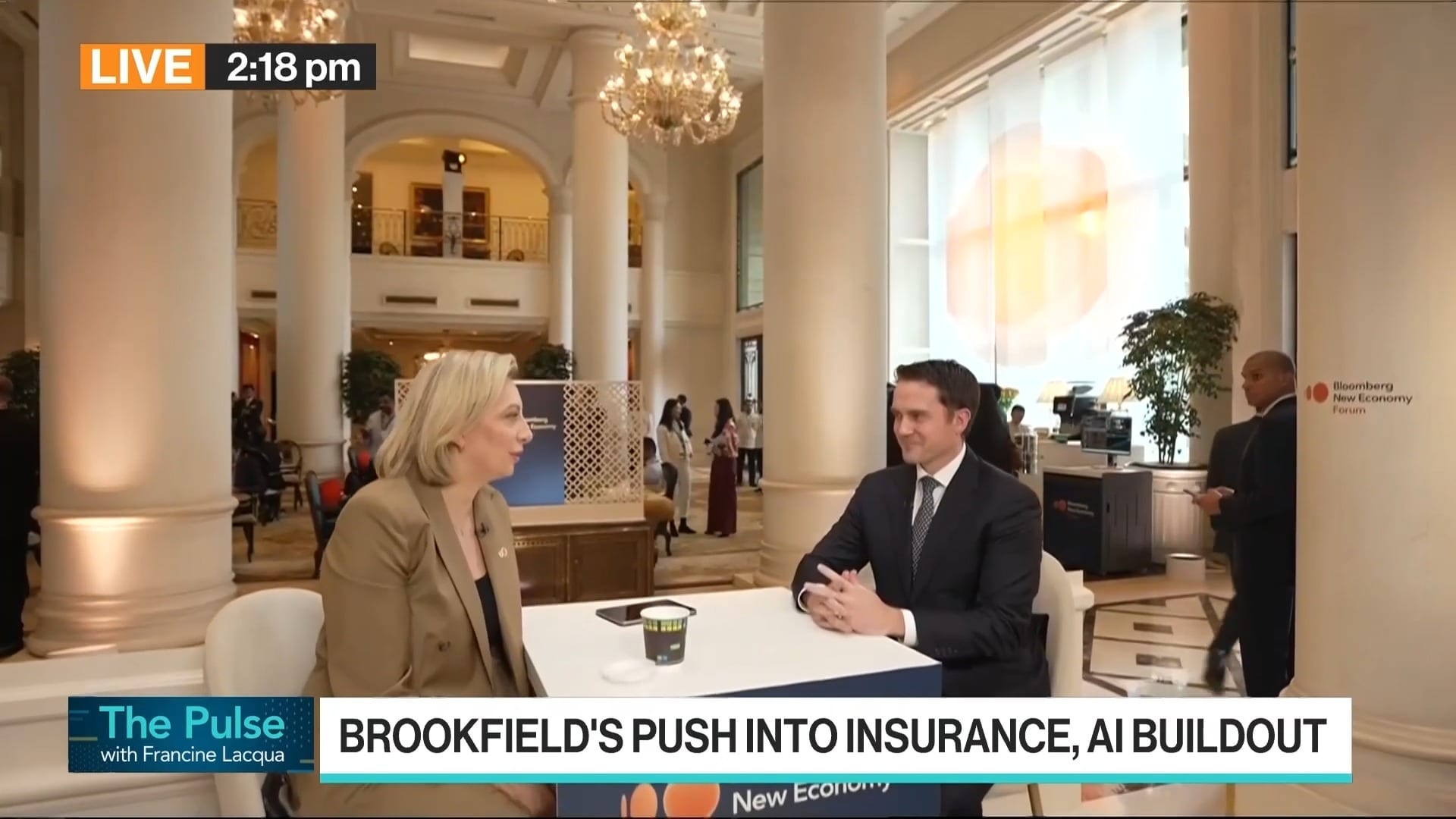
On October 28, GE Vernova+0.48% — GE Vernova, up 0.48 percent today chief executive Scott Strazik told a Morgan Stanley−0.82% — Morgan Stanley, down 0.82 percent today conference that no customer had asked to exit a slot in his gas-turbine queue, and that the company had converted 13 gigawatts of reservations into firm orders in the quarter 12. Nine days later, Elon Musk wrote on X that SoftBank "is defaulting on their turbine orders" 3.
The post offered no evidence and no default has been confirmed, and it came from a man who has questioned SoftBank's ability to fund Stargate since the project launched in January 2025 and who runs a rival AI company 3. SoftBank shares still fell 10.83% in Tokyo 3.
The first 10% drop came from Washington, not Musk
The claim landed on a stock already falling. On November 4 GE Vernova dropped 10% after Democrats won both chambers of Congress, a selloff that read as sentiment more than substance: only about 20% of the company's contracted gas equipment serves data centers, the new Congress does not sit until January, and any curbing bill would need President Trump's signature 4. GE Vernova has lost 19% in four weeks anyway 5.
The cash arrived before the turbines
That is the point of the slot system. Customers pay cash up front to hold a place in GE Vernova's production line, years before a machine ships; in a market where turbine waits run up to seven years, the reservation is the asset 3. Trailing free cash flow hit $17.1 billion in the four quarters to September, against $2.47 billion a year earlier 5.
Of that, $5.3 billion arrived in the third quarter alone as working capital from customer down payments and slot reservations 5, following $6.4 billion of down-payment cash in the second quarter 6. Money collected ahead of delivery is money owed back if a customer walks. No source so far says what happens to a down payment when a reservation is abandoned.
Free cash flow surged from under $2 billion a quarter to over $5 billion
Cash tripled once customers began paying for slots years ahead of delivery
Data
| Quarterly free cash flow | |
|---|---|
| Q4 '24 | 0.58 |
| Q1 '25 | 1.01 |
| Q2 '25 | 0.19 |
| Q3 '25 | 0.73 |
| Q4 '25 | 1.81 |
| Q1 '26 | 4.97 |
| Q2 '26 | 5.13 |
| Q3 '26 | 5.42 |
The queue hardened while new orders slowed
The order book itself improved in quality. Firm gas backlog rose from 53 to 64 gigawatts in the quarter as reservations converted, leaving 58 gigawatts of reservations in place and 122 gigawatts under contract 1.
The turbine queue hardened: reservations became orders in Q3
Firm orders overtook reservations for the first time, even as new signings slowed
- Firm orders, GW
- Slot reservations, GW
Data
| Firm orders, GW | Slot reservations, GW | |
|---|---|---|
| June 30, 2026 | 53 | 63 |
| September 30, 2026 | 64 | 58 |
The catch: new gas signings fell to 11 gigawatts from 20 the prior quarter, and new reservations dropped to 8 from 18 1. The company targets at least 130 gigawatts under contract by year-end, a goal it raised from 125 1.
What the cheap multiple rests on
At 21.4 times trailing earnings, the stock now sits below the S&P 500 median of 22.9, but that multiple leans on a fragile profit figure: $10.4 billion of net income against $2.83 billion of operating income over four quarters 5. $4.5 billion of the gap came from one-off transaction gains on the Prolec acquisition, a transformer venture buyout that paid once 5. The operating margin is 6.4% 5.
Reported profit leans on $4.5 billion of one-off Prolec gains
Data
| Trailing four quarters | |
|---|---|
| Net income | $10.4B |
| Operating income | $2.83B |
| One-off Prolec gains | $4.5B |
The improving part is real: third-quarter operating income of $1.39 billion exceeded net profit of $1.29 billion for the first time, and the Power segment margin target rose to 19% to 21% 51.
January's report settles the question
Here is the decision rule. If no customer exit is disclosed before the year-end reading of 130 gigawatts, the reservation book stands as the cheapest quality order book in AI, backed by signed orders rather than sentiment 5. If a walk-away is confirmed, the 21.4 multiple rests on customer cash, and the down payments become the credit question every AI-infrastructure investor must price 5. The January fourth-quarter report settles it 5.
Get Power by email, free
How AI's hunger for electricity moves utilities, power plants and the grid. In our daily email, every weekday.