Constellation's 18.5-year nuclear contracts meet the November 3 midterms and the grid cost fight
Constellation signed a 20-year Google deal and a multi-decade PPA book that bets on uninterrupted data-center growth. If Democrats take the House on November 3, its customers face bigger grid bills and tighter permits, and regulators face pressure to cap returns on its contracts.
 Richard Tang · 2 min read
Constellation Energy−0.82% — Constellation Energy, down 0.82 percent today signed a 20-year nuclear power deal with Google on Tuesday, and ten days before the November 3 midterms it sits on both sides of the election trade 12. Lee Seung-hun of IBK Investment Securities and Choi Bo-won of Korea Investment Securities put power producers like Constellation among the winners, on long-term electricity demand. The same analysts put data-center operators among the losers, facing tighter permitting and bigger grid bills if Democrats take the House. 12
Constellation's contracted nuclear book sits on both ends: its revenue comes from the customers the other side wants to tax. 2
The contracts assume two decades without a repricing
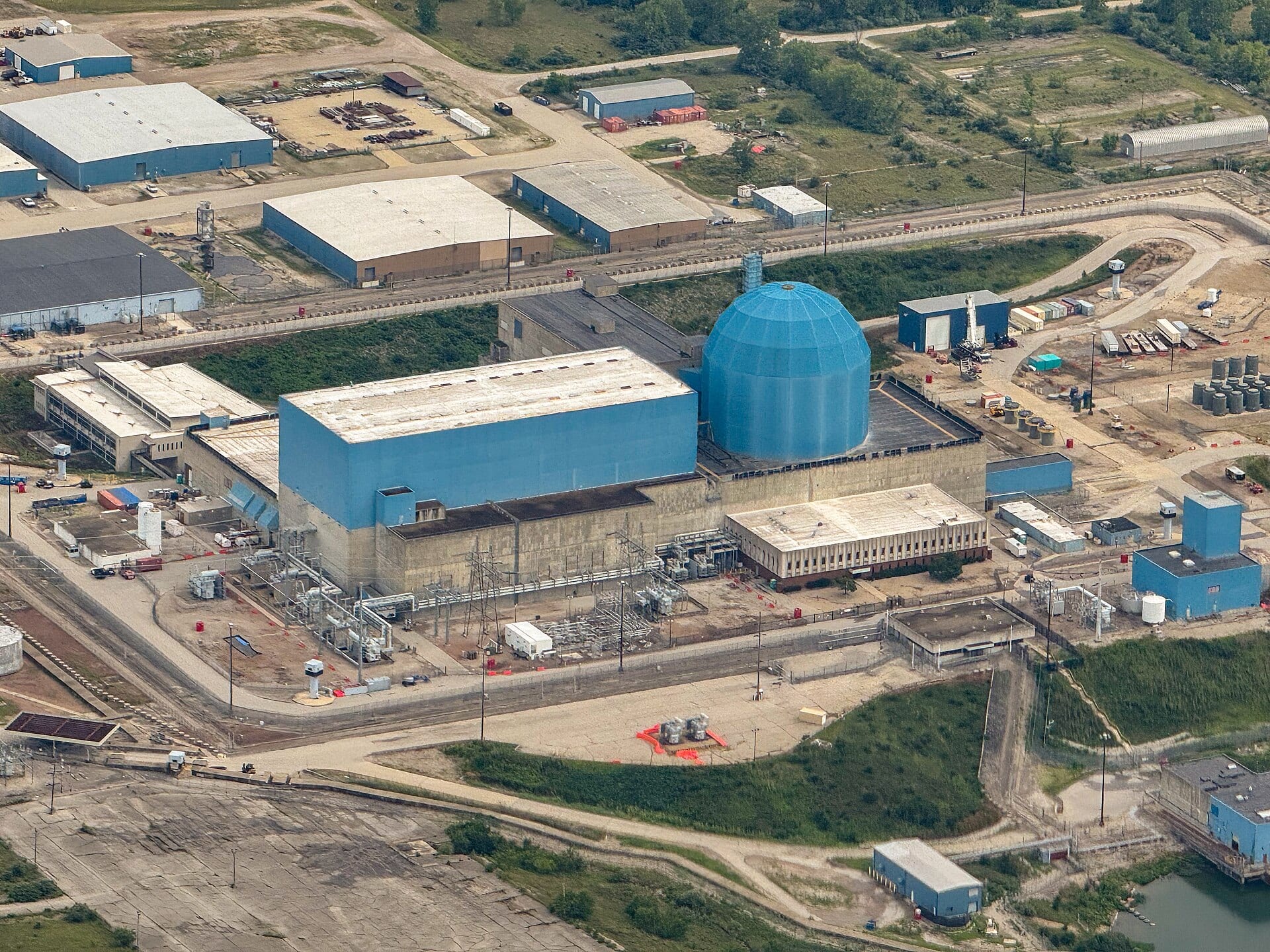
Google signed for 20 years; Constellation added roughly 920 MW of nuclear PPAs in the second quarter alone, averaging about 18.5 years in duration, with Microsoft+0.64% — Microsoft, up 0.64 percent today backing the Crane restart and Meta−1.36% — Meta, down 1.36 percent today taking Clinton. 2 These are not bets on next year's power price. They are bets that the customers behind them can build and run data centers for two decades without regulators repricing the deal in between.
Revenue jumped 63.8% in Q1 '26 as the contracted nuclear book swelled
- Revenue
- Operating income
Data
| Revenue | Operating income | |
|---|---|---|
| Q3 '24 | $6.55B | $1.47B |
| Q4 '24 | $5.38B | $0.97B |
| Q1 '25 | $6.79B | $0.45B |
| Q2 '25 | $6.1B | $0.95B |
| Q3 '25 | $6.57B | $1.09B |
| Q4 '25 | $6.07B | $0.6B |
| Q1 '26 | $11.12B | $2.33B |
| Q2 '26 | $7.5B | $0.58B |
A Democratic Congress that makes operators pay more of grid-upgrade costs and tightens permits would likely slow exactly that build-out. New York's temporary moratorium on large data centers is the template researchers say could spread to the Northeast and Midwest if Democrats win decisively. 1
The valuation already carries the risk
The stock already prices some of this.
CEG is down 26% this year, though it has returned 146% over three years. 2
Three years of gains, one year of doubt at Constellation
Data
| Value | |
|---|---|
| 3-year TSR | 146.36% |
| 1-year TSR | -22.23% |
| Year to date | -26.08% |
The most-followed valuation narrative calls it 23% undervalued at a $350 fair value, and names the real risk: regulators capping returns on long-dated nuclear contracts. 2
What to watch after November 3
Demand for Constellation's power is likely durable even if Democrats win: AI build-outs need firm, carbon-free supply, and a single election is unlikely to end that. What can change is who pays for the grid between the plant and the server hall. If data centers shoulder their own grid costs and permitting holds, Constellation's contracted book keeps its value; if permitting freezes projects, the backlog waits longer to convert to cash flow. Which of those binds depends on how decisively Democrats win and how far regulators go.
Until the vote, CEG shareholders are holding an unresolved question about who pays for the grid. Two markers tell you first: whether the moratorium logic spreads beyond New York, and whether any state utility commission moves to reprice a co-located data-center contract, long before any PPA is renegotiated.
Get Power by email, free
How AI's hunger for electricity moves utilities, power plants and the grid. In our daily email, every weekday.