DDR4 spot fell 3% to $42.71, the first drop in over a year, testing Nanya Technology's record 85.7% margin
It is the first drop after more than a year of rises, and it landed on the chip behind Nanya Technology's record margin. A broker re-dated the 2027 contract price path to flat by the second half and named Nanya the less favored name, while Micron closed up 7.6%. If spot leads contract, the first-half prices Nanya negotiates next are set against a market already 3% lower.
 Vincent Jiangfour-minute read
Drafted with AI from the documents listed under Sources, then edited and fact-checked by Vincent Jiang. How we work
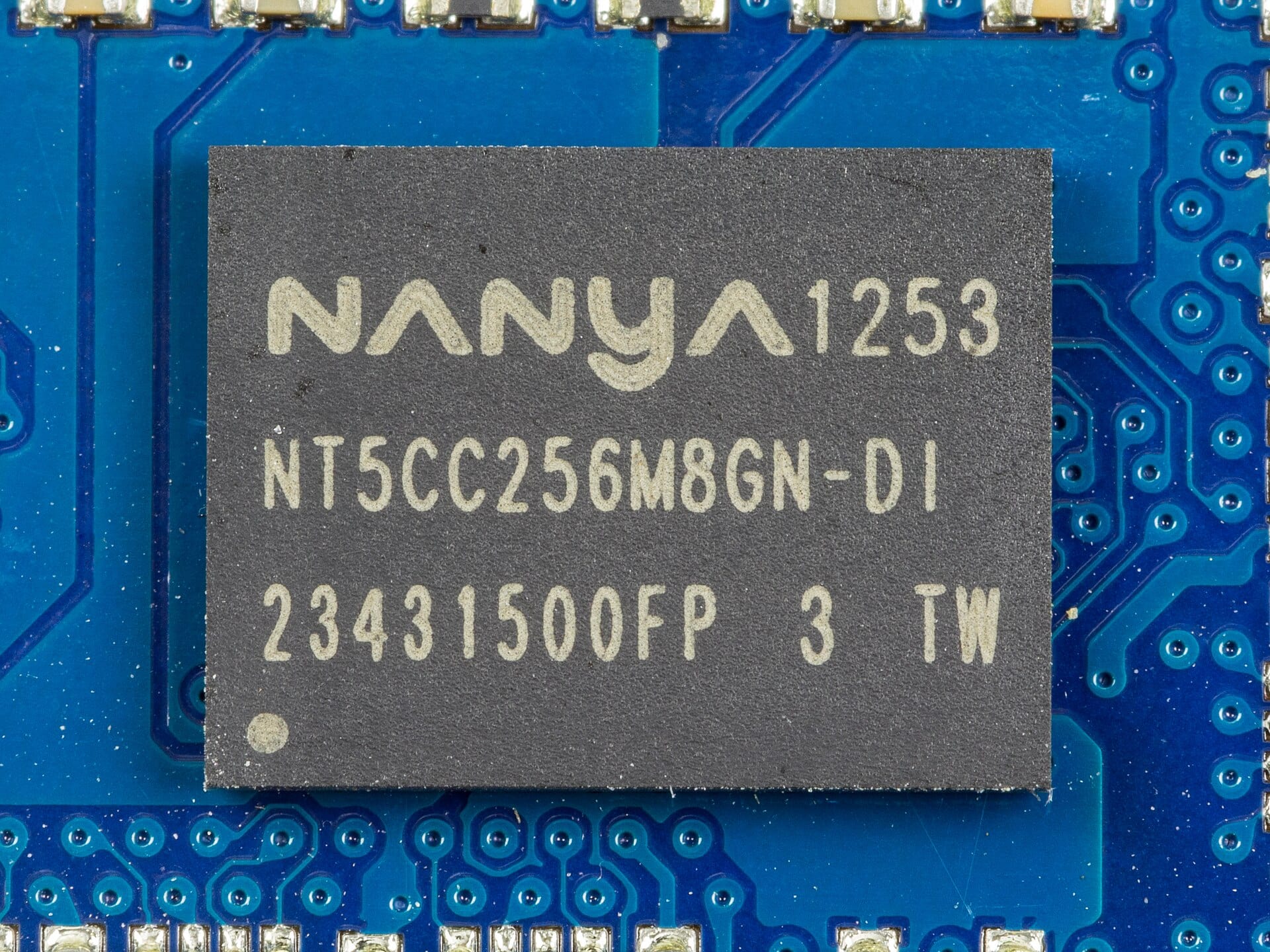
The chip Nanya sells turned first
The DDR4 8Gb 3200MT/s chip, the widely tracked unit of older PC memory, fell from $44.03 on November 18 to $43.32 on November 24, a drop of 1.61%, and to $42.71 by November 27 12. Nanya Technology+0.65% — Nanya Technology, up 0.65 percent today, Taiwan's largest memory maker, kept making this DRAM design (dynamic random-access memory, the working memory in PCs and phones) while Samsung, SK hynix+6.64% — SK hynix, up 6.64 percent today and Micron+7.20% — Micron, up 7.20 percent today moved wafer capacity to AI memory 17.
That is about 3% in nine days, the first decline after more than a year of rising prices 2. Spot is the price for immediate delivery; contract is the quarterly rates makers negotiate with large buyers. TrendForce, the market research firm that tracks both, attributes the fall to weaker demand: distributors are working down inventory and asking for quotes without committing, and Chinese cloud operators have trimmed server memory orders because GPUs are scarce 134.
More than 60% of the output is one old chip
DDR4 and its low-power variant are more than 60% of Nanya's output, and the third quarter's 85.7% gross margin came from average selling prices up more than 60% from the second quarter as long-term agreements signed at 2025 prices rolled off 5. Those agreements now cover 50% to 70% of capacity, with terms from quarterly to three years, which leaves a third to a half of the book with no such cover 5.
October revenue of NT$46.48 billion (Taiwan dollars) grew just 3.07% from September 6, the stall covered here on November 6 7. The stock closed at NT$308.00 on November 27, up 0.65% 6.
A broker moved the turn forward
GF Securities, a Hong Kong brokerage, cut every quarter of its 2027 DRAM contract price path this week to gains of 6% and 3% in the first half and flat in the second, from gains of 10%, 7%, 5% and 3% before, so about 9% for the year instead of about 27% 8413. It stayed constructive on Micron, SK hynix and Samsung and called the outlook less favorable for Nanya and Winbond, the other large Taiwanese maker of older-generation memory, on their consumer exposure 412.
GF Securities cut every quarter of its 2027 DRAM price path and made the second half flat
The 2027 path went from gains all year to +6%, +3%, flat, flat
- Prior forecast
- New forecast
- Estimate
Data
| Prior forecast | New forecast | |
|---|---|---|
| 1Q27 (estimate) | 10% | 6% |
| 2Q27 (estimate) | 7% | 3% |
| 3Q27 (estimate) | 5% | 0% |
| 4Q27 (estimate) | 3% | 0% |
The Chinese order cuts are about 1% of global demand, and GF still sees supply short of demand by 5% this year and next 8. Micron closed up 7.6% at $646.95 on November 27, against Nanya's 0.65% 96.
Micron keeps the pricing power Nanya lacks
The reason is in the same note: high-bandwidth memory for AI processors is absorbing the big three's wafer capacity, and GF expects conventional DRAM to stay short through 2028, so those three keep pricing power and can cut output if the market weakens 4. GF gives Nanya no such support: its exposure is consumer memory, where demand is weakening 4.
Micron's gross margin climbed from below zero to 86.8%, and Nanya's 85.7% sits just under it
Data
| Micron gross margin | |
|---|---|
| Q4 '23 | -0.7% |
| Q1 '24 | 18.5% |
| Q2 '24 | 26.9% |
| Q3 '24 | 35.3% |
| Q4 '24 | 38.4% |
| Q1 '25 | 36.8% |
| Q2 '25 | 37.7% |
| Q3 '25 | 44.7% |
| Q4 '25 | 56% |
| Q1 '26 | 74.4% |
| Q2 '26 | 84.6% |
| Q3 '26 | 86.8% |
The short case is that spot leads contract
TrendForce expects upward pressure through much of 2027, narrowing and possibly leveling off in the second half, with declines dated to 2028; its bear case starts them in the fourth quarter of 2027 11013. Nanya guided on October 12 for average prices to keep improving gradually this quarter 5. The spot drop is 3%, and GF expects output cuts if weakness persists 8.
The short case rests on the uncovered third to a half of Nanya's book, which reprices with the market at each quarterly reset. If spot leads those negotiations by a quarter or two, the first-half 2027 talks open against a chip 3% cheaper than on November 18 12. No print yet shows the slide reaching contracts.
The trade that follows: sell or short into the first-half setting, or refuse to add on the view that scarcity lasts to 2028 4. The squeeze, if contracts settle higher anyway, is the risk to size.
January 14 shows what first-quarter contracts carry
Three readings are dated. TrendForce's next weekly spot print shows whether the slide ran past November 27 127. Nanya's November revenue, due in early December, shows whether volume held as quotes fell. The third is Nanya's results on January 14 127.
January settles it: a higher average-price print means the spot move was noise and the short is a squeeze; a flat one means 85.7% was the top 512.
Sources
- 1ProPakistani, RAM Prices Are Finally Falling, but There's a Catch, 28 November 2026
- 2DRAMeXchange (TrendForce), international DRAM spot price table, 27 November 2026 18:10, and TrendForce research summary noting memory prices rising for more than a year
- 3Notebookcheck, RAM price surge may be losing steam as DDR4 prices fall and 2027 outlook improves, 26 November 2026
- 4Yahoo Finance (GuruFocus), Micron Stock Jumps Despite GF Securities Slashes DRAM Price Estimates, 27 November 2026
- 5Yahoo Finance, NANYA TECHNOLOGY CORPORATION (2408.TW) Q3 FY2026 earnings call transcript, 12 October 2026
- 6MarketScreener, Nanya Technology: October 2026 Revenue NT$ 46,476 Million, 3 November 2026; Nanya quote page, Taiwan exchange close of 27 November 2026
- 7The Inference, Nanya Technology hit limit-down at NT$324 after record revenue grew just 3.07% in a month, 6 November 2026
- 8Wccftech, Analyst Jeff Pu Says DRAM Prices Could Halve in 2028 as the AI Memory Boom Cools, but Cheaper RAM Isn't Coming Next Year, 26 November 2026
- 9Seeking Alpha, Micron, SK Hynix, Samsung in focus as GF cuts DRAM prices for 2027, 27 November 2026
- 10TrendForce Press Center, Limited Demand Visibility and Growing Supply Chain Caution Heighten Risk of DRAM Contract Price Declines in 2028, Says TrendForce, 27 November 2026
- 12The Inference, Nanya Technology earned an 85.7% gross margin on DDR4 as buyers paid 24% more in three months, 27 October 2026
- 13Crypto Briefing, TrendForce warns DRAM contract prices could fall in 2028 as demand visibility fades, 27 November 2026
- 14Micron, quarterly figures from its SEC filings, retrieved 29 November 2026
Get Chips by email, free
How AI demand is reshaping chipmakers, memory and the fabs behind them. In our daily email, every weekday.



Reader comments
0 comments