Dominion Energy's offshore wind fell from $83 to $62 per megawatt-hour, and certificates did it
The largest offshore wind farm in the United States is 85% built, but the cost-per-megawatt-hour drop in Dominion's third-quarter disclosure came from certificate prices, not construction, and the schedule has already spent part of its contingency.
 Vincent Jiang · 4 min read
The 44th turbine is up, and the press saw speed where the calendar shows drift
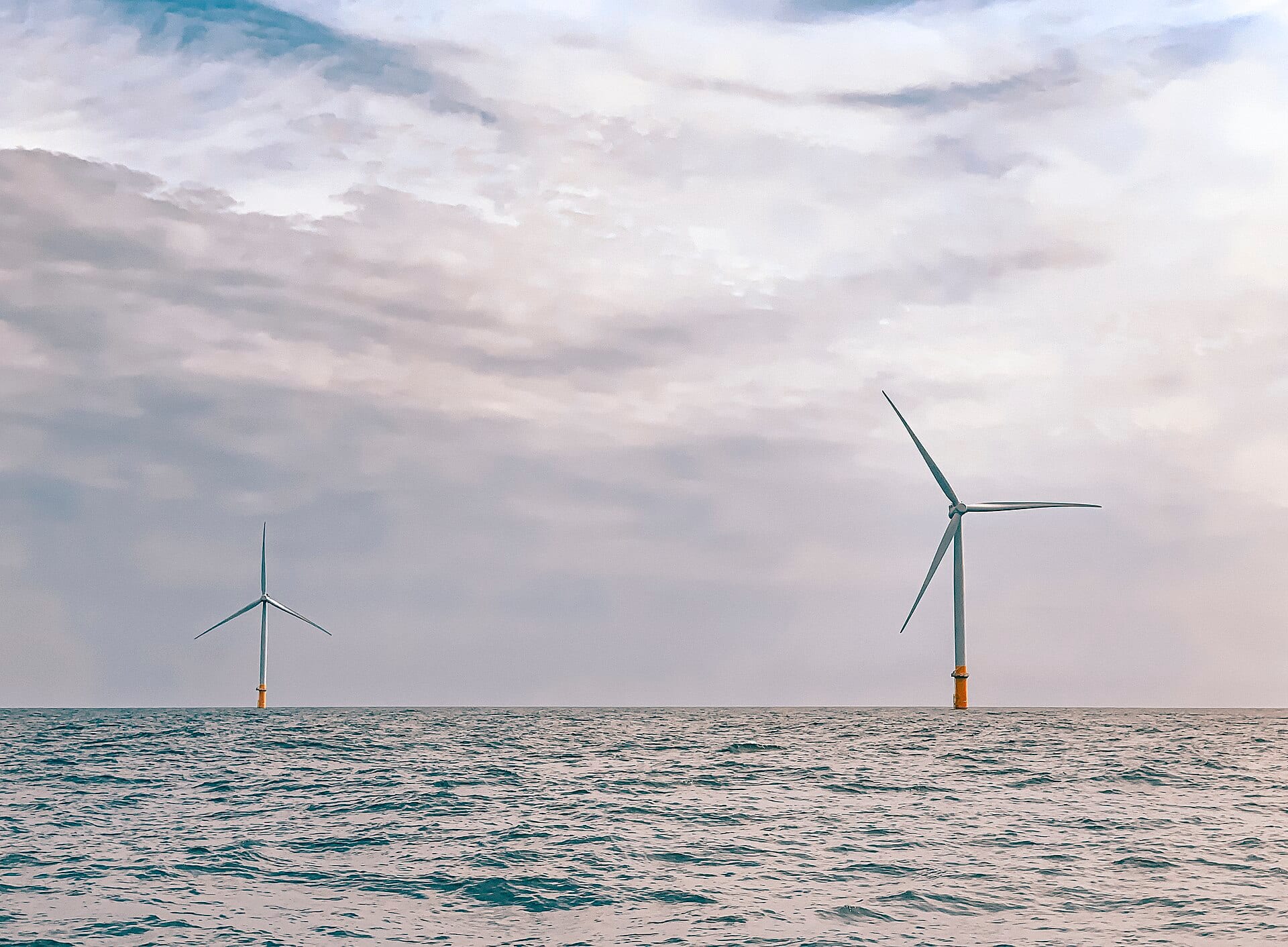
The trade press wrote up last week's milestone as momentum: 44 of 176 turbines now stand at Coastal Virginia Offshore Wind, the 2.6-gigawatt project off Virginia Beach, with more than 640 megawatts already generating and the build called roughly 85% complete 123. The quarter itself was strong, operating earnings of $1.28 per share, up 20.8% year over year, but the wind farm is not the earnings story 34. It is the bill story.
The company's own calendar says something quieter. The 176th and final turbine is due at the end of 2027, a date Dominion+0.97% — Dominion, up 0.97 percent today pushed out earlier this year from early 2027, citing extra allowance for weather, vessel maintenance, loadout operations and extended jacking rather than any change in the two-days-per-turbine installation rate 1.
The customers are still funding $1.5 billion of it
The capital budget holds at $11.65 billion, including $123 million of unused contingency 23. About $10.1 billion was spent through September 30, leaving roughly $1.5 billion, and Dominion funds about $800 million of that after the contribution of Stonepeak, the infrastructure investor that took a 50% noncontrolling stake in the project in October 2024 in a deal worth about $2.6 billion to Dominion 36. The rest of the bill reaches Virginia households through rates, which is why the per-megawatt-hour figure carries so much weight.
$123 million of contingency left against $1.5 billion of cost still to come
Data
| Value | |
|---|---|
| Total budget | $11.65B |
| Spent through Sept 30 | $10.1B |
| Remaining to spend | $1.5B |
| Unused contingency | $0.12B |
The cheaper megawatt hour did not get cheaper
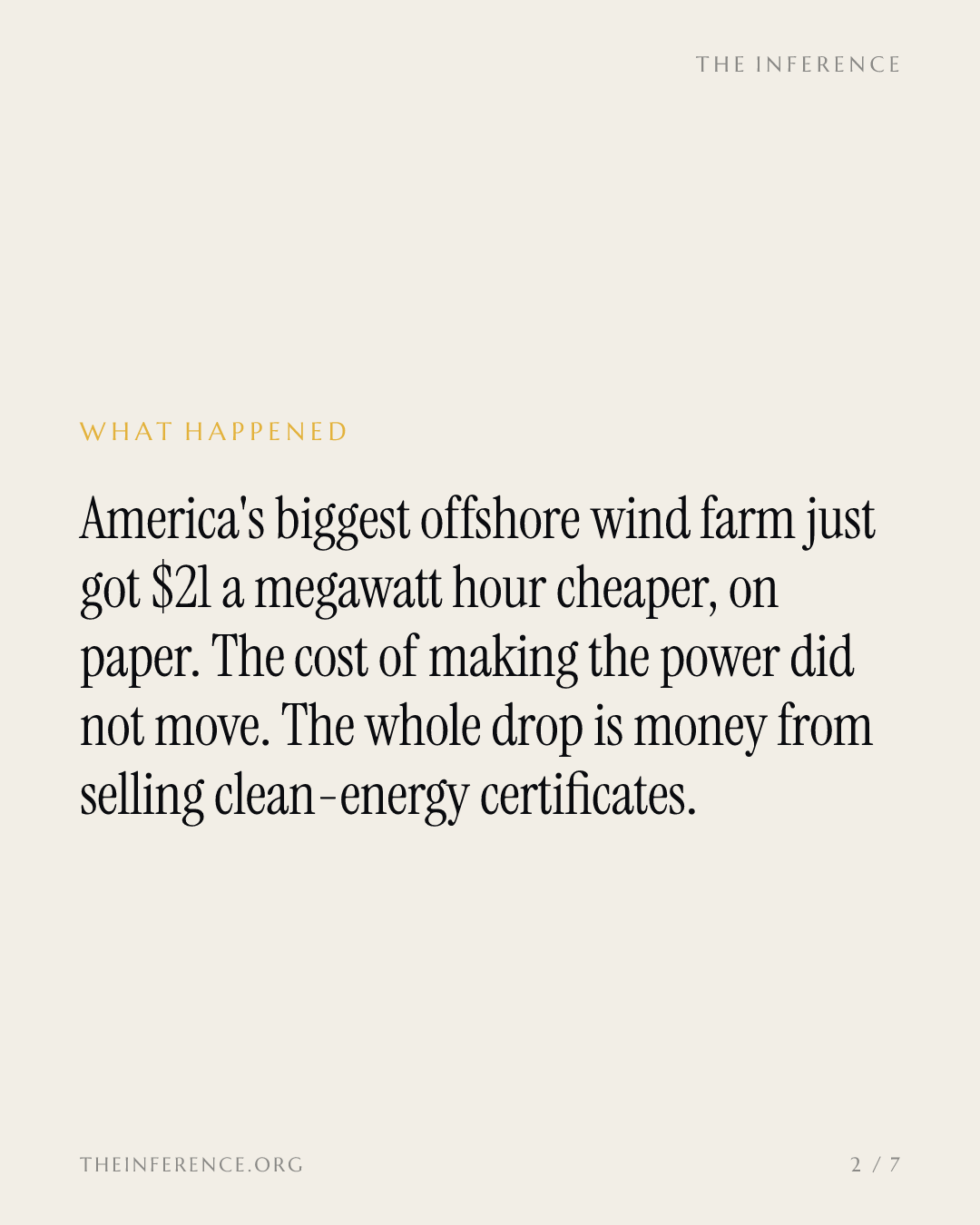
Here is the part the headline number hides. Dominion reported the project's levelized cost of energy, the per-megawatt-hour figure used to argue customer value, falling from $83 to $62 1. The gross generation cost stayed flat at $100 1.
The certificate price is a market number the company will not defend
The entire drop is renewable energy certificate revenue: buyers pay for the clean attribute of CVOW's power, and Dominion credits those sales against the cost 12. Chief Financial Officer Steven Ridge said certificate supply is tightening because Virginia requires a large share to come from in-state resources, and he declined to call the price sustainable, noting it has moved up and down 2. An analyst on the call pegged the price at $38, which matches the $100-minus-$62 arithmetic; the company did not confirm the figure 2. The $21 gain is the market's opinion of a certificate, not a cheaper turbine 2.
The reported cost fell $21 while the gross cost of the power stayed at $100
- Gross generation cost
- Reported levelized cost
Data
| Gross generation cost | Reported levelized cost | |
|---|---|---|
| Prior update | $100/MWh | $83/MWh |
| Q3 2026 update | $100/MWh | $62/MWh |
The cushion is thinner than it was last quarter
Ridge's own arithmetic, offered on the call: over the last three months, 91 calendar days, 14 lost to weather and 36 to maintenance on Charybdis, the Jones Act-compliant installation vessel, left 13 turbines installed in about 41 available days, or 3.2 calendar days per turbine 2. There are 425 calendar days left to install the remaining 132 turbines, which is also 3.2 days per turbine 2.
Loadouts leave 30 to 95 days of slack for weather and harder sites
About 33 port loadouts at four days each consume another 130 days, leaving between 30 and 95 days for weather, maintenance and the harder locations 2. The counterweight is real: installation time has improved from an average of 69 hours for the first 10 turbines to 45 for the next 25 and 38 for the most recent nine, and the third offshore substation should be energized by year-end 2. But contingency is money as well as time, and $123 million sits against $1.5 billion of cost still to come 23.
Installation time has fallen from 69 hours a turbine to 38
Data
| Average installation hours per turbine | |
|---|---|
| First 10 turbines | 69 hours |
| Next 25 turbines | 45 hours |
| Most recent 9 turbines | 38 hours |
The deadline underneath all of it
CVOW carries Dominion's affordability case: the company projects about $5 billion of customer fuel savings over the project's first 10 years, and its Integrated Resource Plan shows the typical residential bill rising from about $180 today to nearly $285 by 2046 under its preferred plan, a 57% increase 257. That is against a regulator-required calculation of more than $458 by 2046, above 150%, which Dominion disputes 257.
The demand side is not in doubt, with roughly 54 gigawatts of data center capacity in contracting stages in Virginia, up 13% since December 23. The merger with NextEra goes to evidentiary hearings on November 17, and the Virginia State Corporation Commission's final order is due January 11, 2027 2.
What decides this
Watch three readings. The 45th turbine and the quarterly levelized-cost update, where certificate prices hold the savings math together or do not. The contingency line, where anything above $123 million of overrun starts reaching customers directly. And the January 11 order, which rules on whether the NextEra+1.03% — NextEra, up 1.03 percent today combination harms Virginia customers while CVOW's cost recovery is still open. The wind farm did not get cheaper. The certificate on it did. The next two quarters show which of the two was the durable number.
Get Power by email, free
How AI's hunger for electricity moves utilities, power plants and the grid. In our daily email, every weekday.