Eoptolink's profit rose 80% while its operating cash flow fell 68%
Shares in the Chinese optical-module maker fell 8.76% on November 13 on US chip-curb talk, but the import ban being drafted targets the generation after the parts it sells today. Its own nine-month report is the real repricing: profit converted into prepaid inventory for a buildout Washington is learning to ration.
 Richard Tangthree-minute read
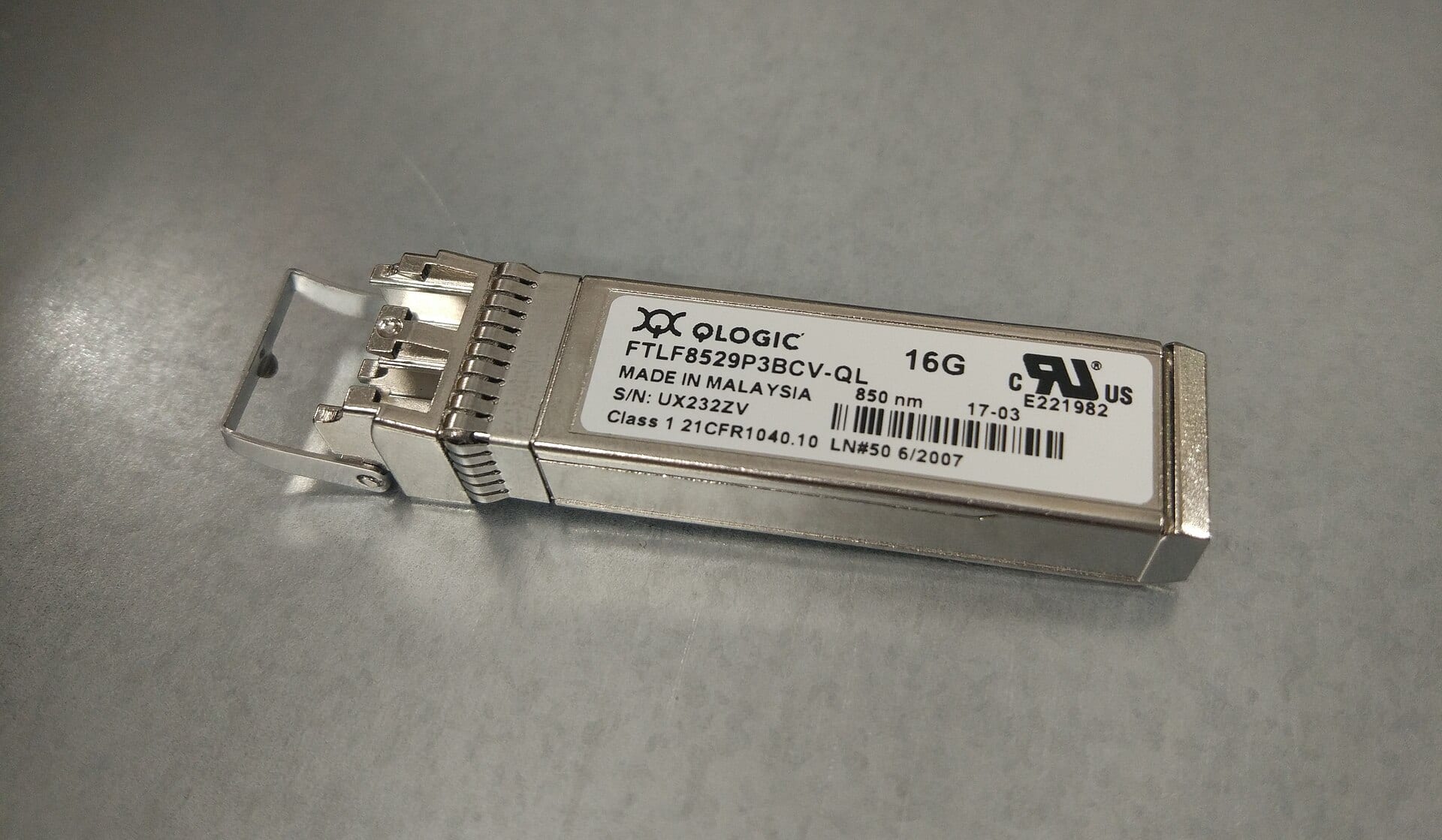
Eoptolink Technology, the Shenzhen-listed maker of the optical transceivers that move data as light between GPUs inside AI data centers, fell 8.76% on November 13, the day after US House Speaker Mike Johnson said Congress was nearing consensus on limiting China's access to advanced AI chips 12. The market is pricing the wrong risk. The import ban on the table does not touch the modules Eoptolink sells today, and the break that matters, between profit and cash, was already sitting in its nine-month report. The repricing is not new: October took almost half the stock's value 10.
The ban being drafted spares the parts that pay the bills
The Federal Communications Commission, the US telecom regulator, is drafting a ban on new Chinese optical transceivers, and Microsoft−0.28% — Microsoft, down 0.28 percent today is lobbying the White House to drop it, as we reported this week 3. Chinese makers supply about two-thirds of the world's transceivers, and without them the GPUs already sitting in a data center do no work 3. But the threshold under discussion, per a Morgan Stanley+0.55% — Morgan Stanley, up 0.55 percent today note, is 3.2 terabits per second 3. That generation is not expected to reach volume production until 2028, and Eoptolink's product line stops at 1.6 terabits 34.
The profit is already sitting in inventory
Revenue nearly doubled in the first nine months of 2026, and net profit rose 80% 5. Cash from operations went the other way, down 68%, because Eoptolink paid upfront for materials, chiefly the scarce optical chips and signal processors that module leaders lock up with scale and prepayments, the playbook Dolphin Research describes 67. Paying upstream to hold delivery slots in a shortage is sound tactics.
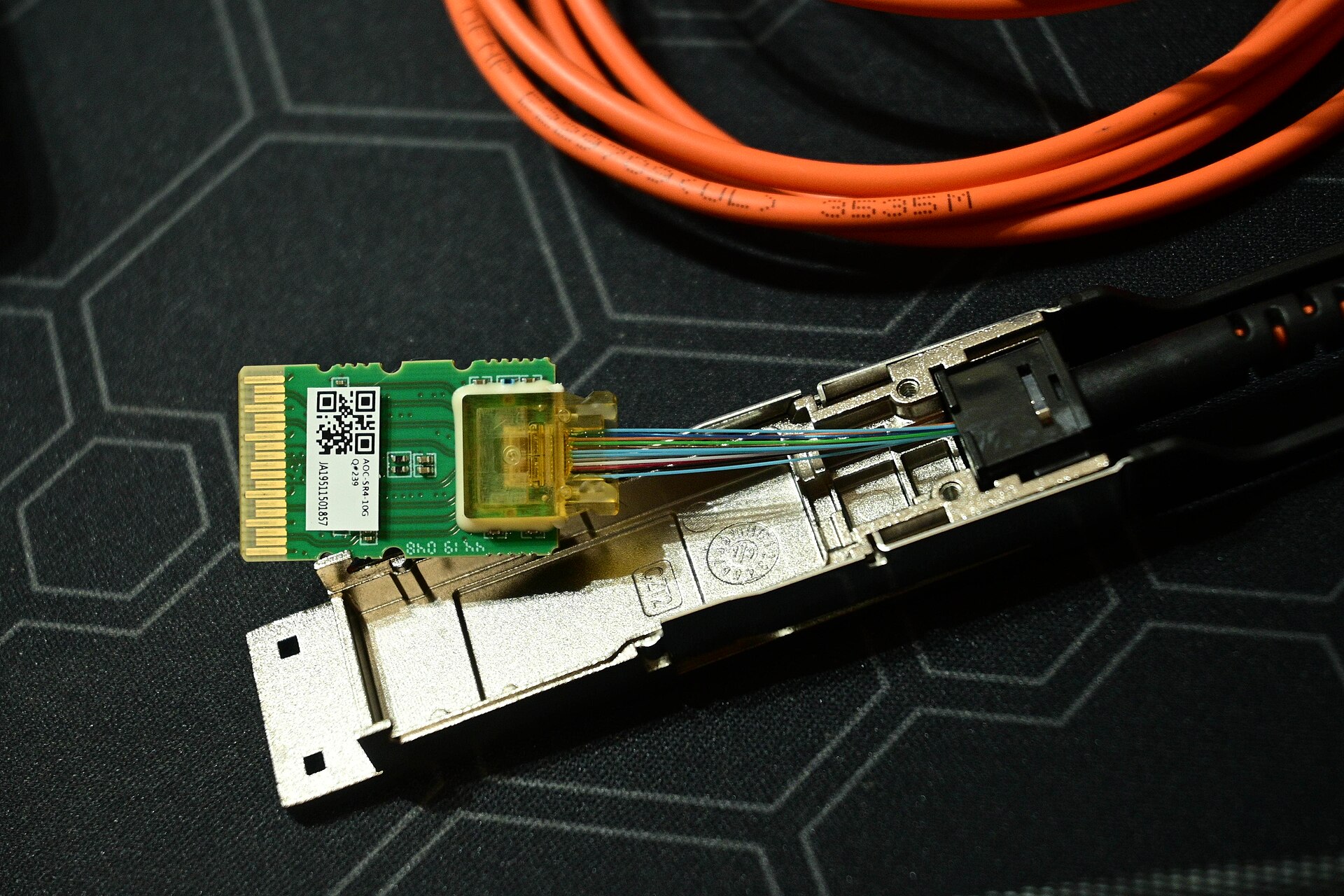
Then the third quarter came in 38% below consensus, which an analysis of the investor call attributes to Thai flooding that pushed shipments into the fourth quarter 41. Management still points to a 50 billion yuan year and says the Chengdu and Thailand plants are scaling with stable margins 46.
Zhongji Innolight−8.39% — Zhongji Innolight, down 8.39 percent today, the larger rival running the same playbook, collected far more of its profit as cash over the same nine months 6.
Both module makers boomed; only Innolight collected the cash
Eoptolink's cash conversion has broken; its larger rival's has not
- Net profit
- Operating cash flow
Data
| Net profit | Operating cash flow | |
|---|---|---|
| Zhongji Innolight | CNY 22.2bn | CNY 8bn |
| Eoptolink | CNY 11.4bn | CNY 1.5bn |
The rule that unplugs the buyers
The threat the selloff half-notices is not to the parts but to the customers. The Commerce Department is finalizing a rule to stop Chinese AI firms renting Nvidia compute through data centers in Thailand, Malaysia and Singapore, and the Remote Access Security Act, already passed by the House, would write that authority into law 89. Developers locked out of rented compute build smaller clusters, and a slower buildout anywhere orders fewer transceivers. That last step is a projection, not an observation, and the rule is not yet law.
The part is cheap; the cash is already spent
Eoptolink is the kind of company the AI buildout should pay. Its parts cost a fraction of the GPUs they connect, and they decide whether those GPUs do any work 3. It has already spent the cash to play that role; the fourth quarter shows whether the inventory becomes revenue or a write-down.
The FCC threatens the parts. Commerce, this month, is moving against the customers. Only one of those is in the price.
Get Data Center by email, free
Who is building AI's data centers, and who is paying for them. In our daily email, every weekday.





Reader comments
0 comments