Fujikura banked ¥235 billion, mostly from AI fiber, then guided to ¥194 billion in the second half
The AI data-center fiber supplier banked ¥235 billion of operating profit by September, raised its full-year revenue outlook and doubled the dividend, yet its own ¥429 billion guide plans a smaller, lower-margin second half. Investors deciding whether that is prudence or slowdown are the ones whose money moves.
 Richard Tangthree-minute read

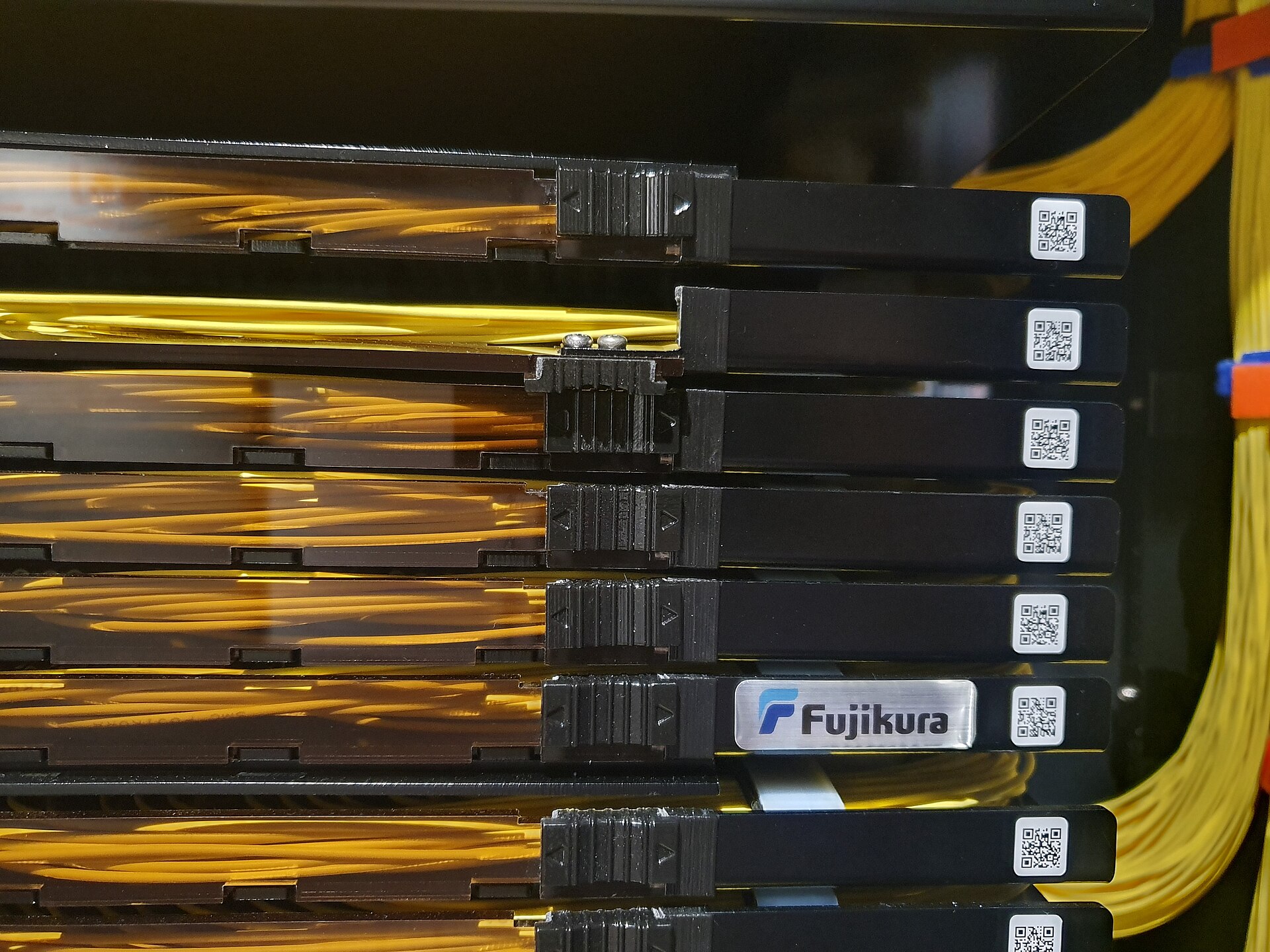
Fujikura−3.20% — Fujikura, down 3.20 percent today reported first-half operating profit of ¥235 billion, up 161% year on year, and then guided to less profit in the second half than it just banked 1. The Tokyo-listed maker of the optical fiber that links servers inside AI data centers posted revenue of ¥867.4 billion for April to September, up 55% 1. It raised its full-year revenue forecast to ¥1.768 trillion and cut its full-year operating-profit forecast to ¥429 billion from ¥432 billion 1.
The subtraction is the story: ¥429 billion minus ¥235 billion leaves ¥194 billion for the second half, an implied operating margin near 21.5% against 27.1% in the first 2. And the cut against the company's August plan is bigger than the ¥3 billion headline: that plan implied about ¥234 billion of second-half profit, so roughly ¥40 billion has come out of the back half 2.
Fujikura quietly took about ¥40 billion out of the second half
The full-year guide leaves ¥194 billion for H2, about ¥40 billion below the August plan
- Estimate
Data
| Value | |
|---|---|
| H1 to Sep 2025 | ¥90.2bn |
| H1 to Sep 2026 | ¥235bn |
| Aug plan, H2 (estimate) | ¥234bn |
| Nov guide, H2 (estimate) | ¥194bn |
The strain sits where demand turns into profit
Nearly all of the first-half profit, ¥217.7 billion, came from the Information and Communication business serving the data-center buildout 2. That is where to look for the bottleneck: not in orders, but in whether extra sales convert into margin at scale. The clearest sign demand itself still runs hot is elsewhere in the group: the company said Monday that glass fiber cable production at Fujikura Automotive Morocco Tangier has run at full capacity since August, serving customers across Europe, the Middle East and Africa 3, though that is an automotive cable operation and says little about optical-fiber margins.
What the guide blames, and what it does not
In May, Fujikura guided cautiously because it feared a sudden fiber ramp would outrun the supply of hydrogen and other raw materials, and the stock fell by its daily limit 4. The new forecast also moves the assumed exchange rate for the second half, which Reuters-reported figures value at about ¥7.2 billion of profit 2. That leaves a gap the company has not explained 2.
The reasonable hypothesis is prudence on procurement and product mix, not cooling demand. The test is whether fiber orders and segment margins hold in the next quarterly report. If they do, the guide was a warning about costs, not customers; if they do not, the fiber boom's second act is thinner than the market assumed.
The market voted before the company did
The shares have been trading this debate for months. They touched ¥7,933 in May, fell limit-down on that first cautious guidance, and have now lost 42% over 30 days 4 5. On Wednesday they dropped another 3.3% alongside peer fiber-optic cable maker Furukawa Electric as Nvidia−3.21% — Nvidia, down 3.21 percent today anxiety spread through Japanese fiber names 3.
At 25.1 times earnings, the stock costs double the 12.6x average of Japan's electrical sector 5. Goldman Sachs cut its price target to ¥5,000 from ¥7,600 while keeping its buy rating 3. President Naoki Okada told Japanese broadcaster TBS that AI data-center investment should keep expanding over the medium to long term, even as he watches the AI selloff with concern 3. Shareholders did get something: the dividend was lifted to ¥80 a share 3.
The guide, not the price, is the signal
The signal here is the company's arithmetic, not the day's tape. Fujikura is telling anyone who reads the forecast that the easy margin phase of the AI fiber boom is passing: demand held, and profit now depends on converting sales at scale through input costs, product mix and currency. That is how a boom matures.
If the second half lands at or above the ¥194 billion the guide implies, the cut was prudence and the premium over the sector has a story behind it. If margins slip further, the premium unwinds. Either way, the money in this chain now flows to whoever executes the ramp, and the next print is where Fujikura has to show it is that company.
Get Data Center by email, free
Who is building AI's data centers, and who is paying for them. In our daily email, every weekday.





Reader comments
0 comments