HonorHealth deploys Qventus AI against a $150 million-a-year Medicaid hole by 2032
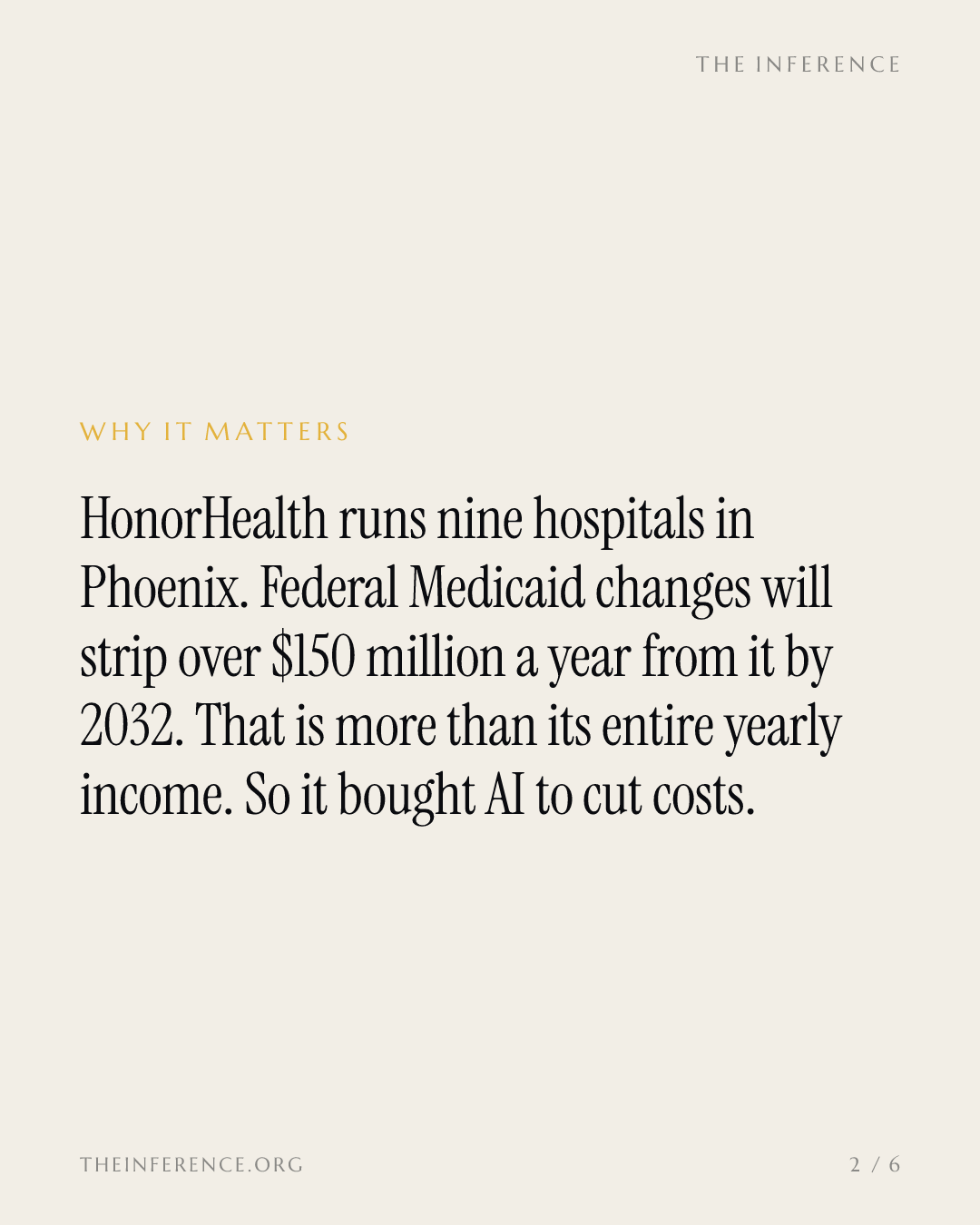
The nine-hospital Phoenix system expects federal Medicaid changes to strip more than $150 million a year from its margins by 2032. Its September deal with Qventus shows who hospital AI budgets are now written for: operators defending margin.
 Vincent Jiang · 2 min read
Patients are already slipping off Medicaid
HonorHealth, a nonprofit system running nine acute-care hospitals across greater Phoenix, is watching patients shift from Medicaid coverage into self-pay ahead of federal work requirements that begin in 2027 under the reconciliation law known as HR 1 1.
CEO Todd LaPorte now expects more than $150 million in annual margin deterioration by 2032 from federal legislative and CMS policy changes 1. The system collects about $4.5 billion a year at a 1 to 2 percent operating margin, or $45 million to $90 million of operating income, and it ran at -0.2 percent in 2025 1.
The projected annual loss exceeds HonorHealth's entire operating income
- Estimate
Data
| Value | |
|---|---|
| Operating income at 1% margin | $45M |
| Operating income at 2% margin | $90M |
| Projected annual margin loss by 2032 (estimate) | $150M |
The September purchase is margin defense
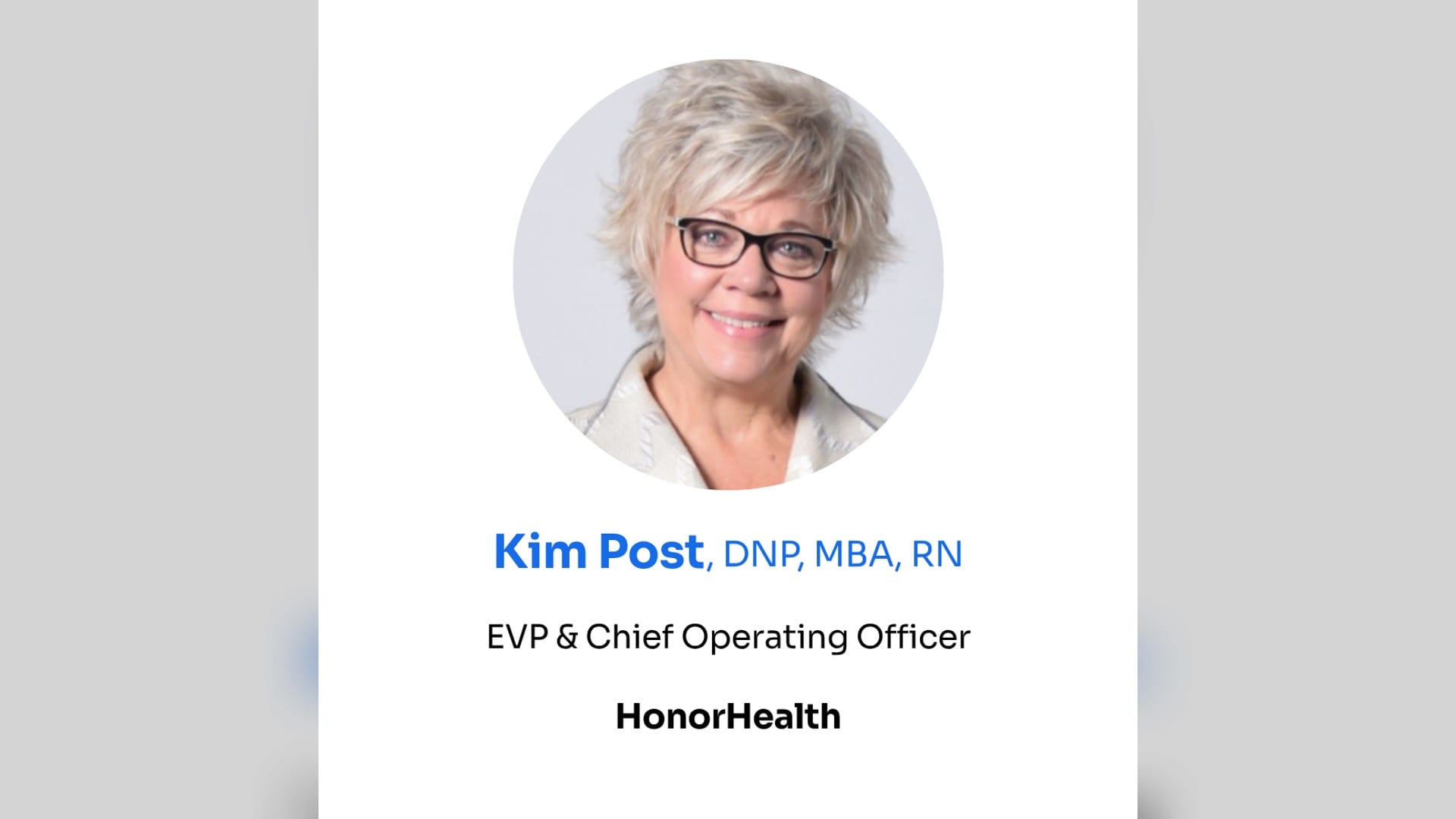
On September 17, Qventus, a privately held San Francisco company selling AI automation for hospital operations, named HonorHealth the latest client of its AI Solution Factory, a model that embeds Qventus engineers with hospital clinicians and IT to build custom AI teammates that act inside HonorHealth's Epic electronic health record 2. HonorHealth COO Kim Post says each solution already deployed has reinforced the confidence to go deeper 2.
LaPorte frames the buy plainly: not a silver bullet, but part of the solution 1. Qventus has raised $201 million across six rounds, including a $105 million round led by the investment firm KKR in January 2025 34.
The receipts are expansion, and they are vendor-reported
Nearly half of Qventus clients, across more than 150 hospital facilities, now run more than one of its modules 28. Allina Health, a Minneapolis nonprofit and the Factory's first client in December 2025, unlocked 689 hours of robotics capacity and a near 6x annualized ROI in 2025 5.
OhioHealth, based in Columbus, expanded in July after Qventus saved nearly 13,000 excess hospital days and $5.1 million, and only after EHR-native tools failed to deliver the surgical growth it wanted 6. Clients using the malnutrition coding module launched in February captured $17.1 million in annualized reimbursement by August 7. Every figure in this section is the vendor's.
The hole is bigger than the software
LaPorte's own arithmetic caps what automation can do here: the projected annual loss is larger than his system's entire operating income at the top of its range 1. Qventus's growth case rests on that squeeze continuing.
Watch the second module
Work requirements start in 2027, the year John Neil succeeds LaPorte as CEO on March 1 1. The tell is expansion revenue: if Qventus keeps landing the second and third module inside the same systems, the Medicaid squeeze is writing the hospital AI budget.
Get Health by email, free
AI in medicine, pharma and biotech. In our daily email, every weekday.