Omni MedSci sued STMicroelectronics and Sony over nine depth-sensing patents as four banks cut targets
On October 30, Omni MedSci sued STMicroelectronics and Sony over nine patents on near-infrared time-of-flight sensing, the same day four banks cut their targets on a quarter that beat. The claim lands on the layer ST pitches as its physical-AI future, and no damages figure exists to price it.
 Richard Tang · 3 min read
Two things hit ST−6.50% — ST, down 6.50 percent todayMicroelectronics, the Franco-Italian chipmaker, on October 30, and the quarter was the lesser one 1. Omni MedSci, a patent owner whose record is litigation, sued ST and Sony−0.31% — Sony, down 0.31 percent today, the Japanese electronics group, in two Texas federal courts over nine patents on near-infrared time-of-flight imaging, the depth-sensing technology Law360 ties to Apple−1.12% — Apple, down 1.12 percent today devices 1. The same session, four banks cut their targets on a stock that had beaten estimates and raised its outlook 23. They were marking down 2027, not the quarter 23.
The banks were marking down 2027, not the quarter
The October 29 results left little to argue with: revenue and fourth-quarter guidance above consensus, adjusted earnings a touch light 2. The sharp fall came a day later, 3.7% at midday, and it was a sector event, with Europe's chipmakers dropping together after disappointing Meta−1.65% — Meta, down 1.65 percent today, Alphabet−0.82% — Alphabet, down 0.82 percent today and Amazon−1.20% — Amazon, down 1.20 percent today numbers 4. Goldman alone raised its target, keeping a Neutral rating 5; the shares, near €42.53, now sit below every published target 3.
Revenue is up double digits year over year for the third straight quarter
Data
| Revenue | |
|---|---|
| Q2 '24 | $3.23B |
| Q3 '24 | $3.25B |
| Q4 '24 | $3.32B |
| Q1 '25 | $2.52B |
| Q2 '25 | $2.77B |
| Q3 '25 | $3.19B |
| Q4 '25 | $3.33B |
| Q1 '26 | $3.1B |
| Q2 '26 | $3.49B |
| Q3 '26 | $3.76B |
Four of five broker targets fell the day after the beat
- Target before October 30
- Target after
Data
| Target before October 30 | Target after | Change | |
|---|---|---|---|
| Deutsche Bank | €70.0 | €65.0 | -7.1% |
| JPMorgan | €71.5 | €60.0 | -16.1% |
| Jefferies | €68.0 | €56.0 | -17.6% |
| Bank of America | €85.0 | €72.0 | -15.3% |
| Goldman Sachs | €53.0 | €55.5 | +4.7% |
The patents sit on the layer where machines get depth
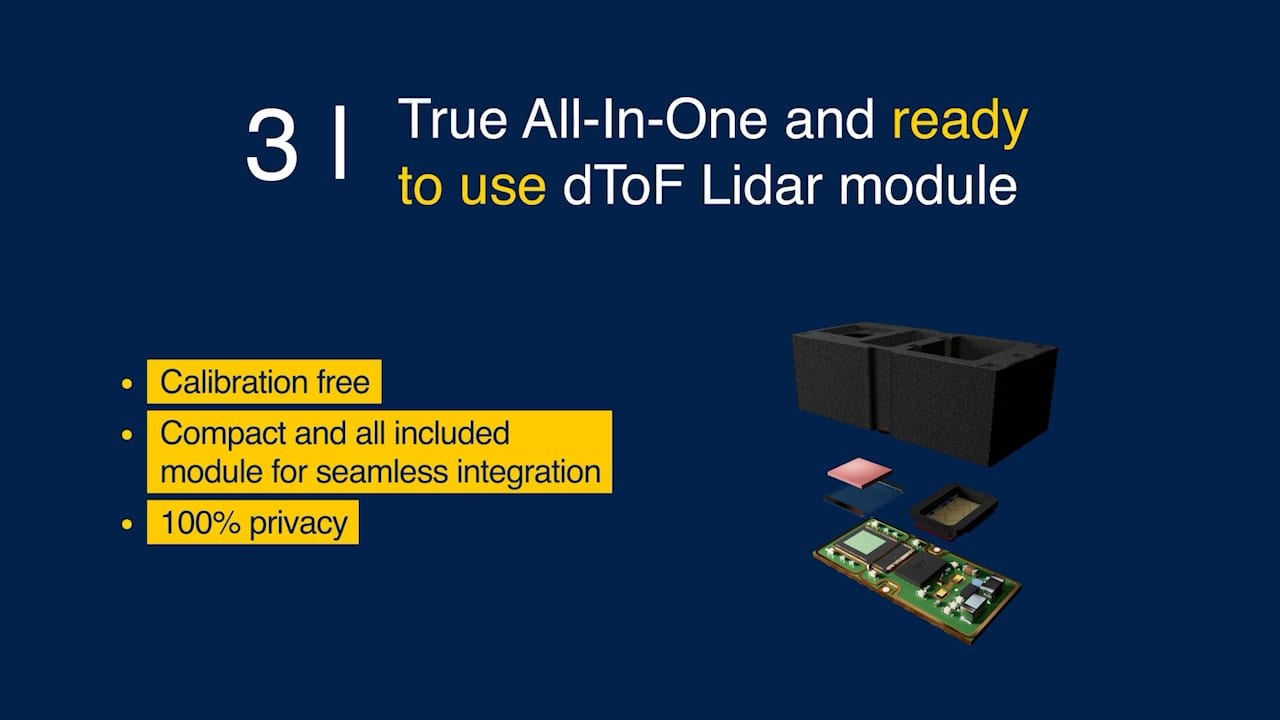
Time-of-flight imaging pulses invisible near-infrared light and clocks how long the reflection takes to return; the delay becomes depth, and the lead patent's own text describes a phone using it to build 3D images 7. That measurement is the interface where a machine touches the physical world, and it is where ST says its next business lives.
Luca Verre, group vice president for strategy in ST's microcontroller, digital IC and RF group, told ChosunBiz that robots succeed because sensing, deciding and acting are distributed across the machine, not concentrated in one processor 8. ST estimates about $600 of semiconductors in a typical humanoid robot, in a market it concedes is early 8, and already pairs those sensors with NVIDIA−3.89% — NVIDIA, down 3.89 percent today robotics technology from digital twins to deployed machines 2.
One 2027 asset ships; the other's title is now in question
Half of 2027 is already observable 92. AI data-center revenue reaches about $1.3 billion this year, raised from a July forecast above $1 billion 9, and management expects it to more than double next year 2. The order backlog stands above $20 billion 10. The sensing half is a projection, and its title just became a live question.
Omni MedSci has run this campaign before: the same patent family was asserted against Apple in the Eastern District of Texas from 2018, Apple fought it on validity, and the lead patent remains in force 7. No damages figure exists for the new suits 1, so the market had nothing to price on Friday, which holds only until a number arrives.
The quarter was never the decision. The decision is which 2027 asset you own: data-center silicon that ships and doubles, or a sensing franchise whose foundations a Texas court will now examine. Depth sensing spreads from phones into robots either way. What changed on October 30 is who gets paid for the layer machines perceive with.
Get Chips by email, free
How AI demand is reshaping chipmakers, memory and the fabs behind them. In our daily email, every weekday.