TSMC surveys suppliers on rare-earth-free motors; every fab motor needs a China license
TSMC sells the world's most advanced silicon and claims it can build fabs anywhere. The first crack in that story is a magnet: the motors inside its automation depend on parts Beijing licenses, and the fix has no cost and no timetable.
 Richard Tang · 2 min read
The world's most advanced AI chips are made in factories whose moving parts depend on magnets China licenses. On October 22 Reuters reported, for the first time, that TSMC has surveyed suppliers on rare-earth-free motors for its factory-automation equipment, trying to cut the risk that Beijing's export controls stall its fabs 1. TSMC−4.66% — TSMC, down 4.66 percent today declined to comment, and two of the three executives briefed said the work is at an early stage with no broad rollout 1.
The constraint is mechanical, not contractual
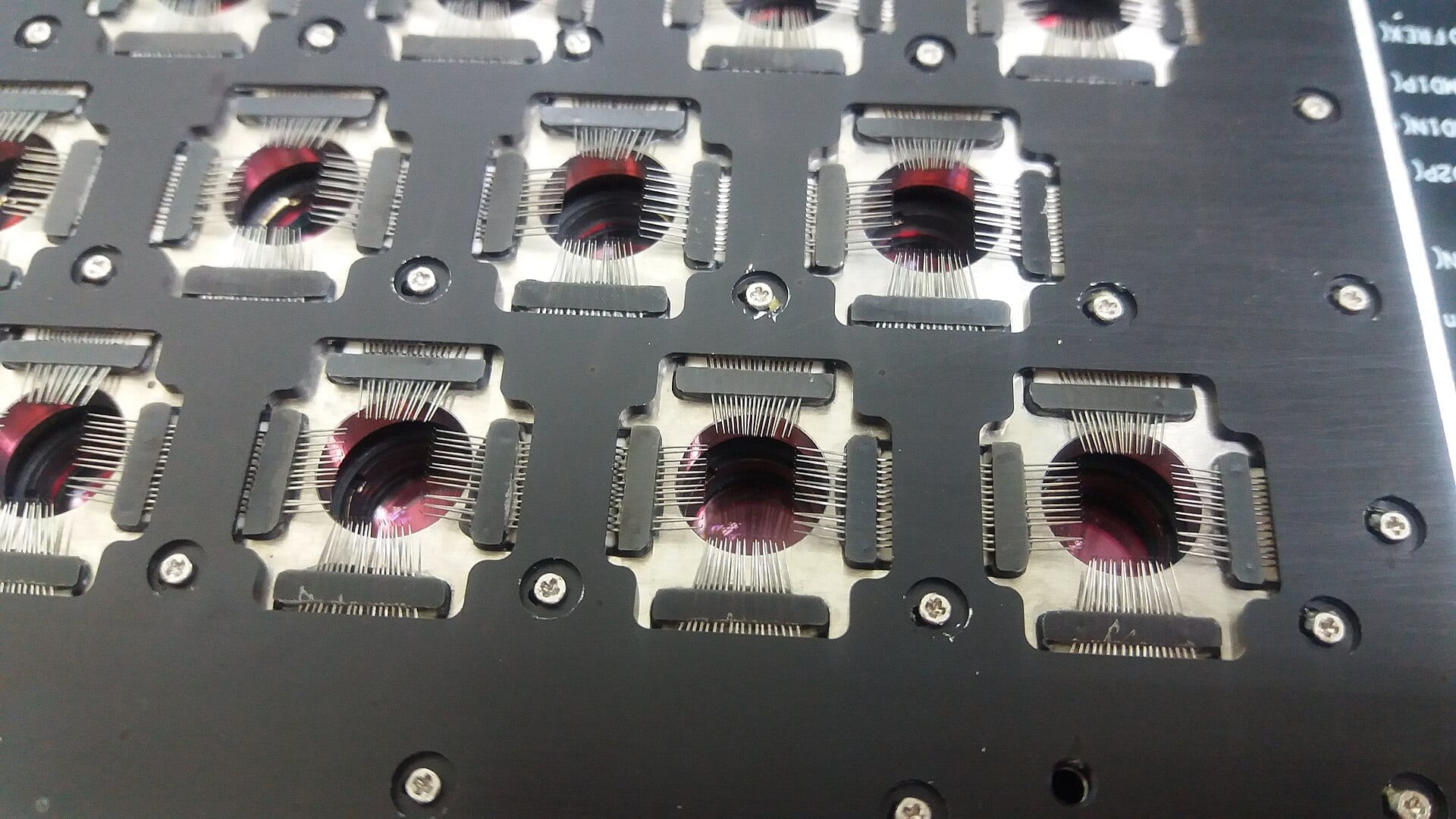
The mechanical fact is simple. Rare-earth magnets sit in the motors that move wafer-handling gear inside highly automated fabs. China put certain rare-earth materials, magnets and processing technology under export controls last year, so every one of those motors now needs a license decision in Beijing. A shortage would hit output for smartphone, AI system, data center and defense customers at once 1.
TSMC's pitch to Washington has been that it can build capacity anywhere the money is. This is the first disclosed hole in that case, and it is not contractual. The new fabs built to escape Chinese dependence contain motors whose magnets still come from China.
Money cannot re-source a magnet the world barely produces outside China. Taipei's own answer, a pilot line at the Industrial Technology Research Institute that could meet an estimated half of the island's demand, is three years out and funded by government support announced in February 12.
Relief today is political, so price the gap
The near-term check is political, not industrial. Beijing has signaled it will keep approving licenses for European buyers through a green channel, and the US-China truce runs to a January deadline; a Commerce Ministry spokesperson confirmed China is willing to keep approving licenses to Europe regardless of whether the truce is extended 4. So the license queue is flowing today.
What investors should price is the gap: no cost, no timetable, no company comment on the mitigation. Keep a discount on TSMC's ramp schedule until someone prices a rare-earth-free motor.
For everyone building on AI, the chain to watch is upstream. The model progress everyone trains for runs through these fabs, and the constraint there is now as much mechanical as financial. The lesson is the same one for learning AI: the capability is real, the infrastructure behind it is fragile in unglamorous places, and whoever closes that gap, the motor maker, the magnet refiner, the supplier engineer, is doing some of the most valuable work in the industry.
Get Chips by email, free
How AI demand is reshaping chipmakers, memory and the fabs behind them. In our daily email, every weekday.