CXMT guides to 132.5 billion yuan in nine-month profit, then its stock falls 7.8%
CXMT, the Hefei-based DRAM challenger, guided its first results since July's IPO to as much as US$19.8 billion of nine-month net income, against a 5.3 billion yuan loss a year earlier. What the filing cannot show is whether its 16-nanometer DRAM can pass a server customer's tests.
 Vincent Jiang · 3 min read
CXMT's first filing as a listed company prints a 49% margin
On October 16, 2026, CXMT, the Hefei-based DRAM maker challenging Samsung, SK hynix−7.15% — SK hynix, down 7.15 percent today and Micron−6.27% — Micron, down 6.27 percent today, filed its first preliminary results since its July IPO raised up to 66.61 billion yuan 1.
Third-quarter revenue was guided at 114.7 to 119.7 billion yuan, up 589 to 619% year on year and 15 to 20% from the second quarter 1. Nine-month revenue should reach 265 to 270 billion yuan, against 32.1 billion a year earlier 1. Net income of 131 to 132.5 billion yuan replaces a 5.3 billion yuan loss, which leaves about 49% of revenue reaching the bottom line at the midpoints 1. CXMT credited demand for AI computing outrunning global DRAM supply, lifting prices 1.
Nine months took CXMT from a 5.3 billion yuan loss to a 132 billion yuan profit
- Estimate
Data
| Value | Range | |
|---|---|---|
| 9M 2025 revenue | 32.1B yuan | — |
| 9M 2026 revenue (estimate) | 267.5B yuan | 265–270B yuan |
| 9M 2025 net income | -5.3B yuan | — |
| 9M 2026 net income (estimate) | 131.75B yuan | 131.0–132.5B yuan |
The buyback could not stop the selling
Chairman Zhu Yiming proposed a 1 to 2 billion yuan buyback over 12 months, several times the 200 to 800 million yuan that companies on China's STAR Market, its Nasdaq-style board, typically spend 1. With only about 6% of CXMT's shares trading freely, 2 billion yuan would absorb nearly 1% of the float 3.
The stock still fell 5.24% on October 15, rebounded 3.28% when the filing landed, then closed down 7.8% at 41.52 yuan on Monday October 19 as memory stocks slid worldwide 23.
CXMT's stock fell 7.8% the session after the filing landed
Data
| Daily change | |
|---|---|
| Oct 15 | -5.24% |
| Oct 17 | 3.28% |
| Oct 19 | -7.8% |
The reason sits inside the filing: third-quarter net income of 53.4 to 54.9 billion yuan grew just 1.0 to 3.8% from the second quarter while revenue grew 15 to 20% 3. Profit stalled because shortage pricing did the work, while the server chip CXMT promised for year-end has not shipped or passed a customer's test 5.
The profit is consumer memory, the promise is servers
Nearly all of that money came from consumer memory, which is what CXMT has mainly built 5. It held 9.5% of global DRAM revenue in the second quarter, up from 7.6%, fourth behind the three incumbents 4. Counterpoint Research, a second research firm, counts CXMT lower, at 7% 3.
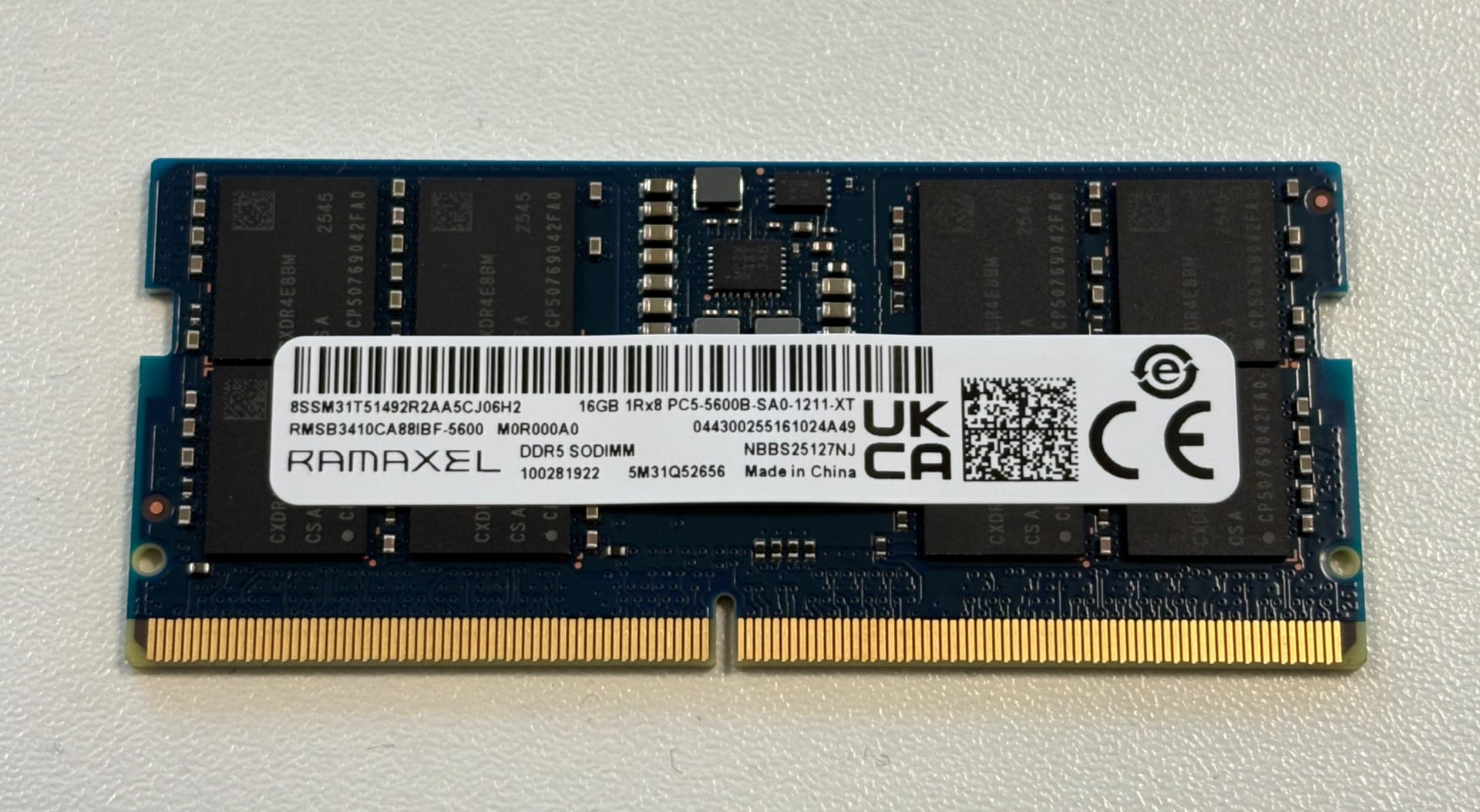
The server promise predates the filing. On October 10, president Cao Kanyu told a Shanghai chip conference that a DDR5 RDIMM, a registered memory module for servers built on the 4F² cell that is about a third smaller than the industry's 6F² layout, would ship by year-end, as TheInference reported on October 11, against Samsung's 2028 target for the same design 54. Samsung fell more than 6%, SK hynix more than 9% and Micron 3.88% when the promise landed, a selloff TheInference covered on October 12 5.
The skeptics' case: nothing has shipped
What is missing is the product: no published specifications, verified yields or customer qualification results 6. CXMT still builds on a 16-nanometer process under limits on extreme-ultraviolet lithography tools, and chip research firm TechInsights puts Chinese server memory two generations behind the majors' 1c-generation parts 5.
Kevin Cassidy of Wall Street brokerage Rosenblatt reckons CXMT's 4F² cells, at its process level, could be 34% larger than rivals' existing parts 3. Jordan Klein of brokerage Mizuho counters that a launch is not mass production, and that this is conventional DDR5, not the high-bandwidth memory AI racks pay premiums for 6.
CXMT holds 9.5% of world DRAM revenue, fourth and climbing
Data
| Value | |
|---|---|
| Samsung | 39.4% |
| SK hynix | 24.9% |
| Micron | 23.3% |
| CXMT | 9.5% |
The next marker lands on October 30
Goldman Sachs−1.75% — Goldman Sachs, down 1.75 percent today holds both doubts at once: the selloff may have underestimated China's capacity ramp while overestimating its memory technology, given how long customer qualification and high-yield mass production take 2. The audited third-quarter report, and a server module passing a customer's test by year-end, settle what a preliminary filing cannot 5.
First comes October 30, when Tokyo Electron, the Japanese tool maker whose biggest single market is still China, 222.9 billion yen of June-quarter sales, reports results 78. Its regional split, 30.4% China in June against 49.9% two years earlier, is the first hard read on the tool bill this buildout is running up 8. That number shows whether the ramp has equipment behind it.
Get Chips by email, free
How AI demand is reshaping chipmakers, memory and the fabs behind them. In our daily email, every weekday.