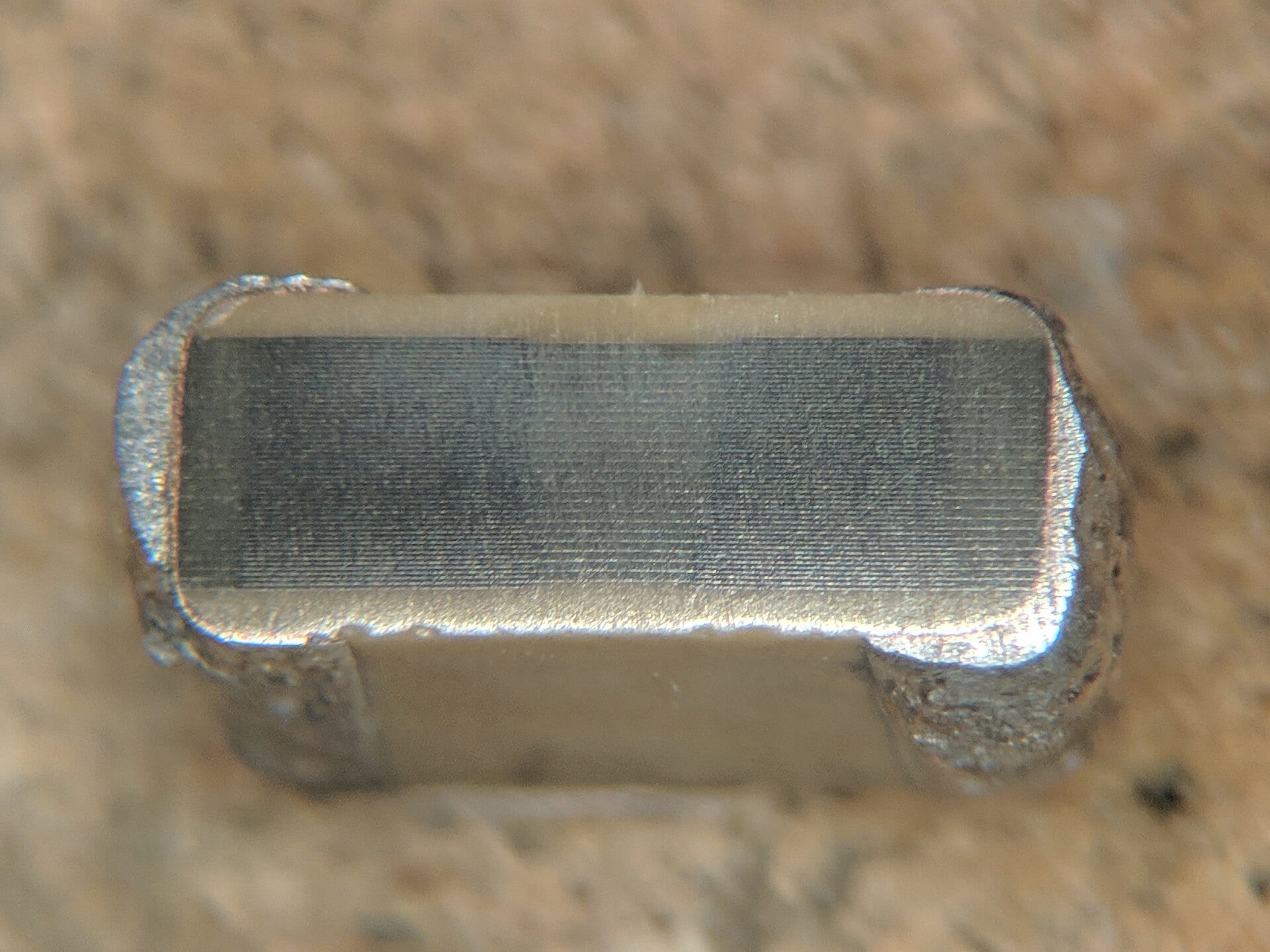
Samsung Electro-Mechanics' biggest capacitor deal lasts one year, not the decade the market is pricing
Samsung Electro-Mechanics booked 879.3 billion won of AI-server capacitors from an unnamed buyer, twelve months of deliveries against a market priced as a decade-long shortage. The order book and the consensus market size cannot both be right.
 Vincent Jiang · 3 min read
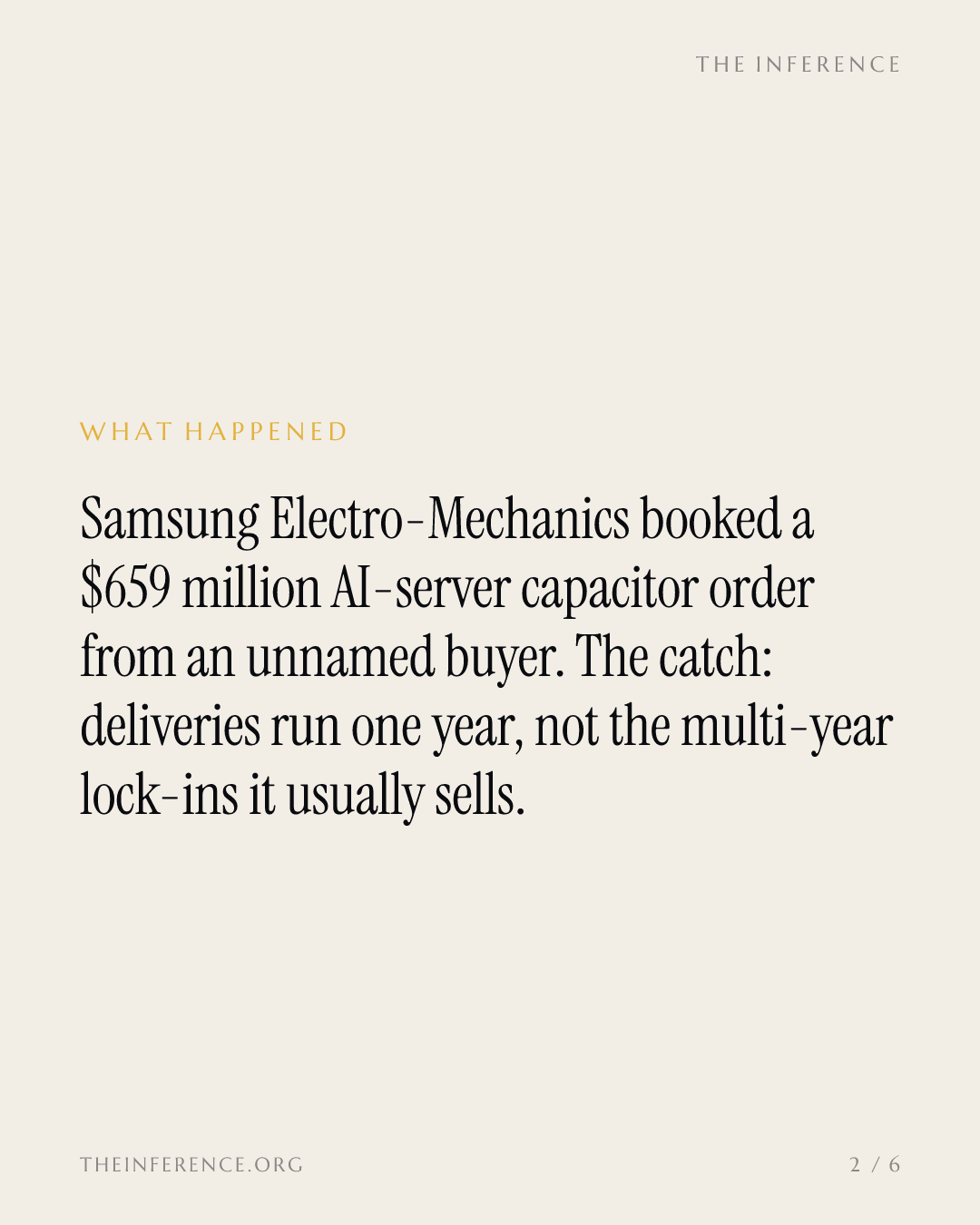
Samsung Electro-Mechanics−7.50% — Samsung Electro-Mechanics, down 7.50 percent today, the Samsung Group affiliate that makes the small parts inside big machines, filed a contract on October 30 to supply 879.3 billion won ($659.3 million) of multilayer ceramic capacitors, or MLCCs, for AI servers to a global customer it refuses to name 1. The deliveries run for one year, starting December 21 1. That single clause is the story: the company sells these deals as three-to-five-year lock-ins, and its second-largest order ever commits twelve months of product 2.
The order book has outgrown the market estimate
The contract is the sixth MLCC long-term agreement of 2026 and the company's eighth supply agreement overall this year, pushing disclosed 2026 orders to 5.18 trillion won across MLCCs, silicon capacitors, inductors and FC-BGA substrates 129. At the rate Yonhap used for the deal itself, that is roughly $3.9 billion in signed orders in one year 129.
Goldman Sachs−3.47% — Goldman Sachs, down 3.47 percent today values the entire global AI-server MLCC market at $1.4 billion in 2025, reaching $5.8 billion by 2030 1. Not every won in the order book is MLCCs, so the two numbers do not collide head-on, but the gap says the market the shortage is priced on is either far bigger than the estimate, or the order book holds more than capacitors.
Disclosed MLCC orders doubled in three months: 450 billion won in June, 1.07 trillion won by September
Data
| Value | |
|---|---|
| Jun | 450B won |
| Jul | 300B won |
| Sep | 1,070B won |
| Oct | 879.3B won |
Prices, lead times and the receipts
Demand is running ahead of supply everywhere the company looks. It expects AI-server MLCC demand next year at roughly eight times this year's level, an upgrade from seven times a quarter earlier, with about 50 customers signed or negotiating long-term deals against roughly 10 in the second quarter 3.
MLCC average selling prices rose more than 10 percent in the third quarter alone, and lead times stretch to 52 weeks, about a year from order to delivery 34. Utilization sits at 91 percent, so a third plant in the Philippines starts up in the first quarter 2. The quarter behind it all: record revenue of 3.76 trillion won and record operating profit of 691 billion won, up 30 and 165 percent 56.
Who holds the risk
The buyers are hardware makers locking a year of scarce parts at prices climbing in double digits; the seller enjoys the scarcity rent until the plants land 25. Brokers split on what that is worth: Meritz raised its target to 2.3 million won and sees steep profit growth through 2028, while Hana cut its target from 3 million won to 2 million won and still rates the stock a buy 45.
Meritz lifts its target to 2.3 million won while Hana cuts from 3 million to 2 million
Data
| Value | |
|---|---|
| Hana, before the cut | 3M won |
| Meritz, after the raise | 2.3M won |
| Hana, after the cut | 2M won |
Rivals are building too: Ibiden approved about 151 billion yen of new substrate capacity on October 29, and Murata plans roughly 1 trillion yen for capacitors 8. If buyers who signed for twelve months need less when that capacity arrives, the price gains reverse, and shareholders carry that.
Three dated tests decide the direction
Three dated events decide the direction. More long-term agreements are expected before year end, which could push cumulative orders past 5.18 trillion won 24. The Philippine plant starts mass production in the first quarter 2.
And from the fourth quarter, deliveries to new CPU customers ramp in earnest, the first test of whether the demand holds once the calendar turns 4. A contract is only long-term as long as the customer stays.
Learn more in the related coverage below.
Get Chips by email, free
How AI demand is reshaping chipmakers, memory and the fabs behind them. In our daily email, every weekday.