Shopify missed for the first time in four years; Affirm's 34% growth and Klaviyo's raise say demand moved
Shopify missed for the first time in four years, but Affirm's 34 percent GMV growth and Klaviyo's beat-and-raise inside two days say demand shifted, not died. The real question is whether Shopify's AI bill lands before its agentic checkout pays off.
 Richard Tang · 2 min read
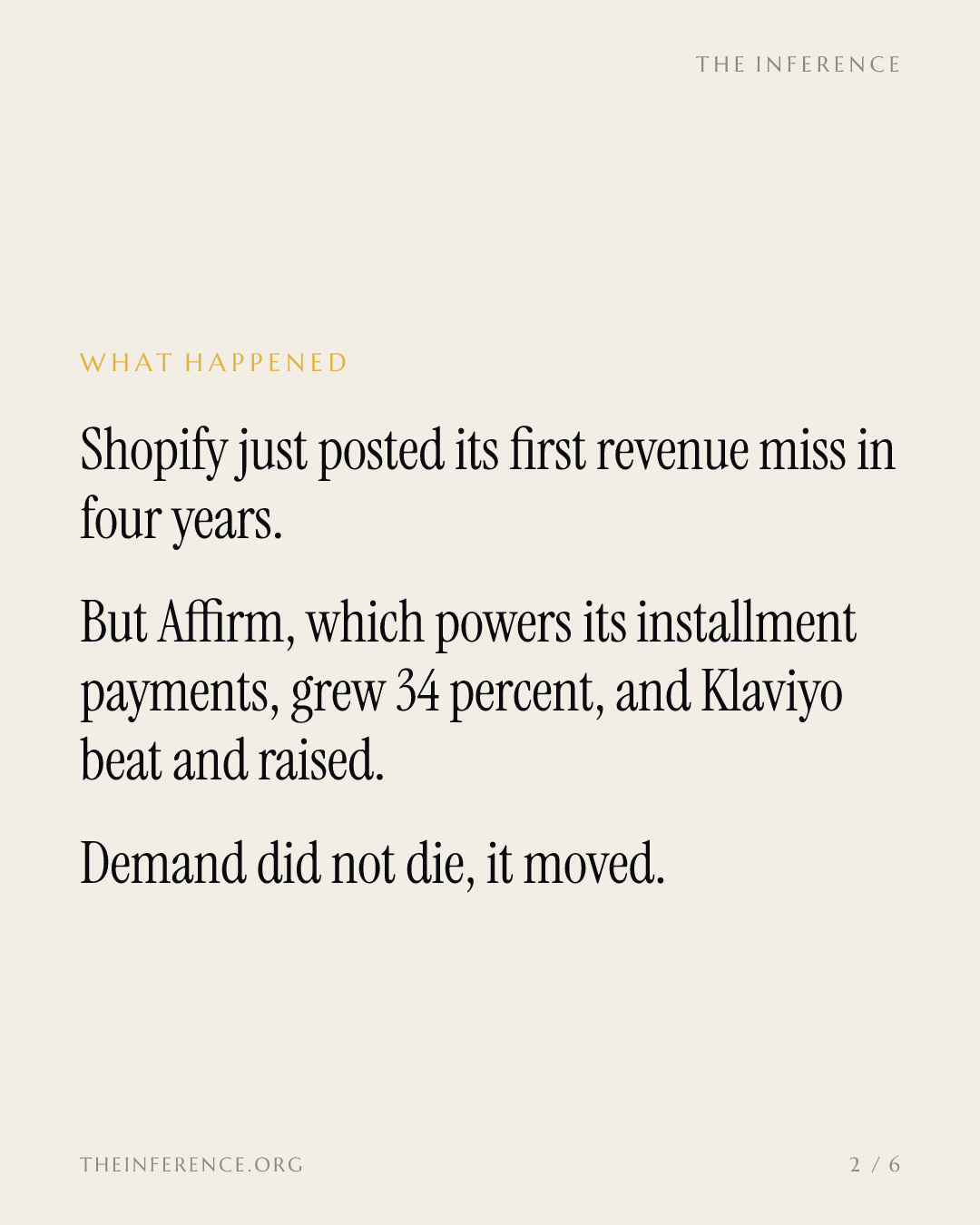
Shopify's+4.05% — Shopify, up 4.05 percent today first revenue miss in four years is not a story about a consumer in retreat. The partner prints that landed within 48 hours say the opposite: demand moved 3. Affirm−3.74% — Affirm, down 3.74 percent today, the lender behind Shop Pay Installments, grew GMV 34 percent and said October was already running at a high-30s rate 3. Klaviyo−0.60% — Klaviyo, down 0.60 percent today, whose marketing software runs on Shopify stores, beat and raised its year 4. The wallet did not close; it migrated to value retail while independent brands bore the pinch 2.
The chain: agentic rails are live, but the bill arrives first
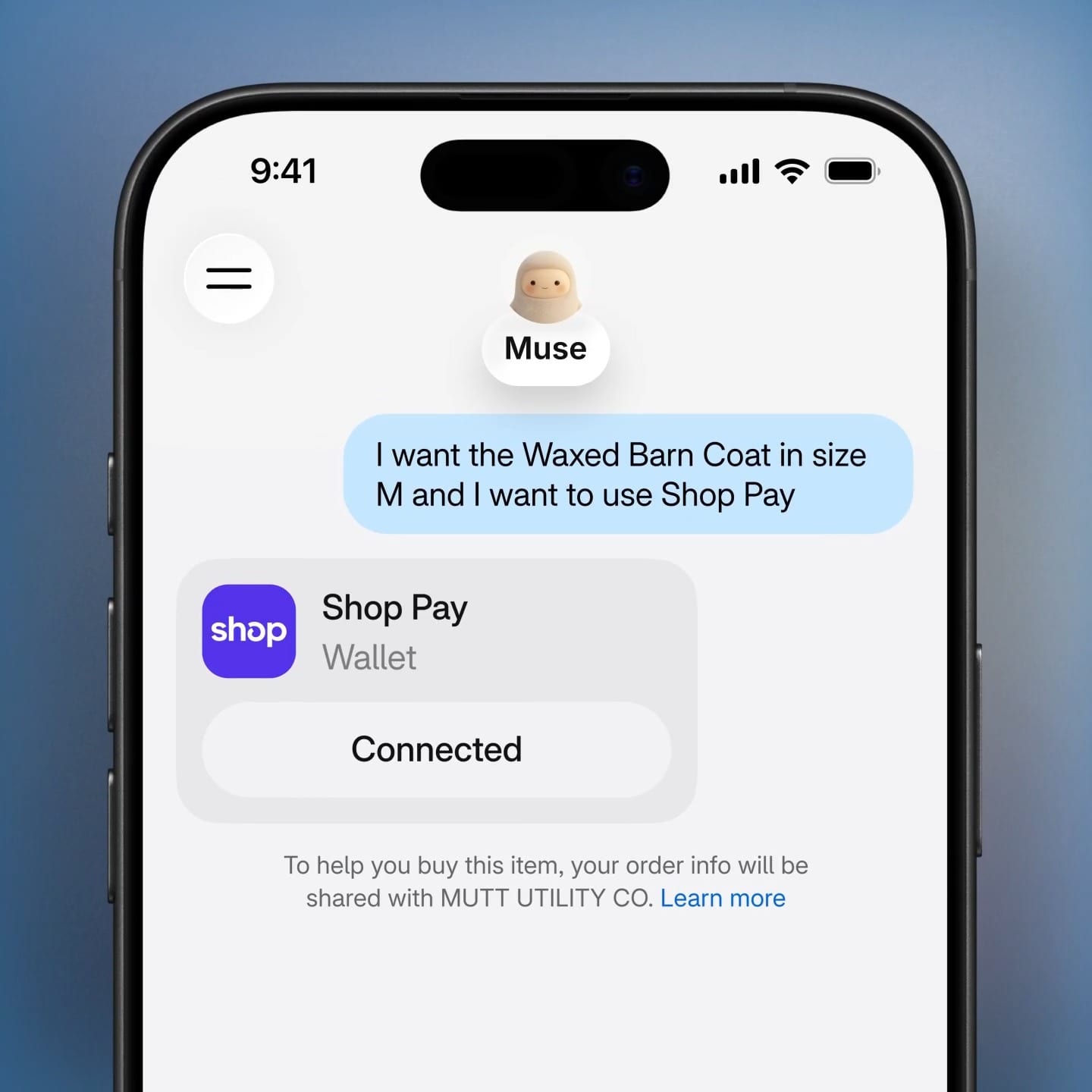
Here is how the pieces fit. Shopify built the infrastructure agents plug into: connection points for Meta's+2.05% — Meta, up 2.05 percent today Muse to Shop Pay, a knowledge base merchants control, Sidekick for store management 1. That matters one level up because this quarter, for the first time, shoppers made delegated purchases through personal agents, AI traffic more than doubled, and AI-driven orders tripled 1.
Klaviyo's Composer shows the same pattern on the marketing layer: weekly credit usage more than tripled to 18 million within three weeks of launch, and it plans to embed Composer in Shopify itself 4. The bottleneck has moved to monetization. Hoffmeister said subscription gross margin compressed on incremental Sidekick AI spend, and fourth-quarter operating expenses are guided to 29 to 30 percent of revenue with free-cash-flow margin flat 2. Merchants and Shopify's margin are paying for agentic commerce before agentic checkout pays anyone.
What to watch
The consumer is not the variable; the mix is. If holiday GMV skews further to big-box value, Shopify's subscription line keeps missing even as the rails it built carry the transactions. Watch Sidekick's cost line and AI-channel conversion, not the macro. The builders wiring agents into checkout and marketing are doing the gap-closing work, and the quarter's evidence says they are early, not wrong.
The rails grew faster than the platform this earnings week
The checkout and marketing rails around Shopify grew faster than Shopify's GMV
Data
| Value | |
|---|---|
| Shopify revenue | 32 |
| Shopify GMV | 29 |
| Affirm GMV | 34 |
| Klaviyo revenue | 25 |
For investors, the post-print bounce turns on one question: whether AI-driven order growth converts into revenue before the AI bill converts into margin compression 12. This quarter it did not. Next quarter is the test.
Get Applications by email, free
How AI is changing the software people and companies use. In our daily email, every weekday.