Shorts fled Magnachip at $2.40. Its CEO paid $3.18 six weeks ago.
The smallest stock on the power-chip beat opens near its 52-week low two days before the two earnings prints that will test the $3.42 price Navitas paid for new Magnachip shares in September.
 Vincent Jiang · 3 min read
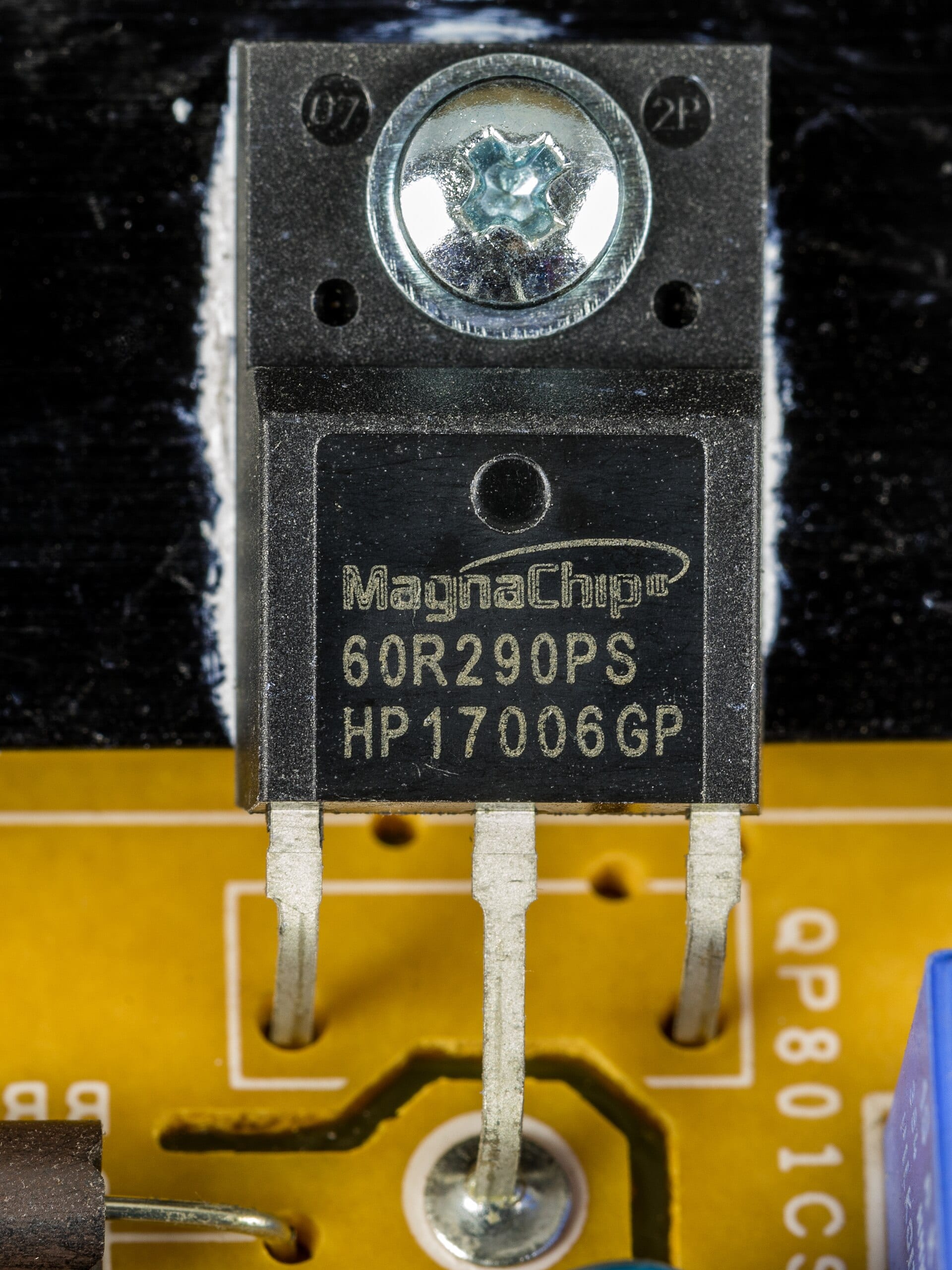
Magnachip Semiconductor, a $91.3 million designer of analog and power chips traded on the New York Stock Exchange, opened Monday at $2.40, within 22 cents of its 52-week low of $2.18 and well under its 50-day average of $3.02 1. Six weeks ago the same stock jumped 14% in a day 2. The difference is not the tape. It is who is still in it.
The crowd paid to bet against the company has cashed out. Short interest fell 34.7% to 1,092,672 shares as of October 15, from 1,672,866 at September 30, leaving 3.2% of shares outstanding sold short and 1.2 days of average volume to buy them back 1.
Institutions, who own 74.26% of the register, were adding in the second quarter: new stakes from Winton Group, Squarepoint Ops, TD Waterhouse and Susquehanna Fundamental, and an 88.7% raise from Algert Global 1. Yet the two analysts covering the stock carry a consensus of Reduce, and Weiss Ratings reissued its sell (D-) rating 1. The professional pessimism has abandoned it and the professional optimism rates it a sell, which leaves a stock anchored to nothing but its own next numbers.
Navitas paid $3.42 in September, the chief executive paid $3.18, the market pays $2.40
On September 21 Magnachip announced that Navitas, the power-semiconductor company selling gallium nitride and silicon carbide devices into AI data centers, had agreed to buy 1,461,988 newly issued Magnachip shares at $3.42 each, $5 million in all, under a privately negotiated purchase agreement set to close on or about September 24 3.
Chief executive Chae Lee bought 80,000 shares at an average $3.18 on September 23, the week the deal was set to close, for $254,400, lifting his stake 27.71% to 368,750 shares 1. At Monday's open, the negotiated price sat more than 40% above the market, and the chief executive's purchase was about 25% underwater 1.
The market opened at $2.40 where Navitas paid $3.42 six weeks ago
Data
| Value | |
|---|---|
| 52-wk high | $9.86 |
| Navitas price | $3.42 |
| CEO buy | $3.18 |
| 50-day avg | $3.02 |
| Mon open | $2.4 |
| 52-wk low | $2.18 |
The partnership behind that price is a licensing deal: Magnachip is porting Navitas' GeneSiC silicon carbide technology, covering 1,200-volt to 3,300-volt and higher applications, into its fabrication facility in South Korea 3. The test of it arrives in two days. Magnachip reports third-quarter results on November 4 after the close, with consensus at $47.50 million of revenue and a $0.20 loss per share 4. Navitas reports the night before, November 3 5.
The $3.42 was never a bid for the whole company
The strongest counterpoint is the fine print. The $3.42 was the price on one negotiated block of new shares sold to a partner, not an offer for every share 24. The companies have disclosed no revenue targets or production timelines for the partnership 2, and the standalone business is guided to a quarterly loss 4. A discount to a strategic price is not automatically a mispricing.
But the sequence still reads backwards. The shorts are gone, the institutions were buying, and the man with the best information in the building paid $3.18 for a share the market now opens at $2.40. On November 3 and 4, two prints in two days will say whether the silicon carbide partnership is turning into orders or whether $3.42 was the high-water mark. Two days of reporting will settle more than six weeks of silence did.
Get Chips by email, free
How AI demand is reshaping chipmakers, memory and the fabs behind them. In our daily email, every weekday.