A week after the FTC demanded Uber's pricing formulas, its CEO described the algorithms in action
One week after the FTC ordered Uber to open its pricing and driver-pay formulas, the CEO said algorithms trained on billions of trips now decide where every incentive dollar goes, and that rider prices may rise to fund drivers. The stock rose 7% anyway.
 Vincent Jiang · 2 min read
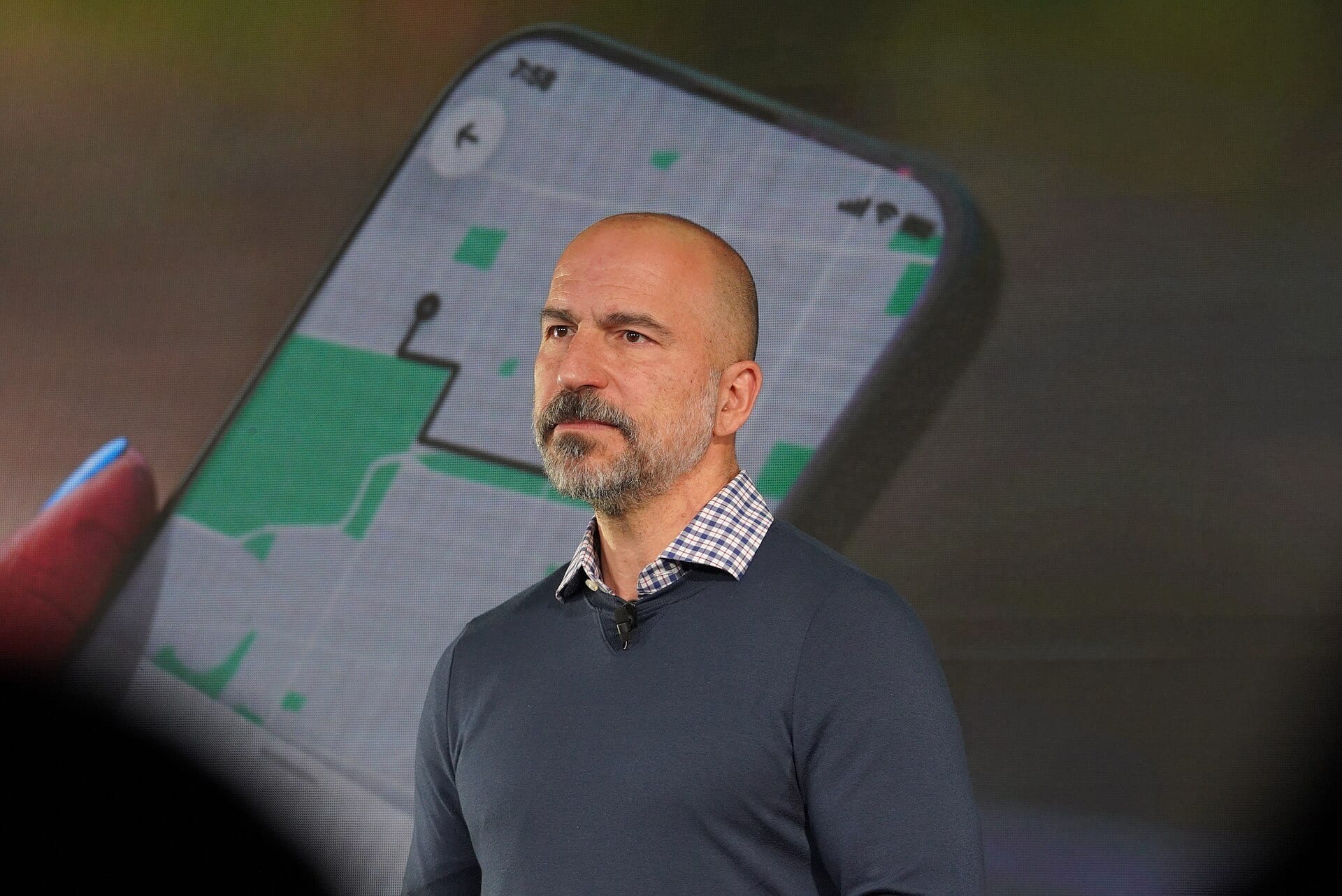
One week after the Federal Trade Commission ordered Uber to hand over the inputs behind its pricing and driver-pay formulas, Uber's+5.05% — Uber, up 5.05 percent today chief executive stood on an earnings call and described those formulas running the company's money in real time. "If you have a dollar, what is the maximum predicted return for that dollar? The algorithms are making these choices," Dara Khosrowshahi said Wednesday, describing a system trained on billions of trips 2. The call landed one week into the agency's 45-day clock, and it handed regulators their evidence on the spot 2.
Riders now fund the drivers
Uber faces its worst driver shortage since 2021, the year it last poured money into driver payments after the pandemic emptied the roads 2. The fix this time is to cut rider incentives and move those dollars to drivers, which "does mean sometimes higher prices for riders," Khosrowshahi said 2. The squeeze is global: fuel prices spiked in Brazil and India after the US and Israel started a war with Iran, so driver incentives are rising there too, said chief financial officer Balaji Krishnamurthy 2.
The beat, and the soft patch
Investors liked the quarter anyway. Revenue rose 9.6% to $14.8 billion and adjusted EBITDA, Uber's reported profit measure, rose 31% to $2.96 billion, both ahead of estimates; gross bookings jumped 20% to $59.82 billion 3. But the fourth-quarter guidance came in light: bookings of $63.25 billion to $65.25 billion against the $64.29 billion analysts expected, and adjusted earnings per share of $0.95 to $0.99 versus $1.00 forecast 3. The stock rose 7.06% on Wednesday 1.
Fourth-quarter bookings guidance brackets the Street view at $64.29 billion
- Gross bookings
- Estimate
Data
| Gross bookings | |
|---|---|
| Q3 '26 actual | $59.82B |
| Q4 '26 guide low (estimate) | $63.25B |
| Q4 '26 guide high (estimate) | $65.25B |
| Street view for Q4 | $64.29B |
Revenue grew 33% over two years, with a dip in Q1 2026
Data
| Revenue | |
|---|---|
| Q3 '24 | 11.19 |
| Q4 '24 | 11.96 |
| Q1 '25 | 11.53 |
| Q2 '25 | 12.65 |
| Q3 '25 | 13.47 |
| Q4 '25 | 14.37 |
| Q1 '26 | 13.2 |
| Q2 '26 | 14.19 |
| Q3 '26 | 14.8 |
The FTC now wants the formulas Khosrowshahi just described
The order, covered in our November 3 piece, arrived October 28 under Section 6(b) of the FTC Act, a study tool rather than an enforcement finding, and went to nine companies including Uber, Lyft and DoorDash 45. Chairman Andrew Ferguson said the agency wants the "opaque methodology" behind what consumers pay and what gig workers are offered, with responses due 45 days after receipt, mid-December for Uber 45.
The call gave the agency a running description of exactly those systems: algorithms deciding where each incentive dollar goes, with the cost passed to riders 2. Transparency is a modest cost for a company growing bookings 20% 3, but it is the first test of whether the margin record holds up once the formulas are public. Watch the filing in mid-December, and the next driver-incentive line.
Get Applications by email, free
How AI is changing the software people and companies use. In our daily email, every weekday.