Unity ties $1.3 billion of studio ad financing to its data framework as AppLovin seeks a restraining order

Unity's PvX deal finances studios' ad spend and locks them into Unity's data rails, just as AppLovin goes to court over those rails. Unity's Q3 print on November 5 shows whether the strategy is working.

Richard TangRichard Tangtwo-minute read
Share
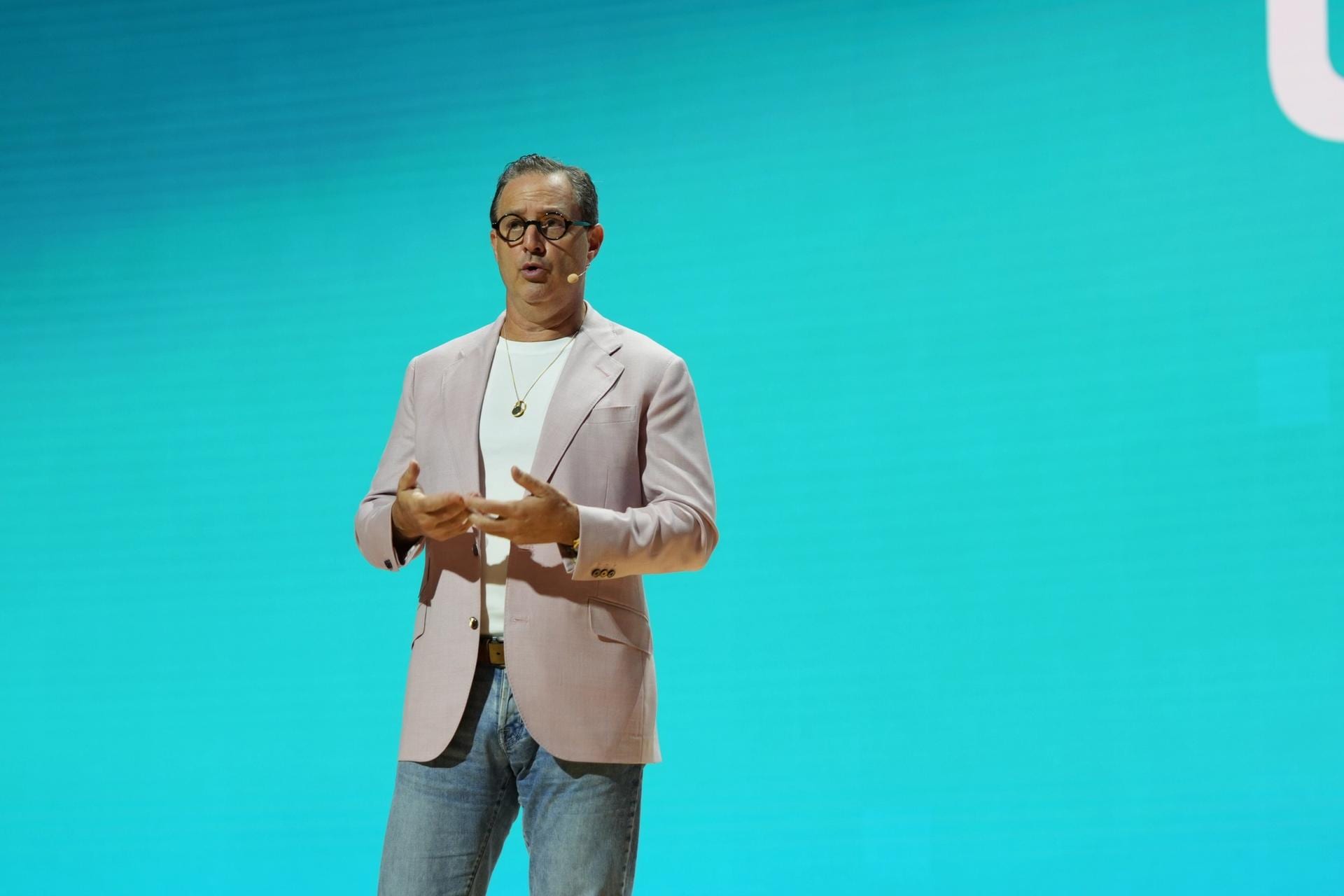
Unity CEO Matt Bromberg speaking on stage at the Unite Seoul 2026 keynote
1 / 6Slide 1 of 6
Unity CEO Matt Bromberg onstage at the Unite Seoul 2026 keynote. Unity reports Q3 on November 5, its first print since the PvX financing deal and AppLovin's court move.

Unity's−2.07% — Unity's, down 2.07 percent today newest growth lever is not a model, it is a lender. On October 27 Unity partnered with PvX, a specialist that underwrites user-acquisition ad spend for mobile studios and says it has committed over $1.3 billion across 17 markets 12. Qualifying studios get ad capital tied to how each player cohort performs, so they scale marketing without selling equity or taking a loan. PvX's CEO credits the ROAS gains from Unity Vector, Unity's AI ad engine, for making the deal possible 12.

The catch is where the value lands. PvX books the credit risk, but Unity gets more ad volume through Vector without financing it, and participating studios must join Unity's Developer Data Framework, plus take Unity Ads credit and support perks 2. That is a data rail being built by contract. It is also contested ground: Mobilegamer.biz reports AppLovin+0.93% — AppLovin, up 0.93 percent today applied for a temporary restraining order in San Francisco Superior Court this month, accusing Unity of harvesting data through Unity's Ad Quality SDK without permission 1.

Vector's growth guide faces its first test since the deal

Unity reports Q3 on November 5 before the open, its first print since both moves 3. Vector grew 23% sequentially in Q2 and is guided up another 19-21%; management guides strategic revenue of $540-550 million plus about $20 million of shrinking nonstrategic revenue, adjusted EBITDA of $185-190 million, and first GAAP profitability 3. Options imply an 11% move 4.

Unity's revenue is growing again: five straight quarters of accelerating year-over-year growth

$0M$200M$400M$600MQ3 '24Q4 '24Q1 '25Q2 '25Q3 '25Q4 '25Q1 '26Q2 '26$546.47M
Data
Revenue
Q3 '24$446.52M
Q4 '24$457.1M
Q1 '25$435M
Q2 '25$440.94M
Q3 '25$470.62M
Q4 '25$503.09M
Q1 '26$508.24M
Q2 '26$546.47M
Unity's total quarterly revenue, in millions of US dollars, from SEC filings. Growth returned to positive in Q3 2025 and reached 23.9% year over year in Q2 2026. Source: [6] Unity, quarterly figures from its SEC filings, retrieved 4 November 2026.6

Here is the checklist. First, does financed UA spend show up as Vector growth at or above the top of the guide, which would say the PvX rail is already pulling money through the platform? Second, does management defend the Ad Quality SDK data the framework depends on, given the AppLovin dispute 1? AppLovin, down 64% this year, reports tonight after the close with its own 46-48% growth guide 5. Two engines, one pool of mobile ad budgets, and Thursday tells us which rail is filling.

Get Applications by email, free

How AI is changing the software people and companies use. In our daily email, every weekday.

Loading APP

Reader comments

0 comments

    More in Applications

    All in this topic →

    Applications

    Sony's anime chief: a season that took a year now takes three to four years in a $28 billion market

    Sony's growth story has moved off the PlayStation and onto intellectual property it owns, and its anime chief just put a number on the constraint: a season that once took a year now takes three to four. Whether AI tools that assist artists rather than replace them can close that gap decides the economics for Sony holders, and for Netflix, the rival that buys Sony's films while bidding against it for anime.

    Applications

    Netflix used AI on 300 titles this year and cut its ad forecast to $2.7 billion

    The disclosure, and the $587 million acquisition of Ben Affleck's AI studio behind it, is the cost side of Netflix's answer to its slowest revenue growth in three years and an ad forecast just cut to $2.7 billion. A $260 billion market cap at 17.6 times earnings is pricing whether it works.

    Applications

    Veeva moves AI to flat fees, with Vault AI at 10% of the Vault subscription, and no AI dollar yet

    The invoice no longer rises with agent work: Vault AI is 10 percent of the Vault subscription with unlimited use, and the compute cost lands on Veeva. Wells Fargo raised its target to $400 on AI growth today anyway, and December 3 results are the first place an AI dollar could appear.

    Applications

    Anthropic hosts Adobe apps in Claude and sells a FigJam rival, while Figma's connector is still in development

    Anthropic both hosts design apps inside Claude and sells Claude Whiteboards, a rival to Figma's FigJam. The launch lands a week after Figma beat estimates and still saw shares slide 8% on AI costs.

    Applications

    Temu's monthly active users fell 18% in October, before Europe's full €5 per-item toll hits PDD

    Temu's user base has shrunk every month since June, and October was the last month before Europe's €2-per-item handling fee applied, which makes the 18% drop a lower bound on the toll. The bill lands on PDD Holdings, whose net income fell 12% last quarter and which reports around November 24.

    Applications

    Sony's boycott quarter set records: 127 million players, 78% digital

    The week-long PS5 blackout asked players to turn Sony off; instead the September quarter set records and the digital-versus-disc split moved further toward Sony's accounts, while the buyer carries the bill for both the console price and the lost used-game market.

    Get the newsletter

    The day's AI and market news, in your inbox every weekday.