AI demand outruns AXT's doubled wafer supply; the up to $545 million fix needs Beijing's sign-off
AXT's record quarter shows AI demand outrunning even a doubled supply of the crystal discs its lasers are grown on. The up to $545 million expansion signed by its Chinese unit closes only if Beijing's filings clear, and the wafers still need export permits to leave.
 Richard Tang · 2 min read
The AI optics bottleneck has moved upstream to the wafer
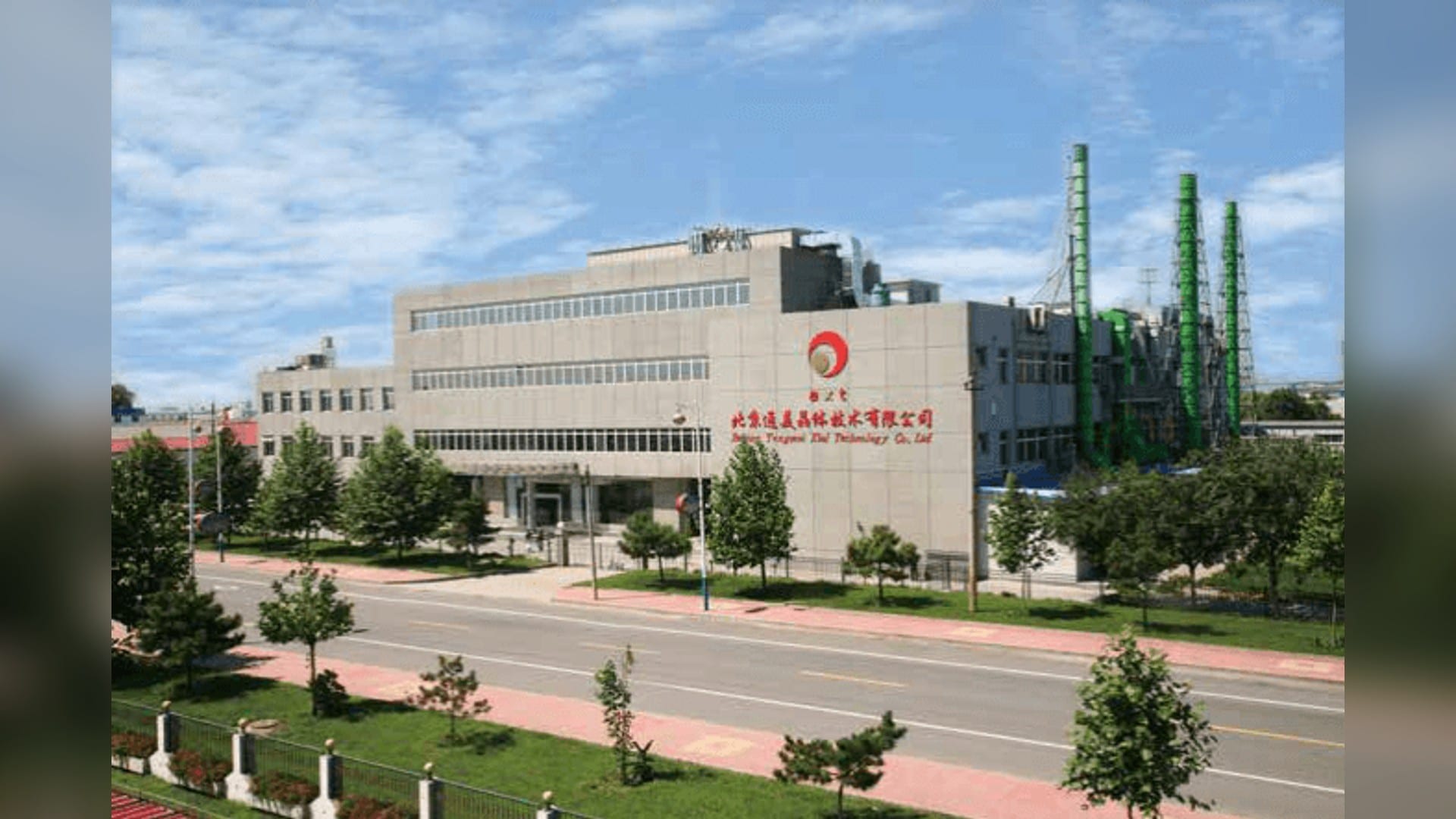
The light that carries traffic between AI chips begins on a polished disc of indium phosphide, and demand for those discs is now outrunning supply. AXT, a Fremont, California materials company that builds its wafers in three Chinese plants, describes itself as one of only three global suppliers of high-quality InP substrates 5.
Its September-quarter revenue hit a record $73.4 million 1, and more than half of each sales dollar now survives production costs, against roughly a fifth a year earlier 1. Chief executive Morris Young says AXT+9.22% — AXT, up 9.22 percent today surpassed its goal of doubling InP capacity this year, and demand is still "outpacing supply" 14.
Gross margin swung from negative to nearly 45% in five quarters
Data
| Gross margin | |
|---|---|
| Q3 '24 | 24% |
| Q4 '24 | 17.6% |
| Q1 '25 | -6.4% |
| Q2 '25 | 8% |
| Q3 '25 | 22.3% |
| Q4 '25 | 20.9% |
| Q1 '26 | 29.6% |
| Q2 '26 | 44.9% |
Buyers cannot route around a wafer shortage
A supplier that doubles output and still calls a shortfall is describing a real constraint at its own layer. It lands on the laser and transceiver makers above it, the companies that turn electricity into light inside AI data centers. A laser line must qualify a wafer source before using it, so buyers cannot route around this shortage the way they can add assembly contractors 6.
AXT's revenue went from flat to near-vertical as AI demand outran wafer supply
Data
| Revenue | |
|---|---|
| Q3 '24 | $23.65M |
| Q4 '24 | $25.11M |
| Q1 '25 | $19.36M |
| Q2 '25 | $17.97M |
| Q3 '25 | $27.96M |
| Q4 '25 | $23.04M |
| Q1 '26 | $26.92M |
| Q2 '26 | $47.59M |
| Q3 '26 | $73.41M |
The fix is funded on paper and gated in Beijing
On October 27, AXT's Chinese manufacturing subsidiary, Beijing Tongmei, signed definitive agreements for up to $545 million from institutional investors, led by BNK-B3, a vehicle of a leading Asia asset manager 3. AXT itself subscribes another $400 million of stock to keep control 3. At the maximum raise it would still own roughly three quarters of Tongmei 3. The closing needs filings with Chinese government authorities and is expected in December. If the minimum tranche has not closed by December 20, the agreement terminates 3.
One investor is an affiliate of an existing customer, a buyer putting equity behind its supplier's furnaces 3. And the finished wafers still need Chinese export permits to leave the country, a risk AXT lists in both of this week's releases 14.
Shareholders pay first and wait longest
AXTI holders have already paid once, in dilution: the diluted share count has grown by half in a year 1. Tongmei's new investors can demand their money back if no overseas listing arrives within three years. That redemption price compounds at eight percent a year, and AXT may have to settle it in cash or its own stock 3.
The demand signal here is reported revenue; the supply response is signed agreements, not wafers. New furnaces only add supply if the filings clear and the permits keep pace. Anyone sizing AI optics supply for 2027 should watch those two papers, not the furnaces.
Get Chips by email, free
How AI demand is reshaping chipmakers, memory and the fabs behind them. In our daily email, every weekday.