Asana's agents now work outside Asana, and every request is billed
Asana's Q3 2026 release lets AI Teammates act inside ten outside apps, from Slack to HubSpot, and the pricing page quietly reveals the real news: usage-based billing. The December 8 report shows whether agents that finish work change the revenue.
 Richard Tang · 3 min read
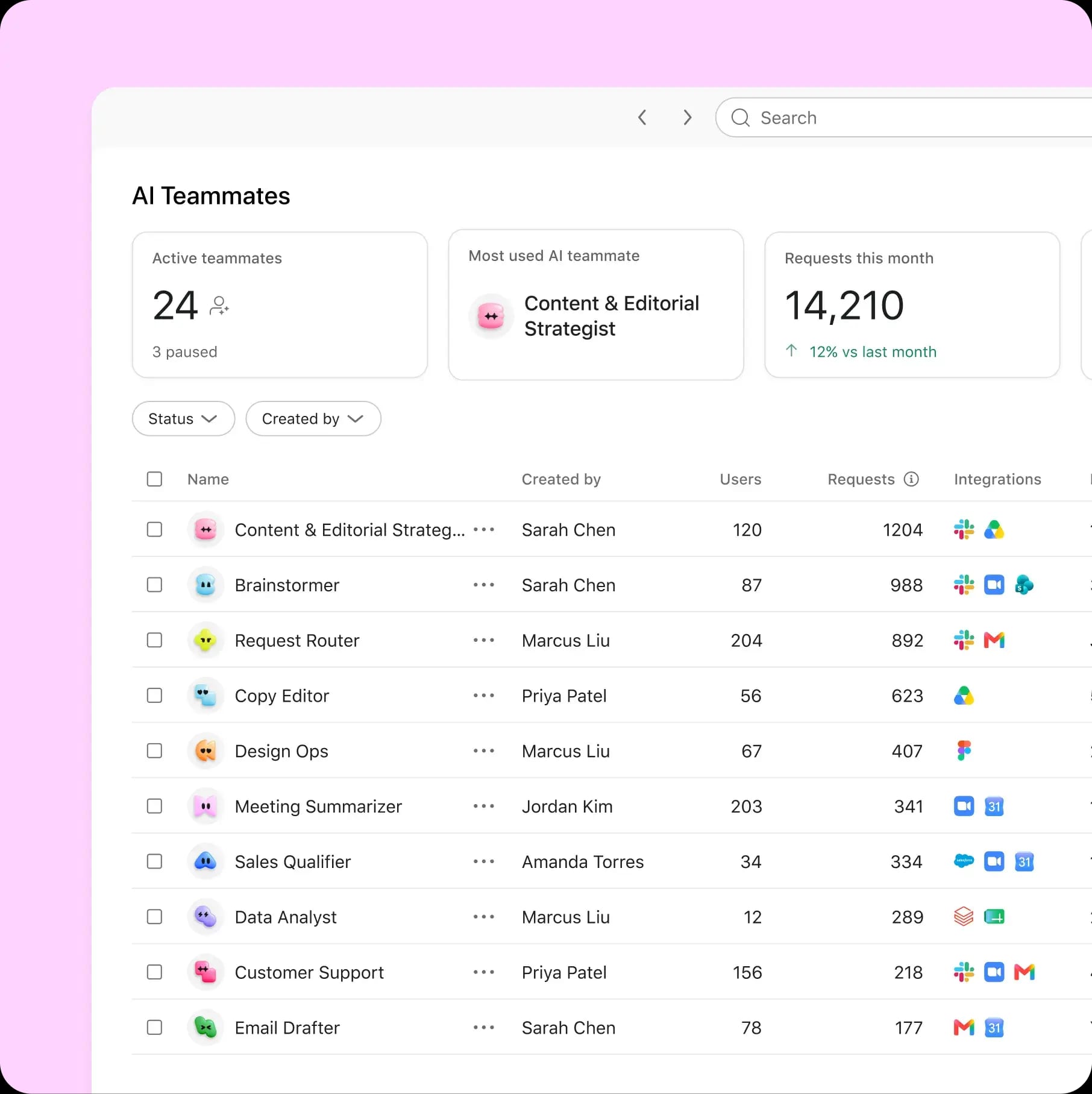
Asana−0.27% — Asana, down 0.27 percent as of its last quote shipped the step that turns its AI agents from advice-givers into co-workers: since the Q3 2026 release on October 22, AI Teammates can act for you inside Slack, Gmail, Microsoft−1.65% — Microsoft, down 1.65 percent today Teams, Google Drive, HubSpot−1.96% — HubSpot, down 1.96 percent today and six other outside apps 1.
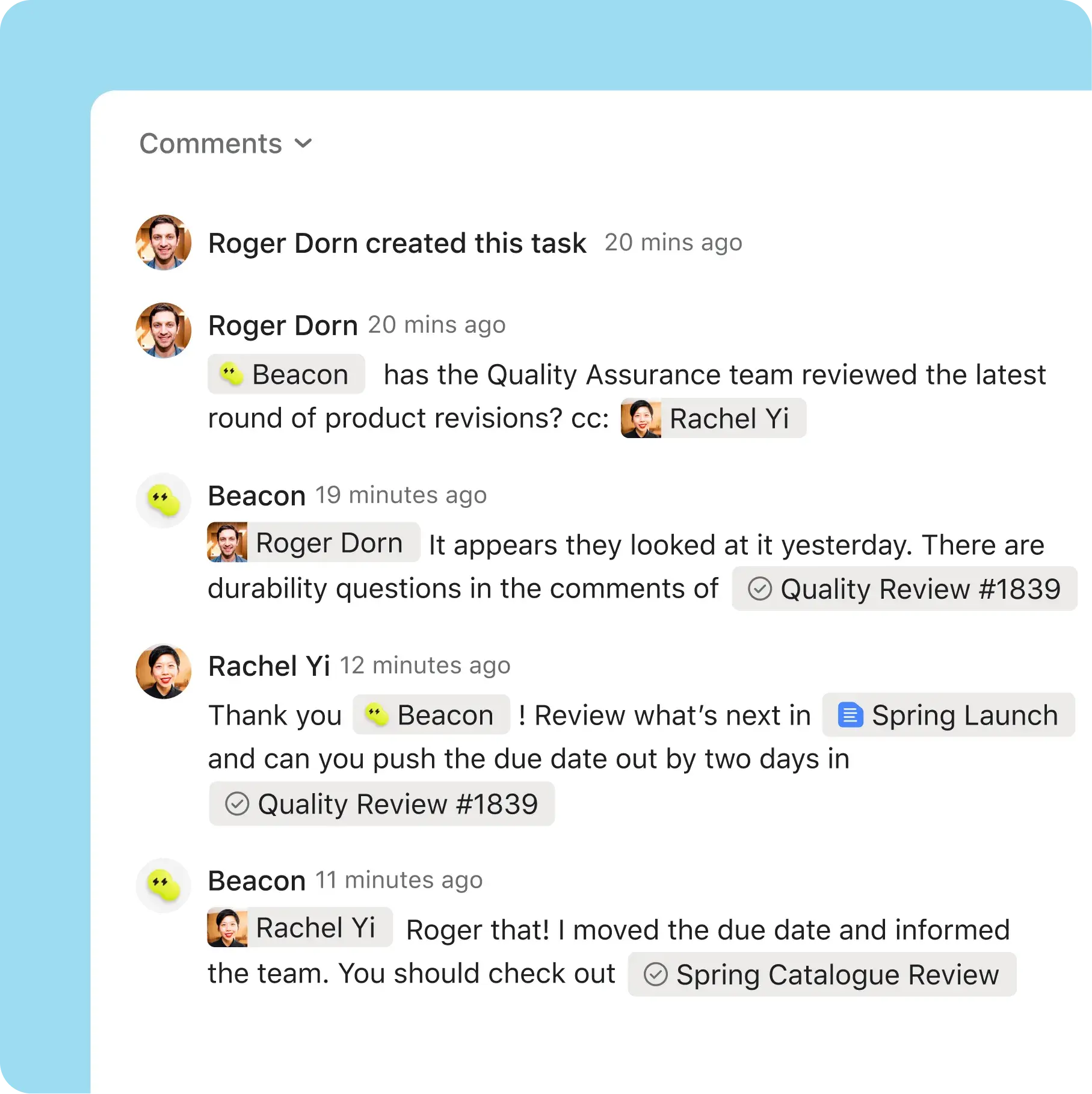
That matters more than it sounds. An agent that can only think inside Asana still needs a person to carry its output into a chat or a calendar; an agent that files, messages and schedules on its own takes over a whole slice of coordination work. The pricing page, not the press line, is where the real news sits: this release arrives with usage-based billing attached 2.
Asana's AI product lead Spencer Herrick says the early bolt-on features made individual people faster without shipping projects faster, and that agents pay off when one of them owns a whole job from intake to sign-off 4.
The meter is the business model
The investors' story is the billing. Every paid plan now bundles AI: Starter costs $10.99 per user per month and Advanced $24.99, each with five AI Teammate requests a user a month, capped at 50 requests per account on Starter and Advanced and raised to 250 on Enterprise tiers 2.
Beyond that, prepaid requests cost $0.50 each and pay-as-you-go $0.60; German trade press reports the same $0.50 to $0.60 band 1. AI Studio automations meter separately in credits, 50,000 a month on Starter scaling to 200,000 on Enterprise, with more purchasable 2. Asana has moved from selling seats to selling seats plus consumption: every agent that earns its keep meters revenue on top of the seat.
This is the other half of the story we covered on October 10, when the cost of running agents was collapsing for Asana and every rival (/article/asana-s-ai-just-got-90-cheaper-to-run-and-so-did-every-rival-s). Cheaper agents plus a working meter is how usage revenue becomes a real line item.
Asana's revenue grows steadily, and agents are the new lever
Data
| Revenue | |
|---|---|
| Q1 '24 | $172.45M |
| Q2 '24 | $179.21M |
| Q3 '24 | $183.88M |
| Q4 '24 | $188.33M |
| Q1 '25 | $187.27M |
| Q2 '25 | $196.94M |
| Q3 '25 | $201.03M |
| Q4 '25 | $205.57M |
| Q1 '26 | $205.1M |
| Q2 '26 | $216.43M |
Included AI requests are small next to the account caps
Data
| Value | |
|---|---|
| Per user, all paid plans | 5 |
| Account cap, Starter and Advanced | 50 |
| Account cap, Enterprise tiers | 250 |
Agents still need babysitters across vendors
The hard limit is coordination beyond one vendor. No provider has published data showing agents that span Asana, Jira, HubSpot and Slack running unaided, so staff keep taking the mediating and control roles once work crosses an ecosystem boundary 1.
Asana's own answer is to keep the agent on its work graph, the connected model of tasks, projects and goals that serves as the single source of truth an agent reads and acts on; there, scoped access, admin controls and audit trails come built in 4.
On the evidence so far, work inside Asana's walls likely bills cleanly, because the pricing page defines one request as one successfully completed unit of work 2; the handoffs a human still brokers are the work the meter cannot yet charge for.
What to watch on December 8
Two numbers tell the story. First, whether the customer returns Asana cites hold: Indeed reports $300,000 a year in time savings from an agent-run creative operations engine, and Morningstar close to 15,000 hours a year 4. Second, whether anything metered reaches reported revenue, because no quarter since the agent push has reported yet; results are due December 8, with the market valuing Asana at about $2.5 billion in the meantime 5.
If agents still need a human to broker every handoff across tools, metered revenue grows slower than the seat base, and the usage and deferred-revenue lines on December 8 will show which is happening 5. Agents that finish the whole job are worth paying by the request. Agents that wait for a person between every app are not, and December 8 shows which one Asana is selling 5.
Get Applications by email, free
How AI is changing the software people and companies use. In our daily email, every weekday.