Pixalate ranks AppLovin No. 2 in US mobile ads with 0% resale but flags 19% as bot traffic at a 52-week low
Pixalate's quarterly trust index scores AppLovin the No. 2 US mobile ad seller with zero resold inventory, then flags 19% of its US impressions as sophisticated invalid traffic and the most delisted-app supply in the top five. The stock sits at a 52-week low with earnings on November 4 and the class-action deadline November 16.
 Vincent Jiang · 4 min read
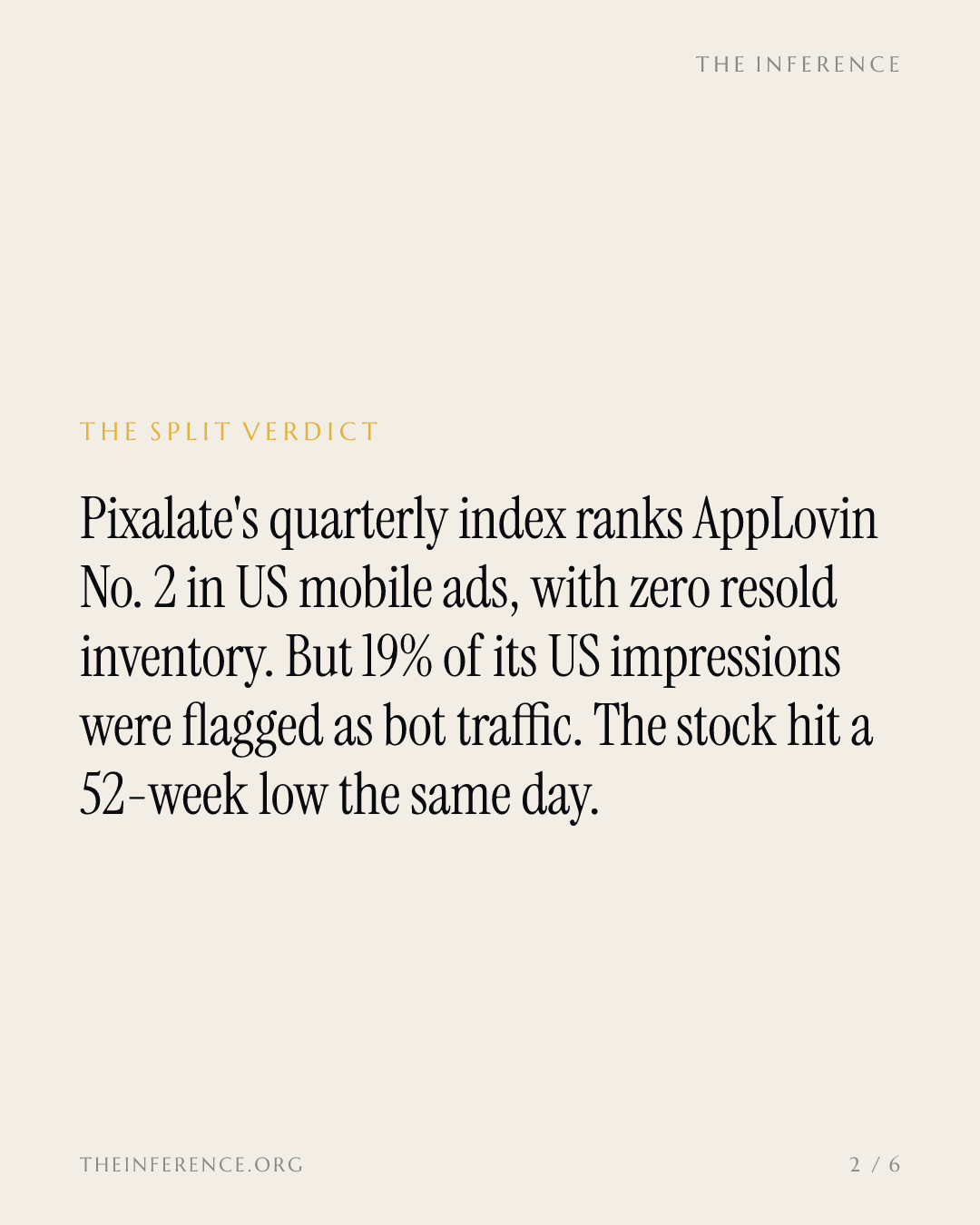
AppLovin−10.04% — AppLovin, down 10.04 percent today ranks the No. 2 open-programmatic mobile ad seller in the United States behind Google AdExchange, with 0% of its measured inventory resold through arbitrage, the metric the report headlines, and 28,302 US apps listing it as a direct partner to Google's−1.59% — Google, down 1.59 percent today 34,192 1. Arbitrage means inventory resold through middlemen rather than delivered publisher-direct, and AppLovin sits at zero of it 1.
One row down, the same index flags the company High SIVT: 19% of its measured US impressions counted as sophisticated invalid traffic, bot-like traffic that mimics real users and defeats standard filters, detected under methods accredited by the Media Rating Council 1. And 14% of its ads sold on apps delisted from the Google Play or Apple−0.95% — Apple, down 0.95 percent today App Store, the highest delisted ratio in the US top five 1.
Pixalate flags every top-five US mobile ad seller for invalid traffic; AppLovin carries 19% SIVT
Data
| Value | |
|---|---|
| Google AdExchange | 25% |
| AppLovin | 19% |
| Liftoff | 25% |
| Mintegral | 16% |
| Unity Technologies | 15% |
Those grades landed on October 29, the same day the stock made a fresh 52-week low: a market value near $85.6 billion, down 59.3% over one year and 12.2% over one month, against an S&P 500 up 1.0% over the month 2. By Friday morning AppLovin traded at $236.46, down 7.2% 3.
Advertisers pay AppLovin for reach, and pay Pixalate to check it
The grader and the graded serve the same customer. Pixalate, the ad-fraud and privacy-compliance platform behind the free quarterly Seller Trust Index covering 275-plus open-programmatic sellers across more than 130 markets, counts advertisers, publishers and financial analysts among its clients 1. Advertisers pay AppLovin's exchange for reach; the same advertisers buy Pixalate's verification of what they actually got 1. Two businesses now grade the same impressions, and only one of them was paid for the ad.
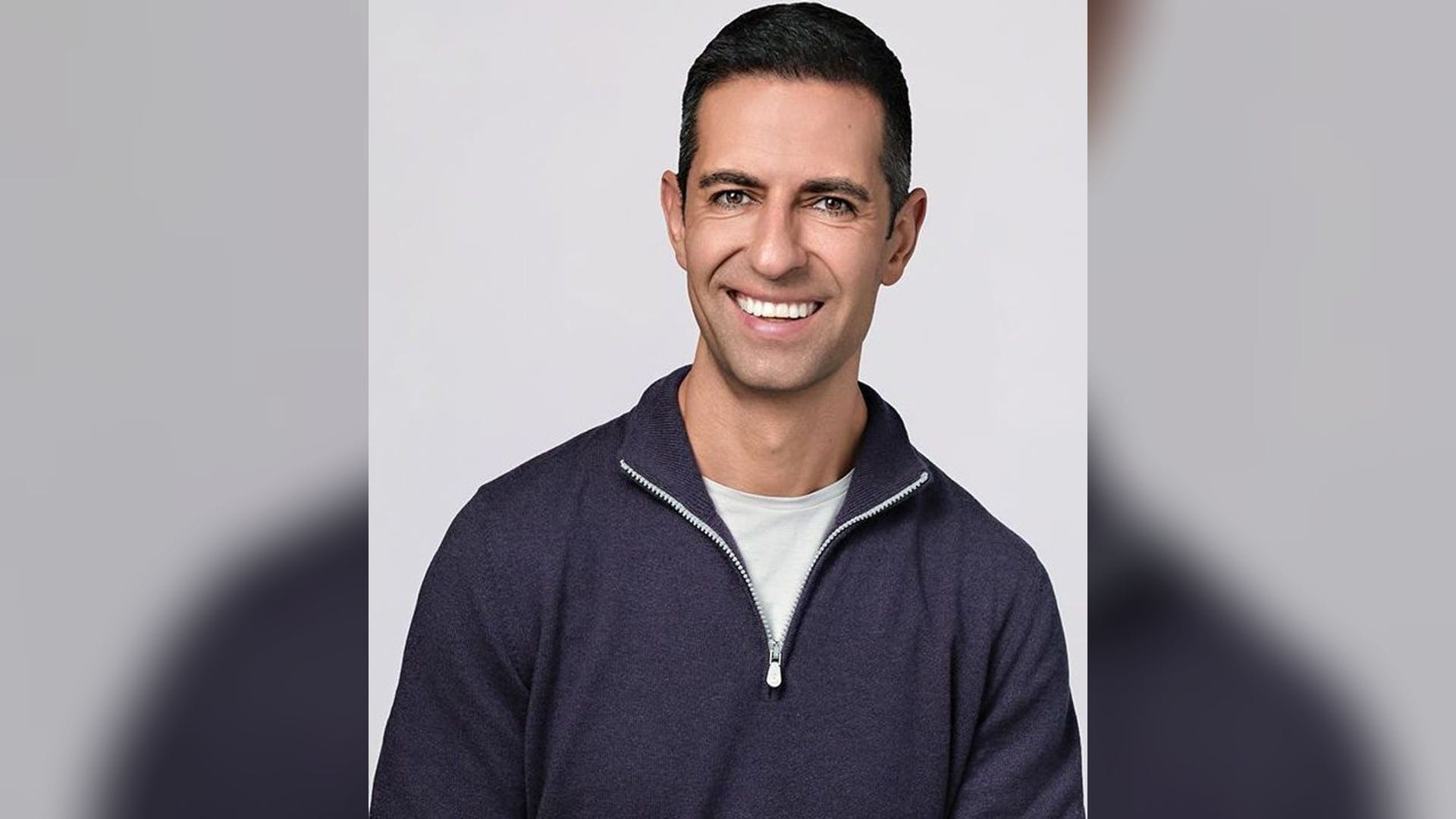
AppLovin, the Palo Alto mobile-advertising company founded in 2012 and led by chief executive Adam Foroughi, joined the S&P 500 in September 2025 4.
The resale tide is rising around it
The industry numbers give the zero its meaning. Worldwide, 16.4% of authorized mobile-app inventory was resold through arbitrage in Q3, up from 15.2% in Q2, and the share of ranked sellers that are primarily arbitrageurs rose to 34.2% globally and from 16% to 24% in the United States 1. AppLovin sits on the clean side of that divide; its flags measure traffic quality, not resale 1.
Arbitrage-heavy sellers jumped from 16% to 24% of ranked US sellers in Q3
Data
| US sellers primarily reselling | |
|---|---|
| Q1 2026 | 22% |
| Q2 2026 | 16% |
| Q3 2026 | 24% |
The lawsuit prices the AI story
As this site reported on September 23, a securities class action filed on September 17 covers purchasers between February 12 and August 5, 2026, and alleges AppLovin overstated the constancy of its AI model gains and hid delays in its generative AI video tool 5. The complaint's record: management said in May it had "100% seen faster improvements" to the models and would roll the video tool out "shortly"; on August 5 it reported second-quarter revenue of $1.92 billion against $1.94 billion consensus, called model improvement "lighter than normal" and the tool "still [a] work in progress" 6.
Per the complaint, the stock fell $64.13, or 12.65%, on July 13 after a Bank of America−2.20% — Bank of America, down 2.20 percent today note on the ads rollout 7, then $82.13, or 19.66%, on August 6, the day after the results 6. What is new this week is a second solicitation: Kaplan Fox & Kilsheimer, a New York plaintiffs' firm, is contacting the same investors, and the lead-plaintiff deadline is November 16 7.
The counterweight: opinion, flags on everyone, printed growth
Pixalate calls its index opinion, not fact, built from buy-side predominantly open-auction transactions, and warns that rival vendors' methods may show different results 1. Every top-five US seller carries a flag, including No. 1 Google AdExchange at 25% SIVT 1. And the bull case still stands on printed numbers: 19.4 times trailing earnings, 60.6% trailing-twelve-month revenue growth and a 5.3% free cash flow yield 2, with Q2 revenue up 52.8% and Q3 guided to $2.055 billion to $2.085 billion, 46% to 48% growth, counting only model improvements already live 8.
Three dates in three weeks
AppLovin reports Q3 on November 4 at 2:00 p.m 3. Pacific 3. The lead-plaintiff window closes November 16 7. Pixalate's next quarterly index will then re-grade the supply behind that earnings print 1.
Get Applications by email, free
How AI is changing the software people and companies use. In our daily email, every weekday.