Constellation Energy raises 2026 guidance again after a $5.06 beat; its 2028 case rests on unsigned deals
Adjusted operating earnings of $5.06 a share, up from $3.04, and a second guidance raise this year reward CEG holders now. The catch for anyone paying for 2028 and beyond is timing: the contracted megawatts mostly arrive from 2029, and the company's own math prices the rest on deals not yet signed.
 Richard Tangtwo-minute read
Constellation−2.89% — Constellation, down 2.89 percent as of its last quote answered this morning's test with cash and contracts: a large earnings beat, a second guidance raise this year, and agreements the company says add more than 1,000 megawatts of new generation 1. The raise is earned. What it does not settle is the question our Sunday test posed, because the megawatts behind the priced-in future mostly arrive after 2028. 1
A beat, a second raise, and new business on top
Third-quarter adjusted operating earnings were $5.06 a share, up from $3.04 a year ago, against consensus near $3.88. 12 Full-year guidance rises and narrows to $12.50 to $12.80. 1
The items new since our Sunday piece: a $715 million agreement to buy the 609-megawatt Rhode Island State Energy Center, a gas plant, from Shell; the first Peak+ contract, a 20-year deal bundling 270 megawatts of energy, capacity and nuclear attributes from 2028; and a conditional Department of Energy loan commitment of up to $5 billion for uprates, money that stays conditional until technical, legal and financial conditions clear. 167
The megawatts are real, and they arrive late
The mechanism matters more than the headline: 20-year hyperscaler contracts turn reactor headroom into financeable uprates, new turbines and steam-cycle work at plants that already hold licenses.
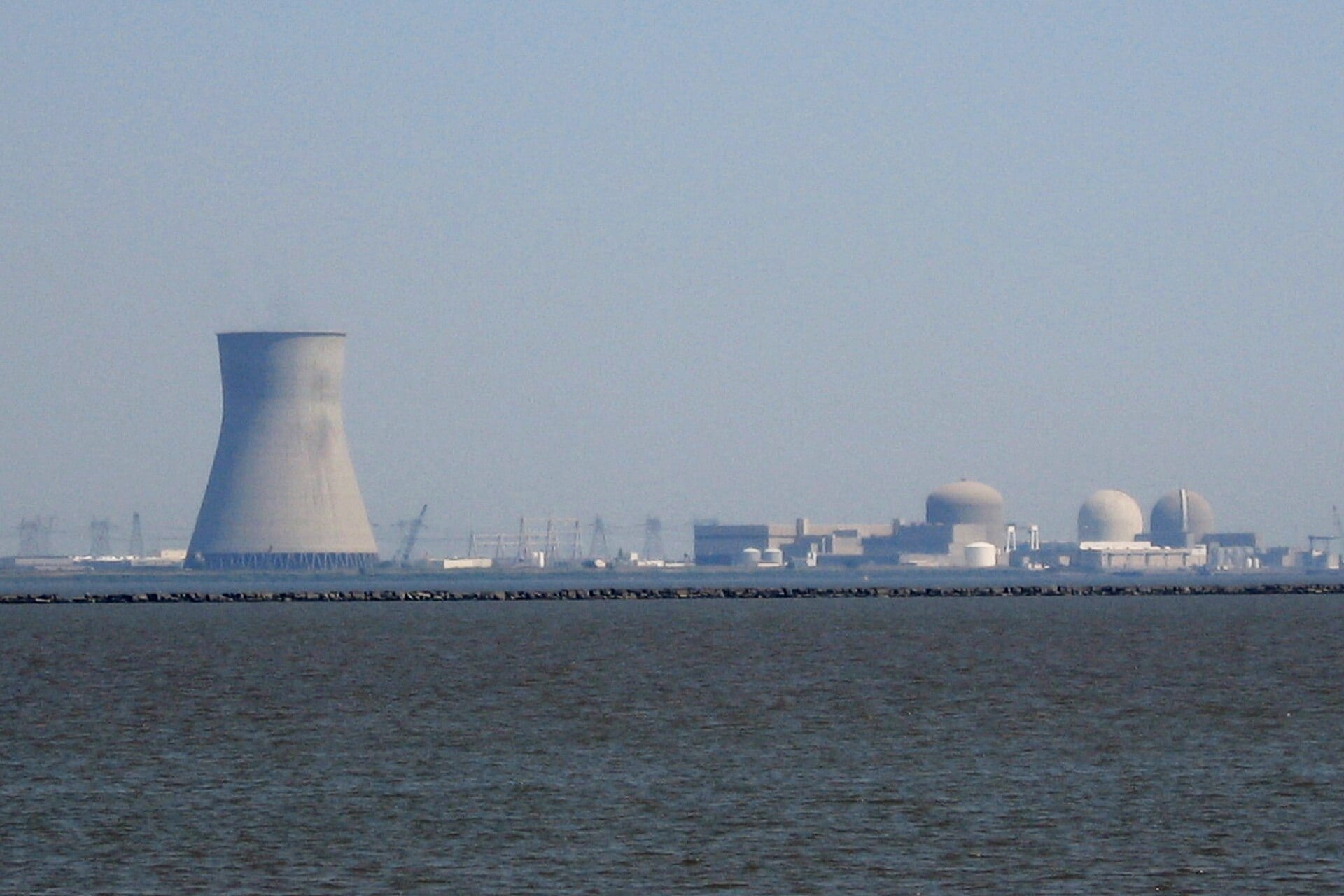
Amazon's 690-megawatt agreement funds more than $3 billion at Maryland's Calvert Cliffs nuclear plant; Google's funds $4.3 billion across 11 units 134. Together they back almost 1.1 gigawatts of expansion, the equivalent, says chief executive Joe Dominguez, of a new large-scale nuclear plant built at no cost to existing customers. 134 The schedule is the catch: only 110 megawatts of the 1,165-megawatt uprate program land by 2028. 5
Only 110 MW of Constellation's 1,165 MW uprate program lands by 2028
The contracted megawatts arrive mostly after 2028
- Estimate
Data
| Value | |
|---|---|
| 2027–28 (estimate) | 110 MW |
| 2029–30 (estimate) | 605 MW |
| 2031–32 (estimate) | 450 MW |
What is signed, and what the stock still owes
Management frames the remaining gap itself. Long-term agreements will sit behind 45 percent of the clean baseload fleet by 2032, leaving most of it open. 5 The 2029 base projection of $11.40 to $11.90 a share excludes deals not yet signed, and each further gigawatt of nuclear contract is worth up to about a dollar of annual earnings. 5
The 2029 base projection sits below the 2026 range the company just raised
- Low
- High
Data
| Low | High | Change | |
|---|---|---|---|
| 2026 guidance | $12.5 | $12.8 | +2.4% |
| 2029 base projection | $11.4 | $11.9 | +4.4% |
Demand is not the constraint: PJM, the mid-Atlantic grid operator, is short about 6.8 gigawatts. 3 Morgan Stanley+0.48% — Morgan Stanley, up 0.48 percent today called last week's selloff an overreaction and kept a $391 target; the argument inside the stock is about timing, not demand. 8
The raise pays for what is signed. The growth still priced in pays for what is not. Closing that distance is the work of Constellation's commercial teams, converting reactor capacity into two-decade contracts at a pace of 8,500 megawatts signed this year, and that pace, not this quarter, decides whether the 2028 case is real. 5
Get Power by email, free
How AI's hunger for electricity moves utilities, power plants and the grid. In our daily email, every weekday.