DoorDash's order growth was 28% with Deliveroo and 17% without, and the ex-Deliveroo line ends
DoorDash's record third quarter grew 28% as reported but 17% without Deliveroo, and the company says the ex-acquisition line stops after this quarter, the same week it signed a $17 billion Instacart deal and a day after the FTC ordered it to explain its pricing and courier pay.
 Vincent Jiang · 3 min read
The line that shows what growth was bought is being retired
In its best-ever quarter, filed with the SEC on October 29, 2026, DoorDash+7.92% — DoorDash, up 7.92 percent today stated quarterly records in marketplace GOV, revenue and net income, and included a line few headlines picked up: "beginning in Q4 2026, we intend to stop disclosing quarterly results excluding Deliveroo" 1. That line is the only disclosure separating the growth DoorDash earned from the growth it bought.
Eleven of 28 points of order growth came from Deliveroo
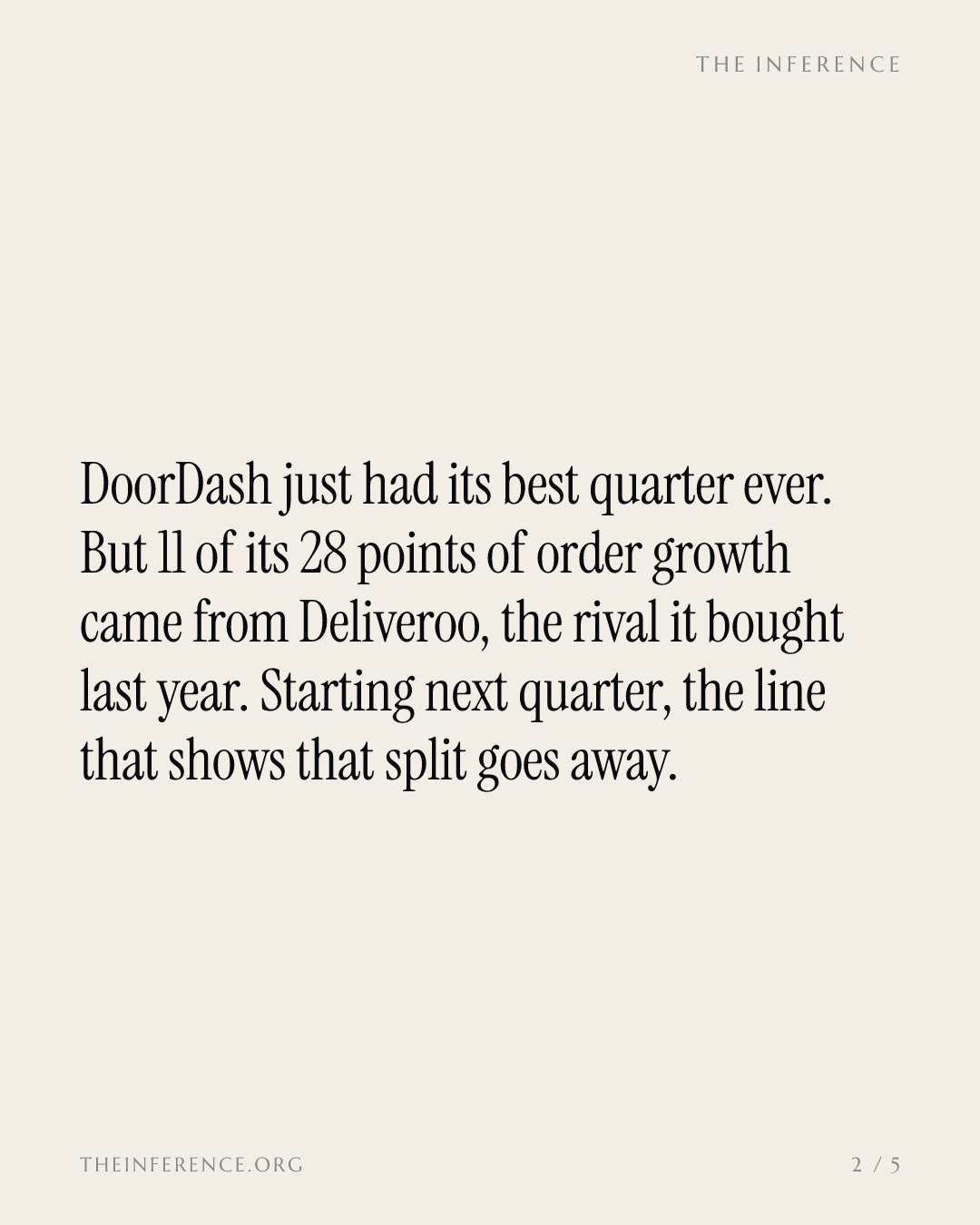
Deliveroo is the overseas delivery company DoorDash acquired last year. The quarter's headlines: 993 million total orders, up 28% year over year; marketplace GOV, the dollar value of orders completed on its marketplaces, of $33.9 billion, up 36%; revenue of $4.6 billion, up 34% 1. Strip out Deliveroo and the same quarter grows 17%, 23% and 23% 1. The takeover of a rival added more than a third of the reported order growth.
A third of DoorDash's reported growth was bought
Deliveroo added 11 points to order growth and 13 to GOV and revenue
- As reported
- Excluding Deliveroo
Data
| As reported | Excluding Deliveroo | |
|---|---|---|
| Total orders | 28% | 17% |
| Marketplace GOV | 36% | 23% |
| Revenue | 34% | 23% |
The dates, stated as facts
The FTC sent pricing-and-pay orders to nine companies on October 28, a day before DoorDash announced the Instacart deal 2. The deal: $65.00 per share, about $17 billion in equity value, at least 75% in cash, a 26% premium to Instacart's October 22 close, with closing expected no earlier than end-2027 1. Whether the retirement of the ex-Deliveroo line this exact week signals anything is an open question; the dates are facts, the motive is not stated anywhere.
The deal is already reshaping daily life: DoorDash's employee question-and-answer document, filed with the SEC, bars staff from connecting with Instacart employees on LinkedIn until close, standard gun-jumping hygiene in the words of antitrust lawyer David Gelfand of Cleary Gottlieb 3, and Northeastern lecturer Chris Selland suggests it may also guard against brain drain 3. Our October 29 piece covered the deal's price and cash funding (/article/doordash-s-record-quarter-funds-a-17-billion-instacart-buyout-at-65-a-share-at-least-75-in-cash); our October 14 preview flagged that Q3 would be the last quarter Deliveroo inflates growth 33.
What the regulator and the market are watching
The FTC wants to know how personal data shapes what consumers pay and what Dashers, DoorDash's couriers, earn. Responses are due 45 days after each company receives its order, which lands in mid-December at the earliest 2.
Pay is already expensive: DoorDash settled New York City's Dasher-pay probe for $131.5 million in September, and its legal reserve rose from $263 million at end-2025 to $406 million at June 30 2. Analysts expect earnings per share nearly to double from $5.10 in 2025 to $9.91 by 2028, which assumes DoorDash keeps setting its own fees and pay 2.
The company's side, stated fairly
DoorDash's stated reason holds up on its face: Q4 2026 marks the Deliveroo anniversary, so total results become comparable with the year-ago period 1. The FTC order is a study, not a rule; no fee has to change because of it 2. At roughly 26 times forward earnings, near a five-year low, the stock already prices in much of this worry 2.
The February call is the test
From the February 2027 print, the fastest growth number DoorDash publishes will arrive undecomposed; the last ex-Deliveroo figure on record is 17% order growth. Watch the FTC responses and the February earnings call. Ask for the bridge from reported to organic growth there. A refusal would not prove anything improper, but it would tell investors the company prefers they not know how much of its growth was bought.
Get Applications by email, free
How AI is changing the software people and companies use. In our daily email, every weekday.