Nvidia made batch transcription free. Only the phone call still pays.
Nvidia released a free, open-weights 40-language transcription model eight days after Mistral priced batch speech-to-text at fractions of a cent. Per-minute APIs still sell where latency forces streaming, and independent benchmarks keep undercutting the vendors' own clocks there.
 Vincent Jiang · 3 min read
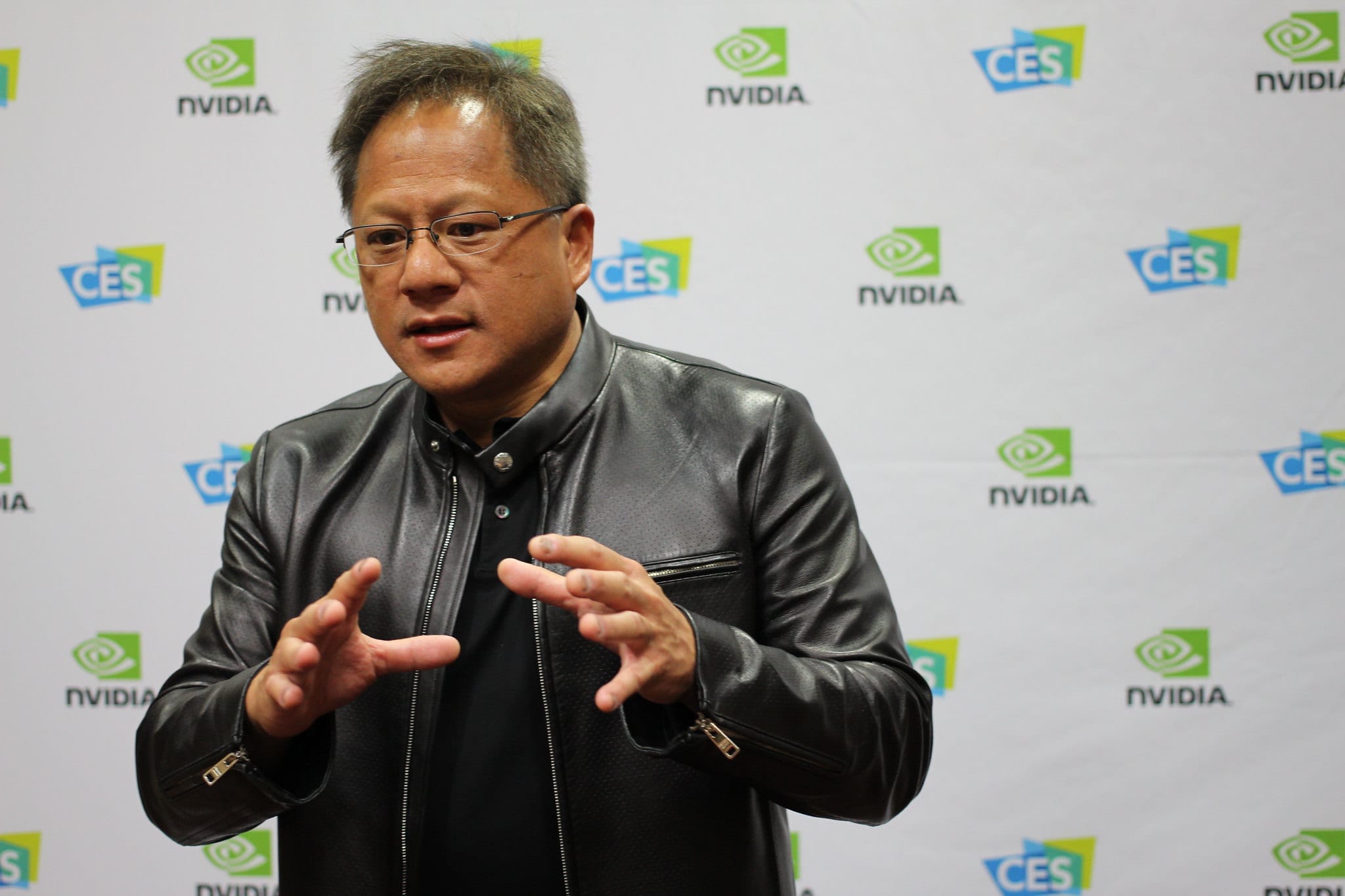
The price of a transcribed minute just hit zero. On October 28, Nvidia−0.59% — Nvidia, down 0.59 percent today released Nemotron 3.5 Transcribe, a free, open-weights speech-to-text model covering 40 languages under the OpenMDW-1.1 license, downloadable from Hugging Face and licensed for commercial use 4. By design it does not stream: it transcribes finished recordings, meetings, call archives, clinical dictations, in batch 14. That single omission draws the new front line of the voice-AI market.
The paid pool is now real-time only
For anything recorded, the API bill is optional. Nvidia's own coverage states the consequence: self-hosting eliminates per-hour API costs that can quickly reach thousands of dollars a month at scale 1. Eight days earlier, on October 20, the Paris-based AI lab Mistral$14B — Mistral, private, latest valuation $14B had priced its Voxtral 3 batch transcription at $0.0035 per minute and a full voice-agent pipeline at $0.04 per minute 2. Nvidia's free model undercuts even that floor.
The mechanism is not charity. Nvidia gives away the weights to drive inference demand for its GPUs, the same playbook Meta+2.12% — Meta, up 2.12 percent today ran with Llama: the hospital or meeting-software startup that adopts the free model still buys Nvidia hardware to run it 1. Revenue in the batch market therefore shifts from API vendors to the silicon layer, and it falls as customers move workloads on-premises.
Batch transcription's price now starts at zero
Data
| Value | |
|---|---|
| Nvidia open weights, batch | $0 |
| Mistral batch STT | $0 |
| Mistral realtime STT | $0.01 |
| Mistral voice agent API | $0.04 |
The real-time premium is contested ground
Streaming is where the pure-play vendors keep their franchise. Nvidia's write-up concedes that developers needing live voice agents still buy streaming APIs from ElevenLabs~$3.3B — ElevenLabs, private, latest valuation ~$3.3B or voice-API vendor Deepgram 1. But that premium now rests on quality claims that independent clocks keep discounting.
On October 29, speech-AI API vendor AssemblyAI shipped its first text-to-speech model at $15 per million characters, undercutting ElevenLabs' $40 and matching Inworld 3. AssemblyAI's own test puts median time to first byte at 47ms 3. Cekura's independent benchmark, which measures a different metric, median streaming latency, timed AssemblyAI at 159ms against Inworld's 45ms at the same price, ranking AssemblyAI 8th of 19 timed models 3. Buyers now have both numbers on one page, and the vendor's own clock is the flattering one.
Frontier voice pricing halves, from $40 to $15 per million characters
Data
| Value | |
|---|---|
| AssemblyAI-TTS-1 | $15 |
| Inworld TTS-2 Flash (on demand) | $15 |
| Cartesia Sonic 3.6 | $37.38 |
| ElevenLabs Flash v2.5 | $40 |
At the same $15 price, the independent clock shows a 114ms spread
Data
| Value | |
|---|---|
| Inworld TTS-2 Flash | 45 ms |
| AssemblyAI-TTS-1 | 159 ms |
| ElevenLabs Flash v2.5 | 177 ms |
| Cartesia Sonic 3.6 | 270 ms |
Who wins, who bleeds
Enterprises and voice-agent builders capture collapsing transcription costs 13. Nvidia converts free weights into paid GPU hours 1.
The squeezed party is the pure-play voice API vendor. If batch workloads migrate to self-hosted open models, the per-minute batch revenue pool shrinks toward zero, and the remaining real-time moat is latency measured in milliseconds by independent benchmarks.
One defensible segment remains where cloud API transcription is blocked by data-residency rules: legal, government, financial and healthcare buyers who need audio to stay inside their own walls 1. But Nvidia's free model is self-hostable too, so even that refuge has a zero-priced competitor standing in it 14. Watch the next independent benchmark of a streaming model: every millisecond it shaves is pricing power the pure-plays cannot defend with a launch-post table 23.
Get Model by email, free
The AI labs, their models, and the business behind them. In our daily email, every weekday.

More about NVIDIA
NVDA · Fiscal Q2 2027Revenue rose 106% to $96.2B, 92.5% of it from Data Center, “driven by the ramp of our Blackwell Ultra infrastructure”. Gains on equity stakes of $7.8B lifted net income to $59.7B.
Show as a table
| Line | Value |
|---|---|
| Revenue | $96.2B |
| Gross margin | 75.0% |
| Operating margin | 66.2% |
| Net income | $59.7B |
| Hyperscale | $48.7B |
| AI clouds & enterprise | $40.3B |
| Data Center | $89.0B |
| Edge Computing | $7.2B |
| Gross profit | $72.1B |
| Cost of revenue | $24.1B |
| Other income | $7.8B |
| Operating income | $63.7B |
| Operating expenses | $8.4B |
| Tax | $11.8B |
| R&D | $7.1B |
| SG&A | $1.4B |